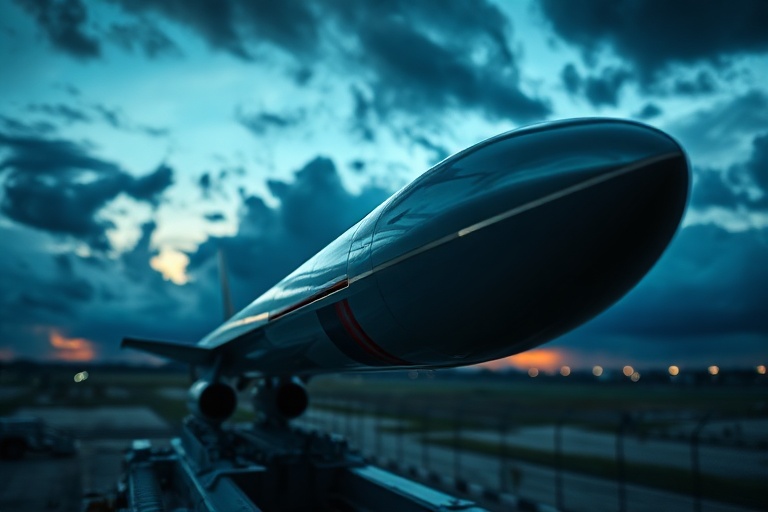
missile
Missiles represent one of the most complex and consequential technologies developed in the 20th century. These self-propelled guided weapons systems have reshaped military strategy, geopolitical alliances, and international law since their inception. From the early V-2 rockets of World War II to today’s hypersonic glide vehicles, missiles have evolved into instruments of both deterrence and destruction.
Their development reflects humanity’s dual capacity for innovation and destruction. Unlike traditional artillery, missiles can deliver payloads across continents with precision that was once unimaginable. This capability has made them central to modern defense doctrines while simultaneously creating new vulnerabilities in an already fragile global security architecture.
The Evolution of Missile Technology
Missile technology began with simple unguided rockets in ancient China, but the modern era of guided missiles emerged during World War II. The German V-2 rocket, developed by Wernher von Braun, became the first operational long-range ballistic missile. Its launch in 1944 marked a turning point in military technology, demonstrating that payloads could be delivered accurately over hundreds of miles.
The Cold War accelerated missile development dramatically. Both the United States and Soviet Union invested heavily in ballistic missile technology as part of their nuclear deterrence strategies. The 1957 launch of Sputnik by the Soviet Union demonstrated the potential of intercontinental ballistic missiles (ICBMs) to deliver nuclear warheads anywhere on Earth. This technological leap created what strategists called “Mutually Assured Destruction” (MAD), a doctrine that paradoxically prevented large-scale nuclear war while maintaining a constant state of preparedness for it.
Today’s missile systems represent several technological generations:
- First Generation (1940s-1950s): Unguided rockets and early guided missiles like the V-2 and early surface-to-air missiles
- Second Generation (1960s-1970s): More accurate inertial guidance systems and the first true ICBMs
- Third Generation (1980s-1990s): Introduction of terminal guidance systems, stealth technology, and multiple independently targetable reentry vehicles (MIRVs)
- Fourth Generation (2000s-Present): Hypersonic missiles, advanced electronic countermeasures, and networked guidance systems
The latest developments focus on speed and survivability. Hypersonic missiles, which travel at speeds exceeding Mach 5, can penetrate even the most advanced air defense systems. These weapons represent a new frontier in military technology, potentially rendering existing missile defense architectures obsolete.
Types of Missiles and Their Strategic Roles
Missiles are categorized based on several factors including launch mode, range, and guidance system. Understanding these classifications provides insight into their strategic roles and limitations.
The most fundamental division separates missiles by their launch platform:
- Surface-to-Surface Missiles (SSM): Launched from land or sea to strike ground targets. Examples include:
- Ballistic missiles (short, medium, intermediate, and intercontinental range)
- Cruise missiles (subsonic, supersonic, or hypersonic)
- Anti-ship ballistic missiles
- Surface-to-Air Missiles (SAM): Designed to intercept and destroy aircraft or other missiles. These form the backbone of modern air defense systems.
- Air-to-Surface Missiles (ASM): Launched from aircraft against ground or sea targets. These include precision-guided munitions that have revolutionized modern warfare.
- Air-to-Air Missiles (AAM): Used by fighter aircraft to engage other aircraft. Modern AAMs can engage targets beyond visual range.
- Anti-Ballistic Missiles (ABM): Specifically designed to intercept and destroy incoming ballistic missiles. The most advanced systems use hit-to-kill technology.
- Anti-Ship Missiles: Specialized missiles designed to target surface vessels. These often use radar homing or imaging infrared guidance.
Range classifications further define missile capabilities:
- Short-range: Less than 1,000 kilometers (e.g., ATACMS, Iskander)
- Medium-range: 1,000-3,000 kilometers (e.g., Pershing II, DF-21)
- Intermediate-range: 3,000-5,500 kilometers (e.g., US Pershing II, Soviet SS-20)
- Intercontinental: Over 5,500 kilometers (e.g., Minuteman III, Topol-M, DF-41)
Each category serves distinct strategic purposes. Short-range missiles are often used for tactical battlefield support, while intercontinental ballistic missiles form the backbone of nuclear deterrence strategies. The proliferation of medium and intermediate-range missiles has created particular challenges in regional security environments, particularly in areas like Eastern Europe and East Asia.
Missiles in Modern Geopolitics
The presence of missiles has become a defining feature of international relations in the 21st century. Their deployment influences military planning, diplomatic negotiations, and even economic policies. The most significant geopolitical tensions involving missiles currently play out in several key regions.
The Korean Peninsula represents one of the most volatile missile proliferation challenges. North Korea’s rapid development of ballistic missile technology, including ICBMs capable of reaching the continental United States, has created a security dilemma that involves not just regional players but global powers. The 2017 test of the Hwasong-15 missile demonstrated Pyongyang’s ability to deliver nuclear warheads anywhere in the continental U.S., fundamentally altering the strategic calculus of American defense planners.
In the Middle East, missile technology has become a proxy for broader power struggles. Iran’s development of ballistic missiles, particularly its Shahab and Sejjil systems, has created tensions with Israel and Gulf states. These missiles serve both as deterrents and as tools for power projection, complicating efforts at regional arms control. The 2019 attacks on Saudi oil facilities using Iranian-designed cruise missiles demonstrated the vulnerability of critical infrastructure to precision strikes.
Europe faces its own missile-related security challenges. The deployment of Russian 9M729 cruise missiles, which the U.S. and NATO argue violate the Intermediate-Range Nuclear Forces (INF) Treaty, led to the treaty’s collapse in 2019. This development has reignited debates about European security architecture and the role of American missile defense systems in Poland and Romania.
The South China Sea represents another missile flashpoint. China’s deployment of advanced anti-ship ballistic missiles like the DF-21D and DF-26 has created what strategists call “anti-access/area denial” (A2/AD) capabilities. These systems complicate American naval operations in the region and have forced reassessments of military strategy in the Pacific.
These developments highlight how missile technology has become intertwined with broader geopolitical competition. The possession of advanced missile systems often serves as both a status symbol for emerging powers and a bargaining chip in international negotiations. The challenge for the international community lies in balancing legitimate security concerns with the need to prevent destabilizing arms races.
The Future of Missile Technology and Arms Control
The next decade will likely see several transformative developments in missile technology. Hypersonic weapons represent the most immediate concern, with Russia, China, and the United States all investing heavily in these systems. Unlike traditional ballistic missiles that follow predictable trajectories, hypersonic glide vehicles maneuver during flight, making them extremely difficult to intercept.
Artificial intelligence and machine learning are also beginning to influence missile guidance systems. Modern missiles can now process vast amounts of data in real-time, allowing for more accurate targeting and the ability to adjust to changing battlefield conditions. Some advanced systems can even identify specific targets among multiple vehicles or structures.
However, these technological advances are occurring against a backdrop of eroding arms control regimes. The collapse of the INF Treaty in 2019 removed one of the most important Cold War-era agreements limiting intermediate-range missiles. The New START treaty, which limits U.S. and Russian strategic nuclear forces, remains in limbo as its 2026 expiration approaches. Meanwhile, emerging technologies like missile defense systems and space-based weapons are creating new domains for potential arms races.
The international community faces several critical challenges in managing these developments:
- Hypersonic Proliferation: The spread of hypersonic missile technology to additional states could undermine existing defense architectures and increase the risk of accidental conflict.
- Arms Control Gaps: The absence of comprehensive treaties covering new missile technologies creates uncertainty about future military capabilities and intentions.
- Dual-Use Technologies: Many missile components have civilian applications, making export controls difficult to enforce while still allowing legitimate technological development.
- Non-State Actors: The potential for terrorist organizations to acquire or develop missile technology remains a serious concern, particularly with the increasing availability of dual-use components.
- Verification Challenges: New technologies like additive manufacturing (3D printing) and advanced composites make it increasingly difficult to verify compliance with arms control agreements.
Addressing these challenges will require innovative approaches to arms control and non-proliferation. Some experts advocate for “treaty-plus” approaches that supplement formal agreements with confidence-building measures and transparency initiatives. Others propose focusing on limiting specific technologies rather than entire weapon systems, allowing for continued legitimate development while constraining the most destabilizing capabilities.
The future of missile technology presents a paradox. On one hand, these systems provide states with unprecedented defensive and deterrent capabilities. On the other, their proliferation increases the risk of miscalculation, accidental escalation, and catastrophic conflict. The challenge for policymakers will be to harness the benefits of missile technology while mitigating its most dangerous consequences.
Conclusion
Missiles have fundamentally transformed the nature of warfare and international security since their introduction in the mid-20th century. Their development reflects humanity’s capacity for technological