Julio César Chávez: The Legend Who Redefined Mexican Boxing
Early Life and Rise in Mexican Boxing
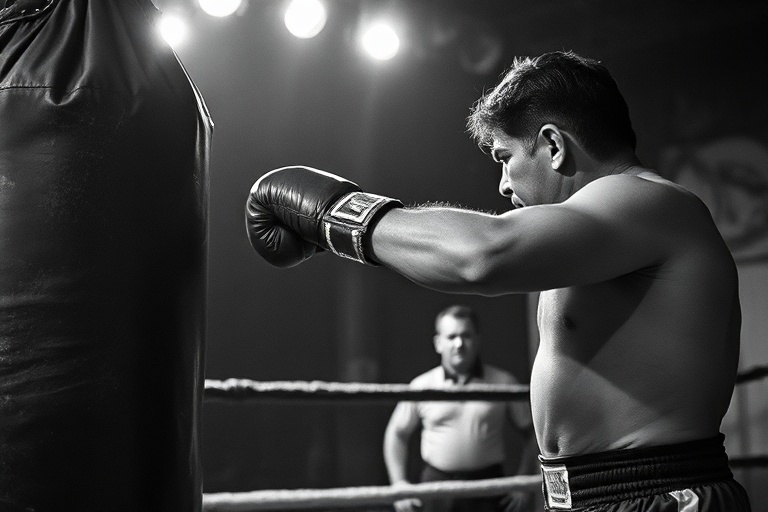
Julio César Chávez González was born on July 12, 1962, in Ciudad Obregón, Sonora, Mexico. Raised in a working-class family, Chávez discovered boxing at the age of 12, training under his father’s guidance in a gym with limited resources. By 16, he turned professional, embarking on a career that would redefine Mexican boxing and leave an indelible mark on global sports history. His early bouts were fought in small venues across Mexico, where he honed a relentless style characterized by speed, power, and an unshakable will to win.
Chávez’s ascent was meteoric. In 1980, he claimed his first major title—the Mexican Lightweight Championship—at just 18 years old. Within three years, he added the WBC Super Featherweight World Title to his resume, becoming the first Mexican boxer to win world titles in three weight classes. His combination of technical precision and raw aggression made him a fan favorite in Mexico and beyond, turning him into a national icon long before he achieved global recognition.
The Golden Era: Dominance Across Decades
From the mid-1980s through the late 1990s, Chávez ruled the ring with an almost mythical aura. His record speaks for itself: 107 wins (85 by knockout), 6 losses, and 2 draws over a career spanning more than two decades. But numbers only tell part of the story. Chávez’s true legacy lies in his ability to transcend boxing, becoming a cultural symbol for millions of Mexicans and Latin Americans.
His rivalry with Meldrick Taylor in 1990 remains one of the most legendary fights in boxing history. Known as the “Thunder Meets Lightning” bout, the contest was stopped in the final seconds of the 12th round, with Chávez winning by technical knockout. The fight’s dramatic conclusion sparked debates worldwide about timing, strategy, and the limits of endurance—debates that still echo in sports commentary today.
Chávez’s influence extended beyond the ring. He became a bridge between Mexican boxing traditions and global audiences, helping to popularize the sport in the United States, Japan, and Europe. His fights were broadcast in over 130 countries, making him one of the first Mexican athletes to achieve true international stardom.
A Global Icon Beyond the Sport
Chávez’s impact on culture cannot be overstated. In Mexico, he embodied the working-class struggle and the dream of upward mobility. His nickname, “El Gran Campeon Mexicano” (The Great Mexican Champion), reflected not just his skill in the ring but his role as a unifying figure in a country often divided by social and economic barriers.
Internationally, Chávez’s fights were more than sporting events—they were cultural exchanges. In the United States, where Mexican boxers were often typecast as brawlers, Chávez represented technical mastery and strategic brilliance. His 1993 victory over Greg Haugen in Tokyo, where he knocked out the larger opponent in the fifth round, cemented his reputation as a force to be reckoned with on any stage.
Chávez’s influence also extended into politics and social movements. He openly supported Mexican labor rights and immigrant communities in the U.S., using his platform to advocate for better conditions. His 2005 induction into the International Boxing Hall of Fame further solidified his place in sports history, but his cultural legacy transcended accolades.
Legacy and Influence on Modern Boxing
Even after retiring in 2005, Chávez’s impact on boxing endures. His son, Julio César Chávez Jr., carried on the family tradition, though with less global success. Meanwhile, a new generation of Mexican fighters—including Canelo Álvarez and Juan Manuel Márquez—cite Chávez as a primary inspiration. His fighting style, marked by relentless pressure and precise counterpunching, remains a blueprint for aspiring boxers.
Chávez’s career also highlighted the global nature of modern boxing. Unlike earlier eras, where champions were often confined to regional dominance, Chávez thrived in an era of international media and cross-border competition. His fights were not just Mexican spectacles—they were global events, drawing audiences from Los Angeles to Tokyo.
Today, Chávez’s legacy is celebrated in documentaries, books, and even video games. His 2018 induction into the WWE Hall of Fame for his crossover appeal further underscored his status as a larger-than-life figure. For many, Chávez represents the pinnacle of Mexican athletic achievement—a testament to discipline, heart, and the power of representation in global sports.
Key Contributions to Mexican Boxing
- First Mexican boxer to win world titles in three weight classes
- Pioneered the spread of Mexican boxing to international audiences
- Inspired generations of fighters, including Canelo Álvarez and Juan Manuel Márquez
- Became a cultural ambassador for Mexican communities worldwide
- Bridged gaps between traditional boxing styles and modern global competition
As boxing evolves, Chávez’s legacy serves as a reminder of the sport’s power to unite, inspire, and transcend boundaries. His story is not just one of victories and titles—it is a narrative of cultural pride, resilience, and the enduring human spirit.
Conclusion: More Than a Champion
Julio César Chávez’s career was defined by more than just wins and losses. He was a symbol of Mexican pride, a global ambassador for the sport, and a cultural icon whose influence extended far beyond the boxing ring. His ability to connect with audiences across continents made him one of the most recognizable athletes of his generation.
Even today, Chávez’s legacy lives on. From young fighters in Mexico City training in makeshift gyms to Latino communities in the U.S. celebrating his achievements, his impact is undeniable. He proved that sports could be a vehicle for social change, representation, and cultural pride.
For those interested in exploring more about the intersection of sports and culture, visit our Sports category for deeper analysis and historical insights. Chávez’s story is a reminder that true greatness is measured not just in titles, but in the lives touched and the barriers broken along the way.