Bhavitha Mandava’s Met Gala 2026 Look Redefines Fashion’s Future
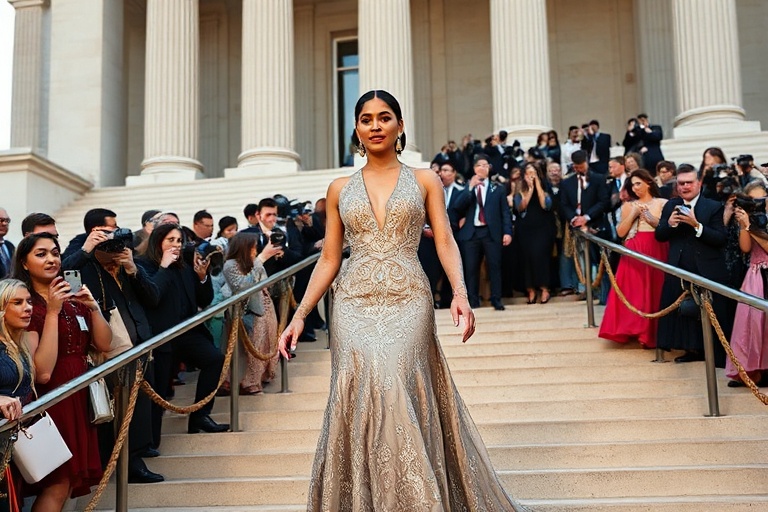
The Met Gala 2026 marked a defining moment for designer Bhavitha Mandava. While her previous appearances turned heads, this year’s red carpet arrival signaled a deliberate shift—one that fused avant-garde craftsmanship with cultural storytelling. Against the backdrop of the Metropolitan Museum of Art’s newly reimagined “Threads of Identity” exhibit, Mandava didn’t just wear fashion; she wore a manifesto.
Her ensemble, a sculptural fusion of biodegradable polymers and hand-woven silk, wasn’t merely an aesthetic choice. It carried a message about sustainable luxury and the decolonization of textile traditions. Critics and attendees alike noted how Mandava’s work transcended ornamentation, becoming part of a larger conversation about who gets to define the future of fashion.
The Design: Where Innovation Meets Artistry
Mandava’s 2026 Met Gala look was a collaboration with Indian textile artisans and MIT’s Media Lab. The centerpiece—a cape constructed from algae-based fibers—shifted color in response to ambient light, a nod to both biotechnology and the fluidity of identity. The bodysuit beneath was embroidered with patterns derived from ancient Andhra Pradesh temple murals, digitally reimagined through generative AI.
This wasn’t her first experiment with tech-textile hybrids, but it was the most publicly celebrated. Fashion insiders observed how Mandava’s approach mirrored broader industry trends: the blurring of physical and digital craft, the revival of regional techniques through modern tools, and the growing demand for garments that do more than adorn—they communicate.
What set her apart was restraint. While some designers leaned into maximalist spectacle, Mandava’s piece balanced opulence with intentionality. The result was a visual paradox: futuristic yet rooted, artificial yet alive. It challenged the notion that sustainability in fashion must come at the expense of drama.
Key Takeaways from Mandava’s 2026 Met Gala Moment
- Sustainability as spectacle: Mandava proved that eco-conscious design can command attention without sacrificing glamour.
- Tech meets tradition: Her use of AI and algae-based materials showcased fashion’s role in bridging centuries-old techniques with cutting-edge innovation.
- Cultural reclamation: By centering South Indian textile traditions, she contributed to a growing movement of designers reclaiming marginalized craft histories.
- Collaborative creation: The piece was co-created with artisans and technologists, reflecting a shift toward interdisciplinary partnerships in fashion.
Broader Implications: Fashion’s Identity Crisis and Revival
Mandava’s Met Gala moment arrives at a pivotal juncture for the industry. After years of criticism for its wastefulness and cultural appropriation, fashion is grappling with existential questions: Can luxury coexist with ethics? Can tradition evolve without erasure? Her work offers a provisional answer—one that privileges dialogue over dogma.
This year’s Gala theme, “Threads of Identity,” couldn’t have been more timely. In an era of algorithmic curation and dehumanized aesthetics, Mandava’s piece reminded the audience that clothing is still a primary language of self-definition. Her use of responsive textiles—materials that interact with their environment—mirrored fashion’s own adaptive role in society.
Moreover, her collaboration with non-Western artisans challenged the Eurocentric dominance of high fashion. Designers like Maria Cornejo and Tory Burch have dabbled in similar collaborations, but Mandava’s integration of indigenous motifs with advanced materials felt less like appropriation and more like restitution. It raised a provocative question: Is fashion finally ready to cede creative authority to the cultures it has historically exploited?
The Ripple Effect: What Comes Next for Mandava and Her Peers
The Met Gala doesn’t just reflect trends—it accelerates them. Already, industry analysts report a surge in inquiries about algae-based textiles and AI-assisted design following Mandava’s appearance. Her post-Gala interviews suggest she’s planning a capsule collection inspired by the piece, with profits earmarked for artisan cooperatives in India.
But the real impact may be cultural. Mandava’s rise comes as Gen Z consumers increasingly demand transparency and purpose from brands. According to a 2025 McKinsey report, 62% of young shoppers prefer labels that engage with social and environmental causes. Her work suggests a path forward: fashion as a conduit for cultural preservation, not just consumption.
Looking ahead, the question isn’t whether Mandava will become a household name—it’s whether the industry will follow her lead. Will other designers prioritize collaboration over competition? Will museums and buyers invest in garments that serve as both art and activism? The answers will shape the next decade of fashion.
A New Era of Fashion Activism?
What makes Mandava’s Met Gala moment significant isn’t just the dress—it’s what it represents. Fashion activism isn’t new, but Mandava’s approach feels distinctly of this moment: intersectional, interdisciplinary, and unapologetically ambitious. She didn’t just wear a statement piece; she wore a statement about the future of the industry.
As the dust settles on another Gala, one thing is clear: Bhavitha Mandava didn’t just attend the Met Gala 2026. She redefined what it means to be there.
For those interested in how fashion intersects with technology and culture, explore more at Dave’s Locker Fashion Section or dive into the broader conversation at our Analysis archives.