Kelechi Iheanacho: From Leicester Breakthrough to Global Recognition
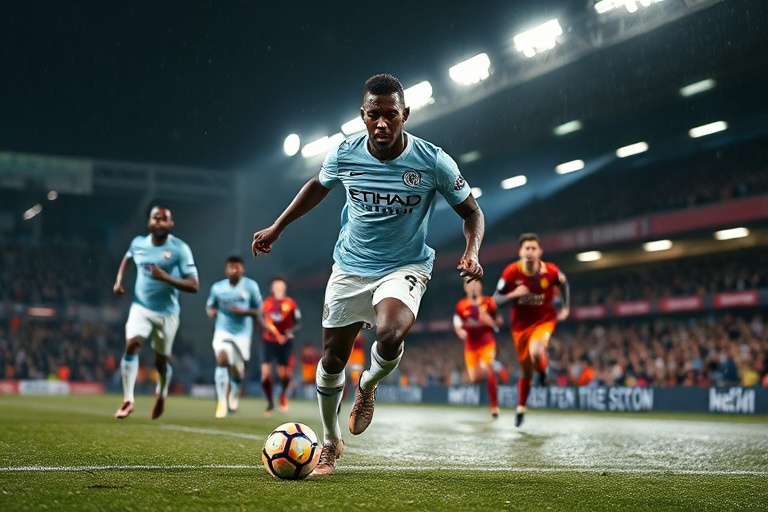
Kelechi Iheanacho stands as one of Nigeria’s most technically gifted footballers, a striker whose career has mirrored the rise of African talent in European football. Born on October 3, 1996, in Imo State, Nigeria, Iheanacho began his professional journey with Manchester City in 2015 after impressing in the youth ranks. His dazzling dribbling, intelligent movement, and clinical finishing quickly made him a fan favorite, though his time at the club was marked by inconsistent minutes.
Iheanacho’s career took a defining turn in 2017 when Leicester City secured his services. While his initial spell at the King Power Stadium was modest, a permanent move in 2018 allowed him to flourish under manager Brendan Rodgers. Over the next five seasons, he evolved from a promising talent into a Premier League mainstay, scoring crucial goals and earning plaudits for his adaptability. His journey reflects a broader narrative: the increasing prominence of African players in top European leagues and the challenges they face in proving their worth beyond raw potential.
The Nigerian Striker’s Playing Style and Technical Profile
Iheanacho’s game is built on three core attributes: technical skill, positional awareness, and versatility. Standing at 5’11”, he combines agility with a strong physical presence, allowing him to hold up play and link with teammates. His first touch is often described as sublime, a trait honed during his formative years in Nigeria’s youth football system. Unlike many African forwards who rely solely on pace, Iheanacho’s game is cerebral. He reads the game well, drifting into channels and exploiting half-spaces—a hallmark of modern attacking play.
His technical profile includes:
- Dribbling: Close control and quick feet enable him to navigate tight spaces in crowded penalty areas.
- Finishing: Both feet and a reliable header make him a constant goal threat.
- Work rate: Presses opponents high up the pitch and tracks back to support defenders.
- Versatility: Can play as a lone striker, in a two-man attack, or even as an attacking midfielder.
This multifaceted skill set has drawn comparisons to Nigerian legends like Nwankwo Kanu and Rashidi Yekini, though Iheanacho’s game is more aligned with contemporary styles seen in leagues like the Premier League and La Liga. His ability to adapt to different tactical systems has made him valuable in an era where forwards are expected to do more than just score.
Cultural Impact and Representation in Global Football
Iheanacho’s career intersects with broader conversations about African representation in global football. Nigeria has long been a powerhouse of talent, producing world-class players such as Jay-Jay Okocha, Kanu, and Victor Moses. Yet, the path for many Nigerian footballers remains fraught with obstacles—limited opportunities in top European academies, cultural adjustments, and the pressure to represent their country with pride.
Iheanacho has navigated these challenges with quiet professionalism. Unlike some high-profile Nigerian players who became instant icons, he has built his reputation through consistent performance rather than spectacle. His rise coincides with a shift in how African players are perceived: no longer seen as raw talents waiting to be polished, but as complete footballers capable of thriving in elite environments. This evolution is reflected in the growing number of African players in top European leagues, from Mohamed Salah to Victor Osimhen.
Off the pitch, Iheanacho has used his platform to support charitable initiatives in Nigeria, particularly in his home state of Imo. His involvement with organizations providing youth football development and education reflects a commitment to giving back—a trait admired in many African athletes. In a continent where football is often a pathway out of poverty, Iheanacho’s success serves as both inspiration and proof of the continent’s depth of talent.
The Leicester Era: Triumphs, Challenges, and Personal Growth
Iheanacho’s time at Leicester City has been a rollercoaster of emotions, marked by setbacks and redemption. After a difficult first season, he found his footing under Rodgers, forming a productive partnership with Jamie Vardy and later James Maddison. His 16-goal haul in the 2019–20 season helped the Foxes secure a fifth-place finish, their highest in the Premier League era at the time. That campaign included a memorable hat-trick against Southampton—a performance that silenced critics and showcased his big-game temperament.
However, injuries and tactical changes have often disrupted his momentum. The 2020–21 season, which saw Leicester qualify for the Champions League, was marred by fitness issues, limiting his impact. Yet, his resilience shone through. Iheanacho’s willingness to adapt—whether dropping deeper, pressing more aggressively, or refining his finishing—demonstrated growth. By the 2022–23 season, he had reclaimed his place as a key figure, scoring crucial goals in both domestic and European competitions.
His journey at Leicester mirrors the club’s own story: a team that punches above its weight, built on grit and collective effort. Iheanacho’s role in their 2021 FA Cup triumph, where he scored in the quarter-final against Manchester United, cemented his legacy at the club. It was a moment that transcended statistics—proof that talent, when nurtured in the right environment, can deliver moments of magic.
Looking Ahead: Legacy and the Next Chapter
As Iheanacho enters his late 20s, the question of his long-term future looms. With Leicester’s relegation from the Premier League in 2023, speculation about his next move has intensified. Clubs in Saudi Arabia, Turkey, and Europe’s top leagues are reportedly monitoring his situation. Yet, the Nigerian striker’s focus remains on returning Leicester to the top flight and continuing to represent Nigeria on the international stage.
His international career, though intermittent, has included standout performances in the Africa Cup of Nations (AFCON). In the 2021 tournament, he scored crucial goals and played a pivotal role in Nigeria’s run to the round of 16. However, inconsistency and competition for spots have limited his appearances. As Nigeria looks to qualify for the 2026 World Cup, Iheanacho’s experience and leadership could prove invaluable.
Beyond club football, Iheanacho’s legacy may lie in his ability to redefine the expectations of African strikers. No longer just athletes with flair, players like Iheanacho embody the modern footballer: technically adept, tactically astute, and resilient. His story is part of a larger movement where African talent is not just scouted for potential but integrated into tactical systems with clear roles.
As football continues to globalize, Iheanacho represents a bridge between tradition and modernity. His career offers valuable lessons about patience, adaptability, and the importance of seizing opportunities when they arise. For young Nigerian players dreaming of European stardom, his journey is a blueprint—not just for skill development, but for navigating the complexities of professional football in a multicultural world.