From Stigma to Symbol: Medellín’s Transformation Over Three Decades
Medellín, once synonymous with violence and cartel wars, has emerged as a global model of urban innovation and social resilience. The city’s journey from infamy to inspiration is not just a local triumph but a case study in how architecture, policy, and community engagement can reshape a city’s destiny. Medellín’s transformation offers lessons that resonate far beyond Colombia’s borders, influencing urban planners, policymakers, and activists worldwide.
The city’s rebirth began in earnest during the late 1990s and early 2000s, a period marked by extreme violence and economic stagnation. By the time Sergio Fajardo assumed office as mayor in 2004, Medellín was ranked among the most dangerous cities in the world. Yet, within a decade, it became a finalist for the Lee Kuan Yew World City Prize and won the Urban Innovation Award in 2013. This shift was not accidental; it was the result of deliberate strategies that prioritized social equity, public space, and connectivity.
The Role of Architecture and Public Infrastructure
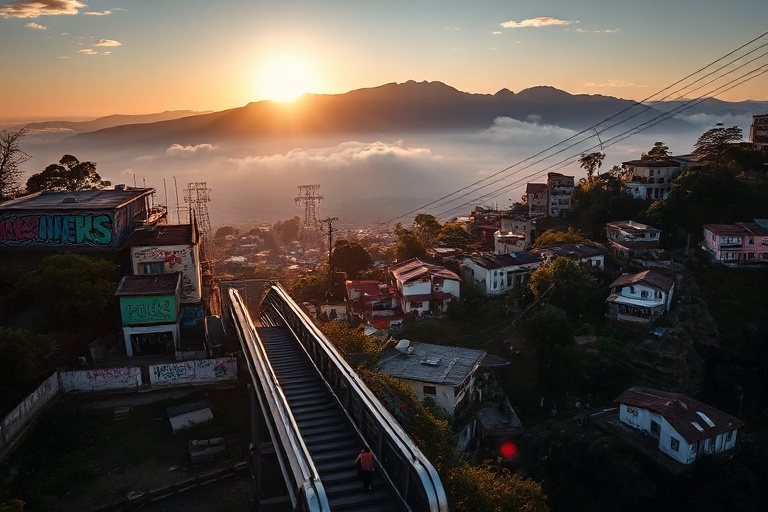
Medellín’s transformation is perhaps most visibly embodied in its architectural and infrastructural projects. The city invested heavily in cable cars, libraries, and escalators in informal neighborhoods, breaking down physical and social barriers. The Metrocable, inaugurated in 2004, connected some of the city’s poorest communities to the urban center, reducing commute times and improving access to jobs and education. These projects were not merely functional; they were symbolic, signaling a commitment to inclusivity.
The Biblioteca España, a striking architectural landmark in the Santo Domingo Savio neighborhood, became an icon of this new Medellín. Designed by Giancarlo Mazzanti, the library’s angular, dark-stone exterior contrasts with the vibrant, communal spaces inside. It served as a cultural hub, offering free access to books, technology, and educational programs. Such projects demonstrated that infrastructure could be a tool for social cohesion rather than just economic development.
Policy Innovations That Drove Change
Medellín’s success cannot be separated from its policy innovations. The city adopted a model of social urbanism, which prioritized interventions in marginalized areas. One of the most notable policies was the creation of Parque Biblioteca (Library Parks), a network of public libraries integrated with recreational and educational facilities. These spaces were designed to be accessible, welcoming, and free, ensuring that even the poorest residents could benefit from them.
Another key initiative was the Medellín Metro, which expanded rapidly during this period. Beyond transportation, the metro became a symbol of civic pride and efficiency. The city also implemented social programs like Buen Comienzo, which provided early childhood education to thousands of children in vulnerable communities. These policies were underpinned by a philosophy that urban development must serve all citizens, not just the privileged few.
The Cultural Shift: From Fear to Pride
Cultural change was as critical as physical and policy transformations. Medellín’s residents had to reclaim their identity from decades of stigma. The city’s cultural scene flourished, with events like the Feria de las Flores (Flower Festival) and the Festival de Jazz becoming symbols of resilience and creativity. Art, music, and literature began to reflect a new narrative—one of hope and renewal.
Local artists, musicians, and writers played a pivotal role in this cultural shift. The Comuna 13, once a stronghold of cartel activity, transformed into a vibrant street art district. Graffiti tours became popular, attracting tourists eager to witness the neighborhood’s metamorphosis. The music scene also evolved, with Medellín producing globally recognized artists like Juanes and Maluma, who often referenced the city’s struggles and triumphs in their lyrics.
Global Recognition and Lessons for Other Cities
Medellín’s story has garnered international attention. Cities from Cape Town to Barcelona have looked to its model for inspiration. In 2016, the United Nations recognized Medellín as a leader in sustainable urban development. The city’s approach—focusing on mobility, education, and public space—has been replicated in places like Rio de Janeiro’s favelas and Medellín’s own informal settlements.
Yet, Medellín’s journey is not without challenges. Inequality persists, and some neighborhoods remain vulnerable to crime and displacement. The city’s success also raises questions about scalability—can other cities replicate its model without the same level of investment or political will? These are important considerations as Medellín continues to evolve.
A Model for the Future
Medellín’s transformation is a testament to the power of visionary leadership, community engagement, and innovative design. It demonstrates that cities are not static; they can be reimagined and rebuilt. The lessons from Medellín are particularly relevant today, as urban areas worldwide grapple with inequality, climate change, and social fragmentation.
For other cities, Medellín offers a blueprint: invest in public infrastructure that serves everyone, prioritize education and culture, and foster a sense of collective pride. The city’s story is a reminder that change is possible, even in the face of seemingly insurmountable odds.
As Medellín continues to grow and change, it remains a symbol of what is achievable when a community commits to a shared vision. Its legacy is not just in its buildings or policies but in the resilience of its people and their unwavering belief in a better future.
Key Takeaways
- Social Urbanism: Medellín’s approach prioritized marginalized communities, using infrastructure as a tool for social equity.
- Innovative Infrastructure: Projects like the Metrocable and Library Parks broke down physical and social barriers.
- Cultural Renaissance: The city’s art, music, and festivals became symbols of its renewed identity.
- Global Influence: Medellín’s model has inspired cities worldwide, proving that urban transformation is possible.