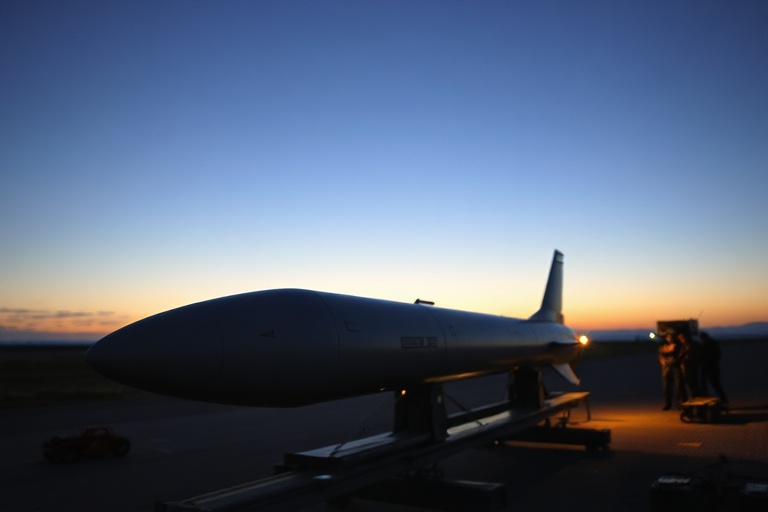
From Cold War Relics to Modern Precision Strikes
The missile has evolved from a blunt instrument of deterrence during the 20th century to a symbol of technological precision in the 21st. Its journey reflects broader shifts in warfare, diplomacy, and global power structures. Understanding this evolution reveals how geopolitics and innovation have shaped one of the most consequential weapons in human history.
Missiles are no longer confined to the arsenals of superpowers. Nations once excluded from the arms race now deploy advanced systems, altering regional balances. This democratization of missile technology has created new challenges for international security frameworks. Meanwhile, non-state actors have demonstrated how relatively simple rocket systems can disrupt even the most advanced military operations.
The Science Behind the Weapon
A missile is essentially a self-propelled guided munition, distinguished from unguided rockets by its ability to adjust its trajectory mid-flight. Propulsion systems vary widely—from liquid-fueled engines that dominated early designs to solid-fuel boosters that power most modern systems. Guidance technologies have seen even more dramatic transformation, moving from basic inertial navigation to satellite-assisted systems like GPS and GLONASS.
The payload determines a missile’s role. Conventional warheads remain common, but specialized variants carry chemical, biological, or even nuclear payloads. Hypersonic missiles, capable of traveling at speeds exceeding Mach 5, represent the cutting edge. These weapons combine extreme velocity with maneuverability, making them nearly impossible to intercept with current defense systems.
Range categories further define missile classifications:
- Short-range: Under 1,000 kilometers (often used in regional conflicts)
- Medium-range: 1,000–3,000 kilometers (historically significant in Cold War standoffs)
- Intercontinental: Over 5,500 kilometers (the backbone of nuclear deterrence)
A Global Arsenal: Who Has What
The proliferation of missile technology has created a complex global landscape. The five permanent members of the United Nations Security Council—China, France, Russia, the United Kingdom, and the United States—maintain the most sophisticated arsenals. Their intercontinental ballistic missiles (ICBMs) form the triad of nuclear deterrence: land-based silos, submarine-launched systems, and strategic bombers.
Emerging powers have made significant strides. India’s Agni series demonstrates its growing missile capabilities, while Pakistan’s development of multiple independent reentry vehicle (MIRV) technology has intensified regional tensions. North Korea’s rapid advancement from rudimentary Scud derivatives to potentially ICBM-capable systems has forced neighboring countries to reassess their defense strategies.
In the Middle East, Iran’s ballistic missile program has become a focal point of international negotiations. The Islamic Revolutionary Guard Corps’ arsenal includes systems like the Sejjil, with ranges capable of striking targets across the Gulf region. Meanwhile, Saudi Arabia has invested heavily in missile defense systems like the Patriot and THAAD to counter these threats.
Europe presents another layer of complexity. Russia’s Iskander missile system has been deployed in Kaliningrad, raising concerns in NATO capitals. Turkey’s development of the Bora and Siper systems highlights how middle powers are leveraging missile technology for both defense and regional influence.
The Cultural Impact of Missiles
Beyond their military significance, missiles have permeated global culture in unexpected ways. During the Cold War, they became potent symbols in art, literature, and cinema. Stanley Kubrick’s Dr. Strangelove satirized the absurdity of nuclear brinkmanship, while films like The Day After brought the terror of nuclear war into American living rooms.
In music, missiles have been both metaphors and literal references. Bob Dylan’s “A Hard Rain’s a-Gonna Fall” used imagery of falling warheads to evoke the dread of the nuclear age. More recently, K-pop groups like BTS have referenced missile tests in their lyrics, reflecting South Korea’s constant state of preparedness against Northern provocations.
Even sports have been touched by missile culture. The 2018 Winter Olympics in Pyeongchang featured a unified Korean team carrying a flag that some interpreted as a subtle nod to missile diplomacy. Meanwhile, American football teams like the New England Patriots have incorporated missile-related imagery into their branding, playing on the idea of precision strikes.
Literature often explores the psychological impact of missile threats. In Haruki Murakami’s 1Q84, the specter of unseen missiles looms over Tokyo. Chinese science fiction frequently incorporates missile technology, with Liu Cixin’s The Three-Body Problem featuring advanced propulsion systems that challenge human understanding of physics.
The Future: Hypersonics, AI, and New Threats
The next frontier in missile technology is clearly hypersonic. Both China and the United States are racing to deploy operational systems. Russia’s Avangard glide vehicle, already in service, represents the first operational hypersonic weapon. These systems combine speed with unpredictable flight paths, rendering traditional missile defense obsolete.
Artificial intelligence is poised to revolutionize missile systems. AI-enhanced guidance could allow for real-time battlefield adjustments, while machine learning might improve target recognition and minimize collateral damage. However, these advancements also raise ethical questions about autonomous weapons systems and the potential for unintended escalation.
The space domain presents another emerging challenge. Anti-satellite missiles, demonstrated by both China and India, threaten to turn Earth’s orbit into a battlefield. The militarization of space could disrupt global communications, navigation, and surveillance systems that modern militaries depend on.
Non-state actors continue to innovate as well. The Houthi rebels in Yemen have demonstrated how relatively simple ballistic missiles can be adapted for asymmetric warfare. Their attacks on Saudi oil facilities in 2019 showed how even rudimentary systems can cause significant economic damage.
International efforts to control missile proliferation face growing difficulties. The Missile Technology Control Regime (MTCR), established in 1987, has struggled to adapt to new technologies and the rise of new suppliers. Regional agreements, like the Treaty on the Non-Proliferation of Ballistic Missiles in Latin America, remain fragile and often unenforced.
Conclusion: A Weapon That Defines Our Era
The missile remains one of the most versatile and dangerous weapons in existence. Its evolution from Cold War deterrent to precision strike instrument reflects broader changes in warfare and technology. As nations continue to develop ever more sophisticated systems, the challenge of maintaining global stability grows more complex.
Diplomacy and arms control efforts must keep pace with technological advancement. The risk of miscalculation or accidental escalation grows with each new system deployed. Meanwhile, the proliferation of missile technology to non-state actors presents challenges that traditional state-centric security frameworks struggle to address.
For better or worse, the missile has become an inescapable part of our global security landscape. Understanding its history, science, and cultural impact provides crucial context for navigating the challenges of the 21st century. As technology continues to advance, the world must grapple with difficult questions about the future of warfare, deterrence, and international cooperation.