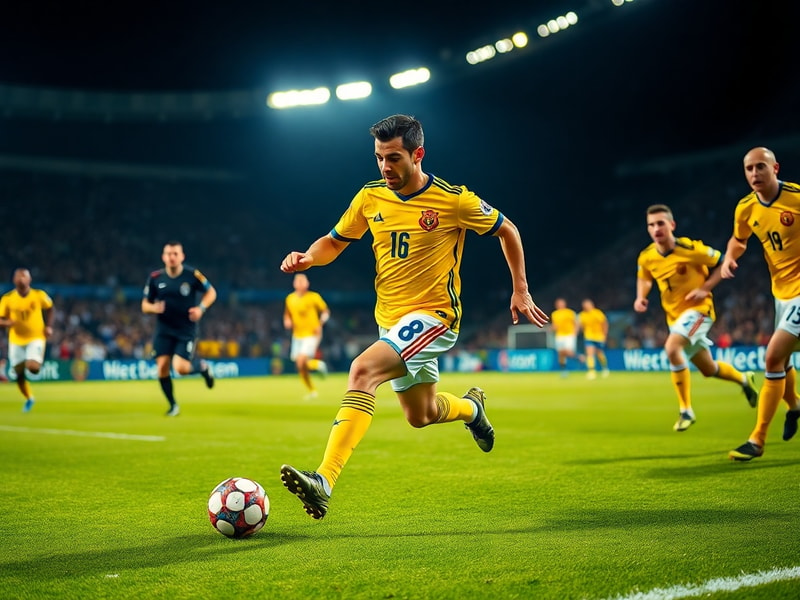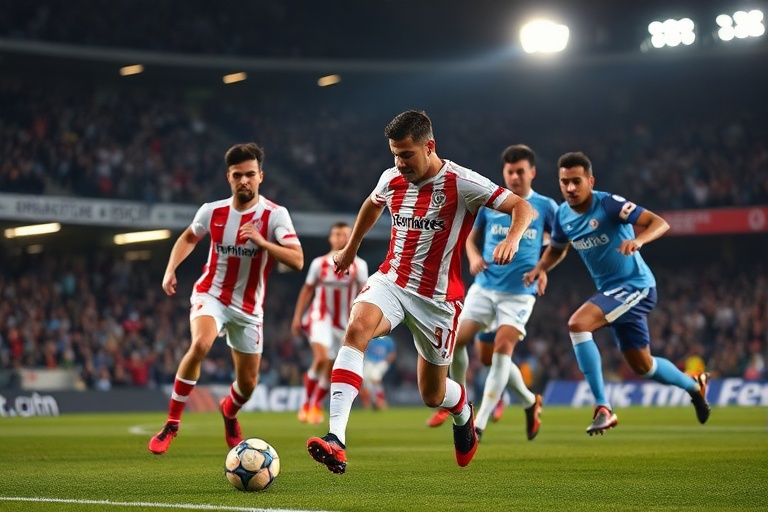
Football in Europe is often defined by more than just the 90 minutes on the pitch. It is a reflection of geography, economics, and cultural identity. Nowhere is this truer than in the clash between AS Monaco FC and Lille OSC (LOSC), two clubs whose rivalry extends beyond the French league into the broader narratives of ambition, investment, and footballing philosophy.
Monaco, with its principality’s glamour and financial muscle, has long been a beacon for high-profile transfers and managerial gambles. LOSC Lille, meanwhile, has carved out a reputation as a breeding ground for raw talent and tactical innovation. When these two teams meet, the contrast is not just tactical—it’s existential.
The Financial Divide and Its Impact on Football
Monaco’s ownership by Russian billionaire Dmitry Rybolovlev has allowed the club to operate with a level of financial freedom unmatched by most French clubs. This has led to a model where success is often measured in short-term splashes—signing young stars like Kylian Mbappé or Radamel Falcao before selling them for record fees. The club’s stadium, the Stade Louis II, is a jewel in the heart of the Mediterranean, a symbol of Monaco’s unique position between sport and spectacle.
LOSC Lille, by contrast, has built its identity through a different kind of financial strategy. Owned by Merlyn Partners and led by sporting director Luís Campos, the club has embraced a model of player development and astute recruitment. Lille’s stadium, Stade Pierre-Mauroy, is a modern, multi-purpose venue designed for both football and major events, reflecting its role as a cultural hub in northern France.
The financial disparity between the two clubs is stark, but it speaks to a broader European footballing divide. Monaco’s model is one of luxury and volatility, while Lille’s is rooted in sustainability and growth. When they face off, it’s not just a match—it’s a collision of philosophies.
Tactical Contrasts on the Pitch
Monaco’s style under recent managers has often been fluid and attacking, prioritizing individual brilliance and quick transitions. Under Leonardo Jardim, the team relied on a high press and wing play, while under Niko Kovač, they shifted to a more structured 4-4-2. Their success has often depended on the ability to integrate world-class talent into a cohesive system.
Lille, under managers like Christophe Galtier and Jocelyn Gourvennec, has favored a more pragmatic approach. Galtier’s tenure was defined by a disciplined 4-2-3-1 formation, with an emphasis on defensive solidity and counter-attacking football. The club’s ability to nurture players like Eden Hazard and Rafael Leão has made it a model for development in Ligue 1.
The tactical battle between Monaco and Lille is a study in contrasts. Monaco’s flair and unpredictability clash with Lille’s organization and structure. When these two styles meet, the result is often a chess match where every move has consequences.
A Rivalry with Historical Weight
The rivalry between Monaco and Lille is not one steeped in decades of tradition. Unlike derbies such as Marseille vs. Paris Saint-Germain, this fixture lacks a deep historical animosity. Instead, it is a rivalry forged in the modern era, defined by ambition and the pursuit of Ligue 1 glory.
Monaco’s dominance in the early 2010s, with Ligue 1 titles in 2016-17 and consistent Champions League runs, put them on a collision course with Lille, who re-emerged as title contenders under Galtier. The two clubs have traded blows in recent years, with Lille’s 2020-21 title win serving as a reminder that financial power does not always translate to success.
Their meetings are often high-stakes affairs, whether in the league or cup competitions. In the 2021-22 season, their head-to-head matches were decided by fine margins, with Lille’s defensive resilience often canceling out Monaco’s attacking prowess. These games are not just about points—they are about proving which model works best in modern French football.
Cultural and Geographical Context
Monaco’s identity is inseparable from its location. The principality is a playground for the ultra-wealthy, a place where football intersects with luxury yachts and high-end casinos. The club reflects this, with a fanbase that includes locals and expatriates from across Europe. The Stade Louis II, with its iconic pitch-side swimming pool, is a testament to the club’s unique setting.
Lille, on the other hand, is a club rooted in the industrial north of France. The city has a working-class heritage, and LOSC’s fanbase is deeply connected to the community. The club’s rise under Galtier was a source of pride for the region, a reminder that football can be a vehicle for social mobility and local pride.
The cultural divide between Monaco and Lille is palpable. One club is a symbol of opulence, the other of resilience. When they meet, it’s more than a football match—it’s a clash of identities.
Key Matches and Moments
Over the past decade, Monaco and Lille have produced several memorable encounters. Here are some of the most significant:
- Lille 1-0 Monaco (April 2021) – A crucial win in Lille’s title-winning season, with a late goal from Burak Yılmaz sealing the points.
- Monaco 3-1 Lille (November 2020) – Wissam Ben Yedder’s brace inspired Monaco to a dominant victory at home.
- Lille 2-1 Monaco (February 2022) – A dramatic late winner from Jonathan David kept Lille’s title hopes alive.
- Monaco 2-1 Lille (April 2017) – Monaco’s attacking prowess overwhelmed Lille in a high-scoring thriller.
These matches highlight the ebb and flow of the rivalry. Lille’s resilience often frustrates Monaco’s flair, while Monaco’s individual brilliance can break down Lille’s disciplined structure. The psychological edge in these games is often as important as the tactical one.
The Global Perspective
While Monaco and Lille are both French clubs, their rivalry plays out on a global stage. Monaco’s ability to attract international talent makes it a club with a global fanbase, particularly in Africa, the Middle East, and Asia. The club’s Champions League runs have given it a platform beyond Ligue 1’s borders.
Lille, meanwhile, has gained recognition for its development model, which has produced players who go on to succeed in Europe’s top leagues. The club’s success has made it a case study for other mid-sized clubs looking to compete with financial giants.
This rivalry is watched not just in France, but worldwide. Scouts, analysts, and fans alike study these matches for clues about the future of European football. Will financial power always prevail? Can a club built on development challenge the status quo?
The Future of the Rivalry
As both clubs look to the future, the rivalry shows no signs of fading. Monaco’s new ownership under an American consortium could bring further changes to its financial model, while Lille’s continued focus on youth development ensures it remains a force in Ligue 1.
The next chapter of this rivalry will be defined by sustainability versus spectacle. Monaco’s ability to balance financial ambition with on-field success will be tested, while Lille’s model of development will face new challenges as it seeks to maintain its place among France’s elite.
One thing is certain: when these two clubs meet, the football is always compelling. Whether in a league decider or a cup upset, the clash between Monaco and Lille is a reminder that football is as much about storylines as it is about results.
Conclusion
The Monaco vs. LOSC rivalry is more than a local footballing feud. It is a microcosm of the broader trends shaping European football—financial disparity, tactical innovation, and the balance between ambition and sustainability. Monaco represents the allure of the quick fix, while Lille embodies the rewards of patience and planning.
As the two clubs continue to evolve, their meetings will remain must-watch fixtures in Ligue 1. For fans, neutrals, and analysts alike, this rivalry offers a lens through which to view the future of the beautiful game.
One thing is clear: in the world of football, the clash between Monaco and Lille is a story that refuses to fade.