From Pink City to Renaissance Gem: The Route Between Toulouse and Lyon
The 500-kilometer journey between Toulouse and Lyon is more than a travel route—it’s a passage through the heart of France’s cultural and industrial evolution. This corridor connects two of the country’s most vibrant cities, each with a distinct identity shaped by history, migration, and innovation. Toulouse, often called “La Ville Rose” for its salmon-hued brick architecture, sits in the southwest as a hub for aerospace and Occitan heritage. Lyon, further northeast, rises as a gastronomic capital with Roman roots and a modern reputation for technology and design.
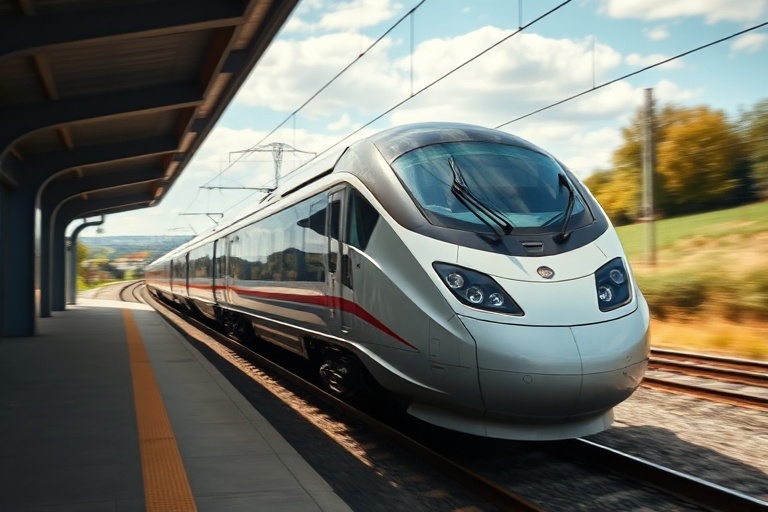
The connection between these cities has evolved from medieval pilgrimage paths to a modern high-speed rail network that now completes the trip in under four hours. This transformation reflects broader changes in European transportation, urban development, and cultural exchange. As France redefines its national identity in an era of globalization, the Toulouse–Lyon axis serves as a microcosm of the nation’s shifting priorities—balancing tradition with progress, regional pride with national integration.
A Brief History of Movement Between Toulouse and Lyon
Long before the TGV, travelers relied on stagecoaches, barges along the Canal du Midi, and later, the expansion of France’s railway system in the 19th century. The opening of the Bordeaux–Sète line in 1857 began to tie Toulouse to national networks, while Lyon’s position as a rail hub near the Swiss border made it a strategic gateway to Central Europe. By the 1880s, the PLM (Paris-Lyon-Marseille) railway dominated the east-west corridor, linking Lyon to Marseille and beyond.
Yet, the direct Toulouse–Lyon route remained fragmented until the mid-20th century. A unified connection only emerged with the construction of the “Ligne des Causses” in the 1930s and later electrification in the 1980s. The real turning point came in 2001 with the inauguration of the LGV Méditerranée, a high-speed line that sliced travel time from six hours to under four. This wasn’t just an engineering feat—it was a cultural one, shrinking distances and enabling daily commutes, cultural exchange, and economic integration across southern and eastern France.
Economic and Urban Ripples of a Connected South and East
The rail link has catalyzed growth in mid-sized cities like Clermont-Ferrand, Valence, and Nîmes, turning them into commuter satellites of larger metropolitan economies. Toulouse’s aerospace cluster—home to Airbus and CNES—now draws talent from Lyon’s tech and biotech sectors, creating a brain circulation that rivals Paris’s dominance. Meanwhile, Lyon’s gastronomic and design industries benefit from easier access to Toulouse’s Mediterranean culture and proximity to Spain.
This connection has also made the region more attractive to international investors. In 2022, the European Investment Bank approved a €300 million loan to expand rail capacity between Toulouse and Lyon, citing its role in supporting a “polycentric Europe” where mid-sized cities drive innovation. Such investments underscore a strategic shift: France is moving away from Paris-centric growth toward a network of dynamic regional capitals.
- Toulouse: Aerospace, Occitan culture, university-driven innovation
- Lyon: Gastronomy, biotech, UNESCO-listed Renaissance districts
- Intermediate hubs: Clermont-Ferrand (tyres and volcanoes), Valence (logistics and wine), Nîmes (Roman heritage and Mediterranean trade)
Cultural Exchange Across the Midi and Rhône
More than an economic corridor, the Toulouse–Lyon rail line carries a cultural payload. The Occitan language, once suppressed, now finds echoes in Toulouse’s music scene and Lyon’s immigrant communities from southern France. The route passes through landscapes where Provençal and Languedoc traditions blend—vineyards of the Côte-Rôtie give way to the aromatic herbs of Provence, while the Pyrenees fade into the Massif Central’s volcanic peaks.
Cuisine, too, travels this route. A passenger boarding in Toulouse might enjoy a cassoulet, while the same traveler disembarks in Lyon to be greeted by quenelles and saucisson brioché. Food festivals like the Fête de la Gastronomie in Lyon and Toulouse’s Marché de Victor Hugo now collaborate, promoting a shared culinary identity that transcends regional borders. Even fashion reflects this exchange—Lyon’s silk ateliers draw inspiration from Toulouse’s bohemian tailoring, creating a hybrid aesthetic seen in boutiques from Avignon to Annecy.
“The rail line doesn’t just connect cities—it stitches cultures together. You can leave a Catalan festival in Toulouse and arrive at a Lyonnais silk-weaving demonstration the same afternoon. That’s the power of proximity.”
—Dr. Élise Moreau, Cultural Geographer at Université Jean Moulin Lyon 3
The Future: Sustainability, Speed, and Social Equity
France’s rail future is green, ambitious, and unevenly distributed. While the Toulouse–Lyon line has reduced air travel between the two cities by 28% since 2018, critics point to uneven ticket pricing and limited late-night service that excludes shift workers and artists. The French government’s 2030 rail plan aims to double passenger capacity on this corridor using hydrogen-powered trains on secondary lines and expanding night trains to Lyon from Toulouse by 2026.
There’s also a push for “slow rail” tourism—heritage lines and scenic routes that connect smaller towns, offering an alternative to the TGV’s speed. Organizations like Rails et Patrimoine are restoring vintage trains to run between Carcassonne and Lyon, promoting heritage tourism and rural revitalization. This dual approach—high-speed efficiency for business and slow travel for culture—could redefine regional identity in a post-carbon Europe.
As climate goals intensify, the Toulouse–Lyon corridor becomes a test case for sustainable mobility in Europe. If successful, it may serve as a model for other mid-range European routes—such as Milan to Barcelona or Prague to Vienna—where rail could replace short-haul flights and reduce highway congestion.
Why This Route Matters Beyond France
From a global perspective, the Toulouse–Lyon connection exemplifies how rail can reconfigure regional power dynamics. In an era of megacities and digital nomadism, it offers a counter-narrative: that mid-sized cities, when well-connected, can become engines of innovation and culture. This model is being studied by urban planners in India, where the Delhi–Kolkata corridor faces similar challenges of fragmentation and inequality.
Moreover, the route highlights France’s role in Europe’s energy transition. With nuclear, wind, and now hydrogen-powered trains on the horizon, the country is positioning itself as a leader in low-carbon transport. The Toulouse–Lyon line is not just a domestic success story—it’s a case study for sustainable regional development worldwide.
As travelers step off the TGV in Lyon, they carry more than luggage. They carry the legacy of Occitan troubadours, the aroma of saucisson, and the quiet promise of a continent moving—slowly, steadily—toward a greener, more connected future.
Conclusion: A Living Corridor of Progress and Memory
The Toulouse–Lyon rail line is more than infrastructure. It’s a narrative of France’s past, present, and future—a bridge between the Mediterranean and the Alps, between industrial innovation and culinary tradition, between a region’s pride and Europe’s collective ambition. As high-speed rail becomes the backbone of 21st-century mobility, this corridor stands as a testament to what happens when speed meets soul.
For travelers, commuters, and dreamers alike, the journey between Toulouse and Lyon is more than a trip. It’s an invitation—to explore, to connect, and to belong to a landscape where history and progress ride side by side.