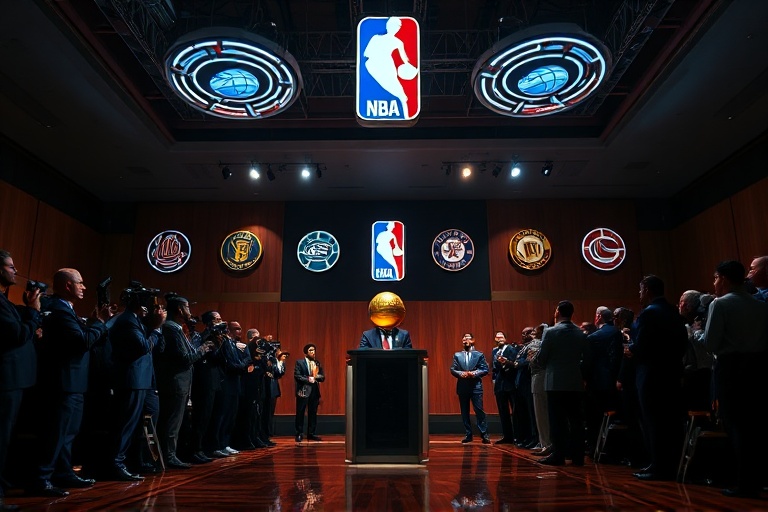
The NBA Draft Lottery represents one of the league’s most intriguing mechanisms—a blend of strategy, probability, and high-stakes suspense. Each May, the 14 non-playoff teams enter a lottery where only the top four picks are determined by chance. The remaining slots follow reverse-order standings, ensuring that even the weakest teams face uncertainty in their pursuit of elite talent.
This system was introduced in 1985 to prevent tanking and maintain competitive balance. Before then, the worst team automatically received the first overall pick. Critics argue the current model still incentivizes losing, while supporters praise its effort to distribute opportunity more fairly across the league. As teams like the Orlando Magic and San Antonio Spurs have shown, landing a franchise-altering player early can redefine a franchise’s destiny.
The Lottery Process: Rules, Odds, and Historical Shifts
The NBA Draft Lottery uses a weighted system where teams with worse records have higher chances of securing top selections. For example, a team with the worst record has a 14% chance at the first pick, while a team with the sixth-worst record has just a 6% chance. These odds are designed to discourage deliberate underperformance while still allowing for unpredictability.
In 2019, the NBA revised the lottery format to reduce tanking incentives. The top three picks are now drawn separately, with the worst team having just a 14% chance to land the first pick—down from 25% under the old system. This change aimed to make the lottery more competitive while still giving lower-tier teams a realistic shot at top talent.
Since its inception, the lottery has produced memorable moments. In 2008, the Chicago Bulls landed Derrick Rose with the first overall pick, sparking a franchise resurgence. Conversely, the 2013 lottery saw the Cleveland Cavaliers fall from the top spot despite having the worst record, a twist that reinforced the system’s randomness. These outcomes highlight how luck remains a defining factor in team-building strategies.
Key Components of the Lottery System
- Draft Order Determination: The 14 non-playoff teams enter the lottery, with their odds based on regular-season records.
- Lottery Draw Mechanics: Four balls are randomly selected from a pool of 1,000 combinations, assigning the top three picks.
- Remaining Picks: Picks 5 through 14 are assigned in reverse order of regular-season standings.
- Lottery Protection: Teams can trade draft picks, complicating the process as franchises maneuver for long-term advantages.
How Teams Strategize Around the Lottery
General managers and front offices spend months preparing for the lottery, analyzing prospects and projecting team needs. While luck plays a role, smart organizations leverage analytics and player development to maximize their chances of success. The Houston Rockets, under Daryl Morey’s leadership, famously prioritized statistical modeling to identify undervalued talent—most notably James Harden, who was drafted third in 2009.
For teams stuck in the middle of the lottery, the challenge is balancing patience with ambition. The Atlanta Hawks, for instance, traded multiple future picks to move up in the 2016 draft, securing Taurean Prince. Such maneuvers require foresight, as overcommitting to a single draft can limit future flexibility. Meanwhile, the Toronto Raptors’ 2018 lottery win—landing Deandre Ayton—showed how even a small shift in probability can change a franchise’s trajectory.
Injuries and player development also factor into lottery strategy. A team drafting a high-potential prospect who struggles with injuries may find itself back in the lottery the following year. The Sacramento Kings’ selection of Marvin Bagley III in 2018 remains a cautionary tale, as his inconsistent play and injury history have raised questions about the team’s long-term vision.
The Debate Over Tanking and League Integrity
The NBA’s lottery system exists in part to discourage tanking—the deliberate underperformance to secure higher draft odds. Yet critics argue that the league’s incentives still encourage losing. The Minnesota Timberwolves’ 2015-16 season, where they lost 29 of their final 33 games, drew scrutiny as a possible tanking effort. Similarly, the Philadelphia 76ers’ infamous “Process” era, where they prioritized losing to rebuild, sparked league-wide discussions about competitive integrity.
In response, the NBA has implemented measures like the “Stepien Rule,” which prevents teams from trading away first-round picks in consecutive years, and stricter tampering enforcement. Commissioner Adam Silver has also floated ideas like a modified lottery format where the worst teams receive lower odds, though no changes have been implemented yet.
Yet the lottery remains a vital tool for parity. The Milwaukee Bucks’ 2014 lottery win—landing Giannis Antetokounmpo—proved that even mid-tier teams can strike gold. As the league evolves, the balance between chance and strategy will continue to shape the NBA’s competitive landscape.
What’s Next for the NBA Draft Lottery?
As the NBA approaches its next draft cycle, the lottery remains a focal point for fans and analysts alike. With the 2024 draft featuring standout prospects like Victor Wembanyama’s successor and other generational talents, the stakes have never been higher. Teams will once again weigh the risks of trading picks against the potential rewards of landing a franchise cornerstone.
For fans, the lottery is a moment of pure drama—a chance to dream about the next superstar joining their favorite team. Whether it’s a small-market squad like the Oklahoma City Thunder or a storied franchise like the Los Angeles Lakers, the lottery embodies the unpredictability that makes sports so compelling.
As the NBA continues to refine its draft process, one thing is certain: the lottery will remain a defining feature of the league’s annual calendar, blending hope, strategy, and sheer luck into a single unforgettable night.
For more insights into NBA draft trends and franchise strategies, visit our Sports and Analysis sections.