Parma vs Roma: Tactical History and Key Battles Explained
Few rivalries in Italian football carry the weight of Parma versus Roma. This isn’t a clash of giants in the traditional sense, but rather a meeting of contrasting identities—Parma’s underdog grit against Roma’s capital-city swagger. The two clubs meet on the pitch with distinct histories, tactical approaches, and legacies that add layers to every encounter.
The Historical Rivalry: More Than Just Points
While Parma and Roma aren’t considered traditional rivals in the way Juventus and Inter are, their meetings over the decades have produced memorable moments. Parma, founded in 1913, spent much of its early history in the lower leagues before rising to prominence in the 1990s under the guidance of managers like Nevio Scala and Arrigo Sacchi. Their golden era included two UEFA Cup wins and a Coppa Italia title, often fueled by a mix of Italian talent and South American flair.
Roma, on the other hand, was established in 1927 and has long been the pride of the capital. The Giallorossi’s identity is tied to local pride, with legends like Francesco Totti embodying the club’s connection to its city. When these two sides meet, it’s not just about league position—it’s about narrative. Parma represents the plucky outsider punching above its weight, while Roma embodies the enduring force of a historic club fighting for relevance.
Since their first Serie A meeting in 1951, the two clubs have clashed over 100 times in all competitions. Roma has historically held the edge in terms of wins, but Parma’s resilience in cup competitions—particularly in the 1990s—has left a mark on their rivalry.
Tactical Approaches: Pragmatism vs. Passion
One of the most fascinating aspects of Parma vs. Roma is the tactical contrast. Parma, under managers like Daniele Zoratto or Luigi Cagni, often employs a pragmatic 4-4-2 or 4-3-3 system. Their style is built on defensive solidity, quick transitions, and exploiting set-pieces—a hallmark of their golden era. The club’s emphasis on organization and collective effort has allowed them to punch above their weight against more technically gifted opponents.
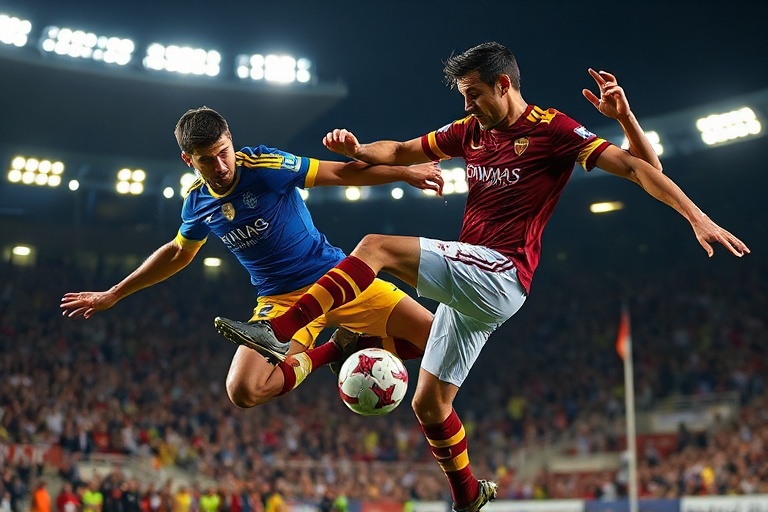
Roma, particularly under managers like Luciano Spalletti or José Mourinho, tends to favor a more fluid, possession-based approach. The Giallorossi often line up in a 4-3-3 or 3-4-3, prioritizing midfield control and vertical passing to unlock defenses. Their attacking style relies on wingers stretching play and a creative No. 10 dictating tempo. When these two systems collide, the result is often a tactical chess match—Parma looking to frustrate, Roma searching for the breakthrough.
In recent years, Parma’s tactical identity has shifted slightly under Franco Colomba, blending defensive discipline with more direct attacking options. Roma, meanwhile, has experimented with high pressing under Daniele De Rossi, adding another layer to their approach. These tactical evolutions make each Parma vs. Roma matchup unpredictable in execution, even if the underlying philosophies remain distinct.
Key Tactical Battles
- Midfield Duel: Roma’s creative midfielders—whether it’s Lorenzo Pellegrini or Paulo Dybala—often face off against Parma’s industrious midfielders like Valerio Verre or Jacopo Da Riva. The battle for midfield control can dictate the tempo of the game.
- Wing Play: Roma’s reliance on wingers like Nicolo Zaniolo or Bryan Cristante forces Parma’s full-backs into defensive duties, while Parma’s own wingers—such as Younes Kamal—look to exploit spaces behind Roma’s backline.
- Set-Pieces: Parma’s strength in dead-ball situations has often been a deciding factor in tight matches. Roma, aware of this, must prioritize defensive organization during set-piece phases.
Memorable Matches and Turning Points
Over the years, Parma vs. Roma has delivered dramatic moments that transcend mere points. One of the most iconic clashes came in the 2001 Coppa Italia final, where Parma secured a 2-1 aggregate victory over Roma. The match was a showcase of Parma’s defensive resilience and tactical discipline, with Hidetoshi Nakata and Fabio Cannavaro controlling the midfield.
In Serie A, a 2018 encounter at the Stadio Olimpico stands out. Roma, fighting for a top-four finish, thrashed Parma 4-1 in a match that showcased their attacking prowess. Lorenzo Insigne scored a brace, while Aleksandar Kolarov’s long-range strike added to the Giallorossi’s dominance. That result was a microcosm of Roma’s potential when at their best—fluid, creative, and overwhelming.
Conversely, Parma’s 2020 Coppa Italia quarterfinal win over Roma was a statement. The Crociati, then in Serie B, defeated the Serie A side 2-1 on aggregate, proving that even in lower divisions, Parma’s tactical acumen and fighting spirit could overcome higher-ranked opponents. That run included a dramatic 2-1 home victory in the first leg, with a late winner from Gervinho sealing the upset.
What’s Next for Both Clubs?
As both clubs look ahead, their paths diverge significantly. Roma is in a phase of transition, rebuilding under new sporting director Tiago Pinto and manager Daniele De Rossi. The focus is on integrating youth talent like Pellegri and consolidating their place in Serie A’s upper echelon. Their ambition is to return to Champions League football, and matches against Parma—even in lower-stakes scenarios—are opportunities to test new systems and players.
Parma, meanwhile, is navigating the challenges of Serie A after promotion in 2021. Under Colomba, the club has aimed to balance financial prudence with competitive ambition. Their goal is to establish themselves as a permanent top-flight side, and victories over Roma would be a statement of intent. The club’s recent investments in young Italian talent reflect a long-term vision, one that could see them become a consistent mid-table force.
For fans, a Parma vs. Roma matchup is never just about the standings. It’s about the clash of cultures—Parma’s blue-collar resilience against Roma’s capital-city glamour. Whether it’s a league fixture or a cup tie, these matches are a reminder that football’s beauty lies in its unpredictability and the stories it creates.
As both clubs continue to evolve, one thing remains certain: when Parma and Roma meet, the pitch becomes a stage for narratives far bigger than the result itself.
For more insights into Italian football’s tactical landscape, visit our Sports section. To explore historical club profiles, check out our Analysis category.