Paulo Dybala: The Argentine Jewel Who Redefined Modern Football
Paulo Dybala’s journey from Rosario to the world’s grandest football stages reads like a script written for a dreamer. Born in 1993, he grew up in the working-class neighborhood of La Bajada in Argentina, where football wasn’t just a pastime—it was survival, identity, and aspiration. His rise wasn’t meteoric by accident. It was forged in relentless training sessions, under the watchful eyes of local coaches, and fueled by a rare blend of creativity and composure.
Dybala’s technical grace and playmaking intelligence soon caught the attention of Argentine clubs. At Instituto de Córdoba, he made his professional debut at 17, becoming the youngest foreign player in Argentine Primera División history. His dribbling, close control, and eye for the final ball were reminiscent of a generation-defining talent. By 2012, Palermo secured his services in Italy, marking the beginning of a European odyssey that would redefine both his career and modern football’s tactical evolution.
While Dybala never played for the Argentinian national team at youth level, his senior debut in 2015 under Gerardo Martino felt like a coronation of sorts. Though overshadowed initially by Lionel Messi’s shadow, Dybala carved his own identity—a versatile forward capable of playing as a false nine, second striker, or wide playmaker. His partnership with Cristiano Ronaldo at Juventus elevated his profile globally, turning him into a symbol of stylish, intelligent football in an era dominated by physicality.
The Juventus Years: Crafting a Legend Amidst Turmoil
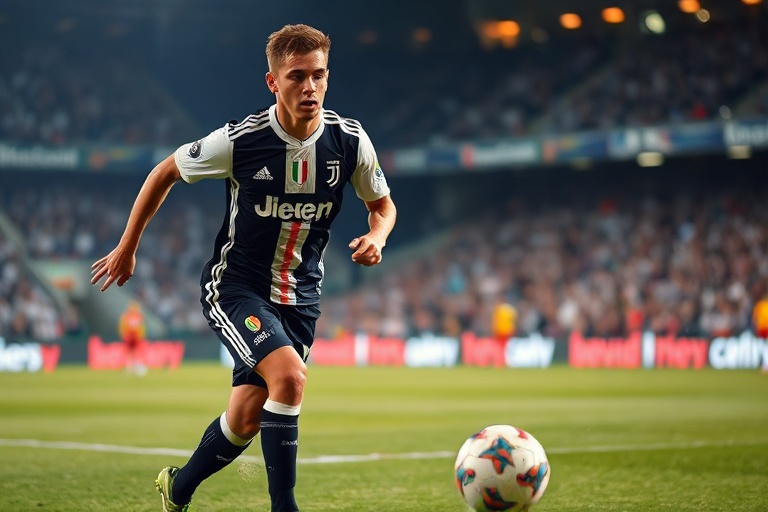
Dybala joined Juventus in 2015 for €32 million, a fee that seemed speculative at the time. Yet within two seasons, he became a pivotal figure in one of Europe’s most successful teams. Under Massimiliano Allegri, Dybala thrived in a fluid 4-2-3-1 system, often operating between the lines. His telepathic link with Paul Pogba and later Miralem Pjanić turned Juventus into a machine of positional play, where quick one-twos and third-man runs became signature moves.
His 2017–18 season was particularly sublime. Dybala scored 22 goals and provided 10 assists in Serie A, finishing as the league’s top assist provider. That campaign included a breathtaking solo goal against Barcelona in the Champions League, a display of dribbling and acceleration that silenced Europe’s skepticism. Yet, despite his brilliance, Dybala’s time in Turin was marked by inconsistency in big games and a narrative that he was “not clutch enough.” The arrival of Cristiano Ronaldo in 2018 shifted the dynamics. While Ronaldo took center stage, Dybala adapted, often playing deeper, orchestrating attacks, and proving his tactical versatility.
The departure of Ronaldo in 2022 left a void, but Dybala remained a cornerstone. His contract dispute, public fallout with the club, and eventual free transfer to Roma in 2022 marked a turning point—not just for him, but for football’s emotional economy. It highlighted how modern stardom is as much about performance as it is about perception, media narratives, and self-worth.
Roma and the Reinvention: From Outcast to Olympian
Joining Roma under José Mourinho in 2022 was a gamble on both sides. Dybala, labeled as past his prime, needed redemption. Roma needed a creative spark. The reunion with former Juventus teammate Leonardo Spinazzola and the guidance of Mourinho—a manager known for revitalizing careers—proved transformative. Dybala rediscovered his form in Serie A, forming a lethal trio with Tammy Abraham and Lorenzo Pellegrini.
His impact was immediate. By the end of the 2022–23 season, he had scored 11 goals and provided 7 assists, helping Roma finish sixth and secure Champions League football. But it was the 2023–24 Europa League campaign where Dybala truly etched his name in Roman history. His performances in the knockout stages—especially the quarter-final against Brighton—showcased his maturity. He became a leader, a playmaker, and a scorer when it mattered most. In the final against Sevilla, his calm finish in the penalty shootout sealed Roma’s first major European trophy in 14 years.
Dybala’s journey in Rome transcended football. It became a story of resilience, identity, and belonging. He embraced the city’s culture, learned Italian fluently, and connected with the fans, who affectionately dubbed him La Joya—The Jewel. His reinvention in Serie A proved that footballers, like artists, can evolve across decades without losing their essence.
Cultural Icon: Beyond the Pitch in a Global Game
Dybala’s influence extends beyond tactics and trophies. In Argentina, he is one of the few players outside the Messi-Ronaldo duopoly to achieve global recognition. His style—elegant, intelligent, and unhurried—reflects the philosophy of El Fútbol Arte, a tradition rooted in creativity and flair. This cultural resonance makes him a hero in a country where football is more than a sport; it’s a religion.
Off the pitch, Dybala has become a brand ambassador for global fashion houses like Gucci and Adidas, bridging the gap between athletic performance and high fashion. His personal style—confident yet understated—challenges the stereotype of the footballer as a mere athlete. In an era where social media dictates persona, Dybala maintains a dignified presence, sharing glimpses of his family life, charity work, and training routines.
Dybala’s multicultural background—his father is of Polish descent, and his mother is of Italian and Spanish heritage—has also shaped his global appeal. Fluent in Italian, Spanish, and English, he navigates European football’s complexities with ease, making him a bridge between Latin American passion and European professionalism.
In Argentina, he remains a symbol of diversity. As one of the few non-white players in a national team historically dominated by European-descended players, Dybala represents a changing landscape. His presence in the 2022 World Cup squad, though limited by injury, was a statement—football’s future is multicultural, multifaceted, and evolving.
Legacy and the Future: What’s Next for La Joya?
At 30 years old, Dybala is in the prime of his career, but the road ahead is uncertain. With a contract expiring in 2025, speculation about his next move is rife. Could he return to South America? Join another European giant? Or perhaps explore MLS or Saudi Pro League? His decision will be closely watched, not just for its sporting implications, but for its cultural significance.
What remains clear is that Dybala’s legacy is already secured. He redefined what it means to be a modern forward—not through brute force, but through intelligence, adaptability, and elegance. He proved that footballers can transcend club loyalties, media narratives, and even national expectations. In Turin and Rome, he didn’t just play football; he became part of the cities’ identities.
As football continues to globalize, Dybala’s journey offers a blueprint for the modern athlete: one who embraces reinvention, values cultural connection, and prioritizes substance over spectacle. Whether he lifts another trophy or fades into the sunset, his story will endure as a testament to the beauty of the beautiful game.
For aspiring footballers in Argentina, Italy, and beyond, Dybala is proof that talent alone isn’t enough—persistence, adaptability, and self-belief are the true currencies of success.