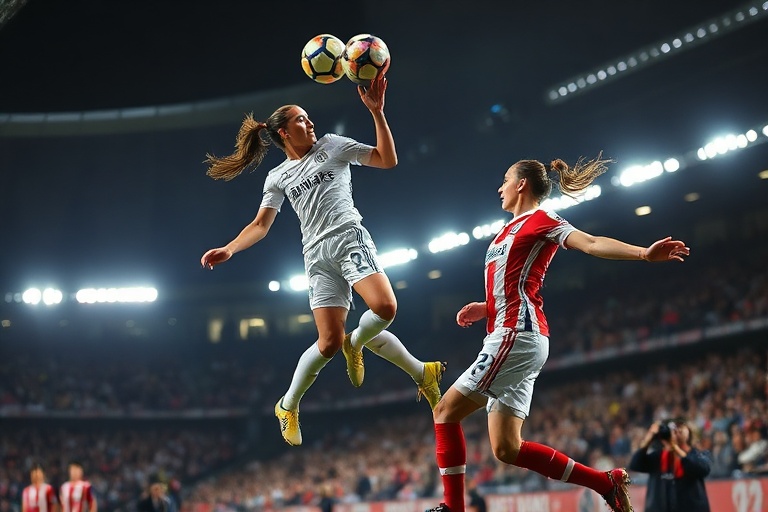
Madrid’s Derby Clásico: When Football Meets Feminism
The rivalry between Real Madrid C.F. Femenino and Atlético de Madrid Femenino isn’t just another fixture on the Spanish women’s football calendar. It’s a cultural clash played out in 90-minute battles, a reflection of Madrid’s dual identity as both the capital of Spain and a global stage for women’s rights. These matches carry weight beyond points and trophies. They shape narratives, challenge stereotypes, and redefine what it means to be a female athlete in the 21st century.
Since the official integration of women’s sections under LaLiga in 2019, the Madrid derby has evolved from local showdowns into spectacles broadcast to millions. The growth mirrors broader shifts in European football, where women’s leagues are no longer side attractions but central players in the sporting landscape. Yet, in Madrid, the derby remains uniquely charged—blending tradition, ambition, and a city’s fierce pride.
The Rise of Women’s Football in Spain’s Capital
Real Madrid entered the women’s football scene relatively late, launching its women’s team in 2014. Initially viewed as a symbolic gesture, the club’s investment gained momentum after UEFA’s Women’s Champions League expansion and LaLiga’s push to professionalize women’s football in 2019. By 2020, Real Madrid Femenino had clinched promotion to Spain’s top tier, Primera Iberdrola, and quickly established itself as a title contender.
Atlético Madrid Femenino, on the other hand, has been a cornerstone of Spanish women’s football since the 1980s. Known as Las Rojiblancas (The Red and Whites), the team has won multiple league titles and domestic cups. Their consistency contrasts with Real Madrid’s rapid ascent, creating a dynamic where tradition faces innovation. Atlético’s foundation in grassroots women’s football has given it a cultural depth that resonates across Spain, particularly in working-class neighborhoods.
Both clubs have leveraged their global brands to elevate women’s football. Real Madrid’s star-studded men’s team has drawn attention to its women’s side, while Atlético’s community-focused approach has strengthened its local fanbase. This dual strategy reflects Madrid’s identity as a city of contrasts—cosmopolitan yet rooted, modern yet traditional.
More Than a Game: The Cultural and Social Impact
The Madrid derby transcends sport. It intersects with broader conversations about gender, representation, and public perception. Women’s football in Spain has historically struggled for visibility, often confined to secondary slots in sports media. But recent years have seen a shift. LaLiga’s decision to broadcast women’s matches on mainstream channels and the rise of digital platforms have changed the narrative.
Yet challenges remain. Despite progress, women’s football still receives a fraction of the investment poured into men’s teams. Pay disparities, media coverage gaps, and stadium attendance figures are often cited as evidence of systemic inequality. The Madrid derby, however, offers a counter-narrative. When over 30,000 fans filled the Wanda Metropolitano in 2023 for a women’s match, it wasn’t just a sporting milestone—it was a cultural statement. Madrid’s women’s teams have become symbols of resistance, proving that passion and performance can break barriers.
The derby also highlights generational shifts. Younger fans view these matches not as exceptions but as the norm. Social media amplifies the reach of players like Esther González (Real Madrid) and Ainhoa Moraza (Atlético), who have become role models for girls dreaming of professional careers. Their visibility on platforms like Instagram and TikTok has redefined athlete-fan relationships, making heroism accessible and immediate.
Key Moments in the Madrid Derby
The rivalry between Real Madrid and Atlético Femenino has produced unforgettable moments—some dramatic, others historic. Here are a few that have defined the fixture:
- 2021: Real Madrid’s First Win (1-0) – A tense, tactical battle at Ciudad Real Madrid ended with a late penalty from Esther González, silencing the Atlético faithful. The result marked Real’s first league victory over their rivals and announced their arrival as serious contenders.
- 2022: Atlético’s Comeback at the Metropolitano (3-2) – Trailing 2-0 at halftime, Atlético staged a dramatic second-half recovery, with goals from Sheila García and Ludmila da Silva sealing a nervy win. The match drew a record crowd for a women’s league game in Spain.
- 2023: The Supercopa Final (Real Madrid 3-1 Atlético) – Played in Almería, this was the first time the Madrid derby reached a major final. Real Madrid’s clinical finishing underlined their tactical evolution, while Atlético’s defensive frailties exposed growing pains in their title defense.
- 2024: The League Decider (2-2 Draw) – A high-scoring stalemate kept the title race alive until the final day. The draw showcased both teams’ attacking quality but also highlighted the physical and mental toll of a grueling season.
These matches are more than records—they’re chapters in a larger story about ambition, rivalry, and the slow but steady dismantling of outdated norms. Each derby adds layers to the rivalry, making it one of the most compelling narratives in women’s football today.
What’s Next for Madrid’s Women’s Football?
The future looks bright, but the path forward isn’t without obstacles. Both clubs face the challenge of sustaining growth without diluting the authenticity that makes the derby special. For Real Madrid, the focus is on building a squad that can compete at the highest European level, particularly in the Women’s Champions League. Their recent signings, including Brazilian midfielder Geyse Ferreira, signal serious intent.
Atlético, meanwhile, is striving to reclaim its domestic dominance while developing homegrown talent. Their youth academy, La Academia, has become a pipeline for both the first team and the Spanish national squad. The club’s emphasis on sustainability contrasts with Real’s star-driven approach, offering a blueprint for long-term success.
Beyond the pitch, both clubs are exploring ways to deepen fan engagement. Initiatives like women’s-only matchdays, community clinics, and educational programs are bridging gaps between the teams and their neighborhoods. These efforts reflect a broader trend in football: the recognition that clubs are more than sporting entities—they are cultural institutions.
The Madrid derby is a microcosm of women’s football’s journey in Europe. It’s a story of progress, setbacks, and relentless passion. As the rivalry continues to captivate audiences, it also reminds us that the most powerful narratives aren’t just about winning—they’re about changing the game.
For fans, analysts, and aspiring athletes alike, the Madrid derby offers more than entertainment. It’s a lesson in resilience, a celebration of community, and a testament to the power of sport to redefine society. In a city where history is written in stone, these matches are carving new paths—one goal at a time.