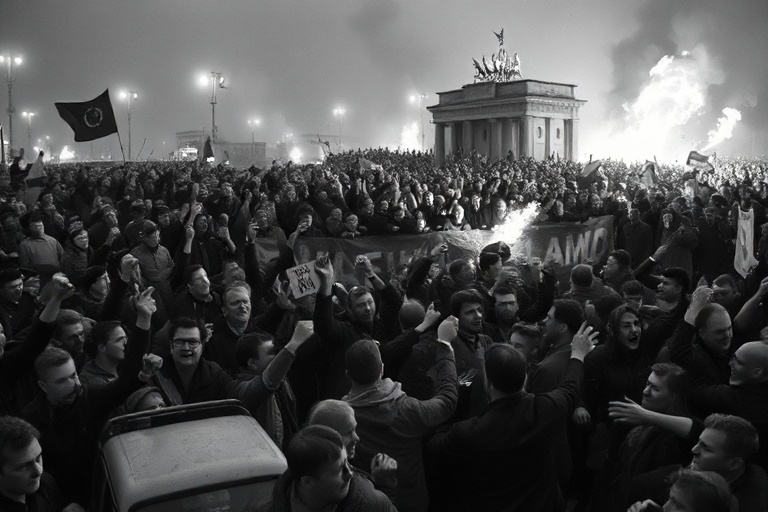
The word “revolution” carries weight across languages and cultures. It evokes images of upheaval, transformation, and the relentless push against stagnation. Whether through political upheaval, technological breakthroughs, or social awakening, revolutions redefine the boundaries of what is possible. These moments are not isolated events but rather the culmination of years—or even decades—of simmering discontent, unmet aspirations, and the courage to challenge the status quo.
From the streets of Cairo during the Arab Spring to the digital forums where hacktivists challenge authoritarian regimes, revolutions manifest in countless forms. Some are violent, others peaceful; some are sudden, while others evolve gradually over time. What unites them is their power to alter the trajectory of societies, sometimes permanently. This article explores the multifaceted nature of revolutions, examining their origins, their global impact, and the enduring legacies they leave behind.
The Anatomy of Revolution: What Drives Change?
Revolutions do not occur in a vacuum. They are the result of deep-seated systemic failures, economic disparities, or cultural oppression. History shows that revolutions often emerge when a critical mass of people concludes that incremental change is no longer viable. The French Revolution of 1789, for instance, was fueled by the Third Estate’s frustration with feudal privileges and the monarchy’s inability to address widespread hunger and inequality.
Today, technological revolutions follow a similar pattern. The digital revolution of the late 20th and early 21st centuries was not merely about faster computers or the internet—it was about dismantling traditional gatekeepers of information. Platforms like social media gave voice to marginalized communities, enabling movements such as #MeToo and Black Lives Matter to gain unprecedented traction. These shifts demonstrate that revolutions, whether political or technological, are fundamentally about power: who holds it, who challenges it, and who ultimately wields it.
Several key factors typically precede a revolution:
- Economic strain: When livelihoods are threatened by inflation, unemployment, or resource scarcity, people become more receptive to radical alternatives.
- Political repression: Authoritarian regimes that stifle dissent often create the very conditions that fuel rebellion.
- Cultural awakening: Art, literature, and education can inspire collective consciousness, making people question long-held norms.
- Trigger events: A single incident—such as the self-immolation of Mohamed Bouazizi in Tunisia in 2010—can serve as a catalyst for broader unrest.
These elements rarely act alone. Instead, they combine in unpredictable ways, creating the volatile mix that ignites revolution.
Revolutions in the Digital Age: A New Frontier
The internet has democratized revolution in ways previous generations could scarcely imagine. Social media platforms act as accelerants, allowing protests to organize in real time and injustices to be broadcast globally within seconds. The Arab Spring, which began in 2010, demonstrated the power of digital tools in mobilizing millions. Platforms like Twitter and Facebook became virtual town squares where dissent could flourish despite state censorship.
Yet the digital revolution is not without its contradictions. While it empowers activists, it also enables governments to surveil and suppress dissent. Authoritarian regimes have adapted by deploying cyber warfare, internet shutdowns, and troll farms to undermine opposition movements. China’s Great Firewall and Russia’s internet censorship laws are modern tools of counter-revolution, designed to stifle the very forces that once promised liberation.
Beyond politics, digital revolutions are reshaping industries. The rise of blockchain technology, for example, challenges traditional financial systems by decentralizing control over currency and transactions. Cryptocurrencies like Bitcoin represent a financial revolution, one that questions the authority of central banks and governments. Similarly, the open-source software movement has revolutionized how technology is developed, prioritizing collaboration over proprietary control.
These digital upheavals highlight a crucial distinction: revolutions are no longer confined to physical spaces. They now unfold in code, algorithms, and data flows, making them both more accessible and more elusive.
Cultural Revolutions: The Quiet Transformation of Values
Not all revolutions are fought with barricades or barricaded servers. Some unfold in the realm of culture, where ideas and identities are contested and redefined. The counterculture movements of the 1960s, for instance, challenged traditional norms around gender, race, and authority. Music, fashion, and literature became vehicles for dissent, influencing generations to question the established order.
Today, cultural revolutions are often tied to identity politics. Movements like LGBTQ+ rights, feminism, and anti-racism have gained global momentum by redefining social hierarchies. The #MeToo movement, which exposed systemic sexual harassment and assault, reshaped workplace policies and public discourse around consent and power. These shifts are revolutionary because they challenge deeply entrenched beliefs about who deserves respect, recognition, and rights.
Cultural revolutions also thrive in unexpected places. K-pop, a genre once dismissed as a niche interest, has become a cultural force that transcends borders. Bands like BTS have leveraged their global fanbase to address issues like mental health and youth empowerment, proving that pop culture can be a platform for social change. Similarly, the global popularity of anime and manga has fostered new communities that challenge Western-centric narratives about art and storytelling.
These movements illustrate that revolutions are not solely about overthrowing governments or toppling corporations. They are also about reshaping the collective imagination—about who gets to tell stories, who gets to be heard, and who gets to define the future.
The Aftermath: What Comes After the Revolution?
Revolutions are often celebrated in their early stages, but their aftermath is far more complex. History is littered with examples of revolutions that succeeded in toppling oppressive regimes only to replace them with new forms of tyranny. The Russian Revolution of 1917, which overthrew the Romanov dynasty, ultimately led to decades of Stalinist oppression. Similarly, the Iranian Revolution of 1979 replaced a secular monarchy with a theocratic regime that suppressed dissent and restricted freedoms.
Yet not all revolutions end in failure. The American Revolution, which established a constitutional republic, laid the groundwork for modern democracy. The Indian independence movement, led by figures like Mahatma Gandhi, demonstrated that nonviolent resistance could dismantle colonial empires. These examples underscore that the success of a revolution is not determined solely by its ability to overthrow the old order but by its capacity to build something sustainable and just.
The legacy of a revolution often depends on how its ideals are institutionalized. The civil rights movement in the United States, for example, did not end with the passage of the Civil Rights Act of 1964. Instead, it sparked ongoing struggles for racial justice, economic equity, and voting rights. Similarly, the environmental movement continues to evolve as activists push for systemic changes to combat climate change.
Revolutions, in their purest form, are not endpoints but beginnings. They are the first steps toward a new reality, one that requires continuous effort to uphold and expand. The challenge lies in ensuring that the energy and idealism of revolution do not dissipate but instead fuel the long-term work of building a better world.
The Role of Leadership in Sustaining Change
No revolution succeeds without leadership, though the form that leadership takes can vary widely. Some revolutions are led by charismatic figures—think of Nelson Mandela in South Africa or Malala Yousafzai in Pakistan. Others emerge from collective action, where no single leader can claim ownership of the movement. The Arab Spring, for instance, was decentralized, with activists coordinating through social media rather than through traditional hierarchies.
Leadership in revolutions is often fraught with challenges. Charismatic leaders may become targets for assassination or co-optation. Collective movements can struggle with infighting or lack of cohesion. The key to sustaining change often lies in balancing visionary leadership with grassroots participation. Movements that empower local organizers and decentralize decision-making tend to have greater resilience.
Ultimately, the question is not just how revolutions begin but how they endure. The most transformative revolutions are those that foster new systems of governance, education, and culture—not just for a moment, but for generations.
Lessons from Failed Revolutions
Failure is an inevitable part of revolutionary history. The Hungarian Revolution of 1956, crushed by Soviet tanks, or the Green Movement in Iran after the 2009 elections, serve as reminders that repression can silence even the most determined movements. These failures highlight the importance of adaptability and international solidarity. Movements that lack external support or fail to adapt to changing circumstances often struggle to survive.
Yet even failed revolutions leave a mark. They inspire future generations to pick up where others left off. The fall of the Berlin Wall in 1989, which symbolized the end of the Cold War, was the culmination of decades of resistance against communist regimes. While not every revolution achieves its immediate goals, its ideas often live on in unexpected ways.
Revolutions are messy, unpredictable, and often painful. But they are also the engines of progress, the catalysts for change, and the reminders that no system is permanent. Whether through political upheaval, technological innovation, or cultural transformation, revolutions shape the world we live in—and the world we will inherit.