The Sinking of the Russian Ship: A Global Event with Far-Reaching Consequences
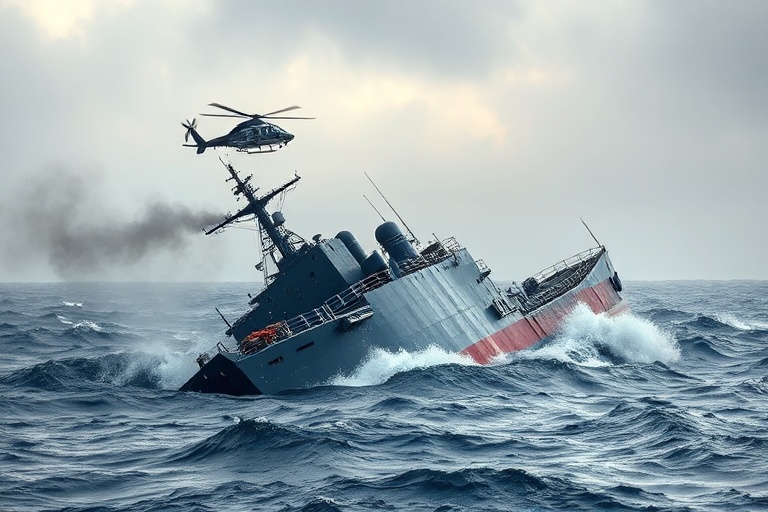
The recent sinking of a Russian naval vessel in the Black Sea has sent ripples through international waters, both literally and figuratively. On the evening of June 20, 2024, reports confirmed that the Ivan Khurs, an intelligence-gathering ship, was struck by Ukrainian missiles near the Crimean coast. While the exact circumstances remain disputed, the incident underscores the escalating tensions in a region already strained by nearly a decade of conflict.
This event isn’t just another headline in a long-running war. It carries implications for global maritime security, naval warfare tactics, and the delicate balance of power in Eastern Europe. For observers outside the immediate conflict zone, the sinking serves as a stark reminder of how localized disputes can quickly escalate into broader geopolitical flashpoints.
The Ship and Its Strategic Role
The Ivan Khurs was no ordinary vessel. Commissioned in 2018, it belonged to a class of ships designed for electronic intelligence (ELINT) and signals interception. Such vessels are critical in modern naval warfare, capable of monitoring communications, tracking radar systems, and gathering data on enemy movements. Its loss represents a significant blow to Russia’s intelligence capabilities in the Black Sea—a region where Moscow has sought to maintain dominance since its annexation of Crimea in 2014.
According to naval analysts, the ship’s primary function aligned with Russia’s broader military strategy in the area. The Black Sea has become a testing ground for hybrid warfare, where conventional and unconventional tactics blur. The presence of ships like the Ivan Khurs allows Russia to project power beyond its shores while also serving as a deterrent against NATO encroachment. Its sinking, therefore, isn’t just a tactical setback—it’s a symbolic one.
A Disputed Narrative: What Really Happened?
The circumstances surrounding the attack remain shrouded in ambiguity. Ukrainian officials claimed responsibility, asserting that a precision strike using Western-supplied missiles had successfully neutralized the vessel. Russian authorities, however, denied any loss of life or significant damage, going so far as to dismiss the reports as “fake news.” Such conflicting accounts are par for the course in wartime, but they complicate efforts to piece together a clear picture.
Independent verification has proven difficult due to restricted access to the area and the fog of war. Satellite imagery and open-source intelligence suggest debris consistent with a missile strike, but definitive proof remains elusive. What is clear is that the incident occurred in waters claimed by both Russia and Ukraine, adding another layer of complexity to the legal and political fallout.
The lack of transparency from both sides raises questions about accountability. In an era where misinformation spreads as quickly as verified facts, the sinking of the Ivan Khurs becomes more than a military engagement—it becomes a test of how the international community discerns truth from propaganda.
Global Reactions: From Diplomacy to Escalation
The international response to the sinking has been swift and varied. NATO members, including the United States and the United Kingdom, issued statements condemning Russia’s military actions in the region. Meanwhile, countries like China and India adopted a more cautious stance, emphasizing the need for dialogue rather than confrontation. This divergence reflects the broader struggle to define the conflict’s narrative on the global stage.
For smaller nations bordering the Black Sea, the incident serves as a cautionary tale. Countries such as Romania and Bulgaria, already wary of regional instability, must now navigate the heightened risk of unintended escalation. The presence of foreign military vessels in their waters could draw them into the conflict, whether by design or accident.
Economic repercussions are also beginning to surface. Shipping routes through the Black Sea, a critical corridor for grain and energy exports, face renewed uncertainty. Insurance premiums for vessels operating in the area have spiked, and some companies are rerouting cargo to avoid the conflict zone entirely. This economic strain could ripple outward, affecting food prices and energy supplies in regions already grappling with inflation and supply chain disruptions.
The Future of Naval Warfare in the Black Sea
The sinking of the Ivan Khurs may well mark a turning point in how naval conflicts are waged. Traditional battleships and aircraft carriers are becoming relics of a bygone era, replaced by smaller, more agile vessels equipped with advanced missile systems. The Black Sea has become a proving ground for these modern tactics, where drones, missiles, and cyber warfare play as significant a role as traditional naval power.
For Russia, the loss of the Ivan Khurs could accelerate efforts to deploy more advanced intelligence-gathering platforms. Alternatively, it may prompt a shift in strategy, relying more heavily on satellite-based surveillance to compensate for the gap in maritime intelligence. Either way, the incident underscores the vulnerability of large, high-value targets in an era where precision strikes are increasingly accessible.
Ukraine, on the other hand, has demonstrated the effectiveness of asymmetrical warfare. By targeting high-profile assets like the Ivan Khurs, Ukrainian forces have exposed the limitations of Russia’s naval dominance. This approach could inspire similar tactics in other conflicts, where smaller, less conventional forces seek to challenge larger, better-equipped militaries.
A Broader Cultural and Historical Context
The Black Sea has long been a crossroads of empires, cultures, and conflicts. From the ancient Greeks to the Ottomans and the Soviets, its shores have witnessed centuries of struggle over territory, resources, and influence. The current conflict is merely the latest chapter in a story that stretches back millennia.
In this context, the sinking of the Ivan Khurs takes on deeper significance. It’s not just a military incident—it’s a reminder of the region’s enduring role as a battleground for competing visions of power and sovereignty. For historians and strategists alike, the event invites comparisons to past conflicts, from the Crimean War to the Cold War standoffs of the 20th century.
The cultural impact of the sinking is also worth noting. In Russia, state-controlled media has framed the incident as a provocation, while independent outlets have questioned the government’s narrative. In Ukraine, the event has been celebrated as a victory, a symbol of resistance against an occupying force. These competing narratives highlight how modern conflicts are not just fought on the battlefield but in the realm of public perception.
What Comes Next?
The immediate aftermath of the sinking raises more questions than answers. Will Russia retaliate with a larger strike, risking further escalation? Will Ukraine continue to target high-value assets, gambling on the hope that each success chips away at Russian morale? And how will the international community respond—aiding one side, brokering peace, or standing on the sidelines?
One thing is certain: the Black Sea will remain a flashpoint for years to come. The loss of the Ivan Khurs is a reminder that in modern warfare, no target is too small to matter, and no conflict is too localized to stay contained.
For those watching from afar, the sinking serves as a call to pay closer attention. The world’s oceans are not just vast stretches of water; they are arenas where the future of global power is being decided, one missile at a time.
To stay informed about evolving conflicts and their broader implications, follow updates on News and Politics at Dave’s Locker. The stakes have never been higher, and the need for clarity has never been more urgent.