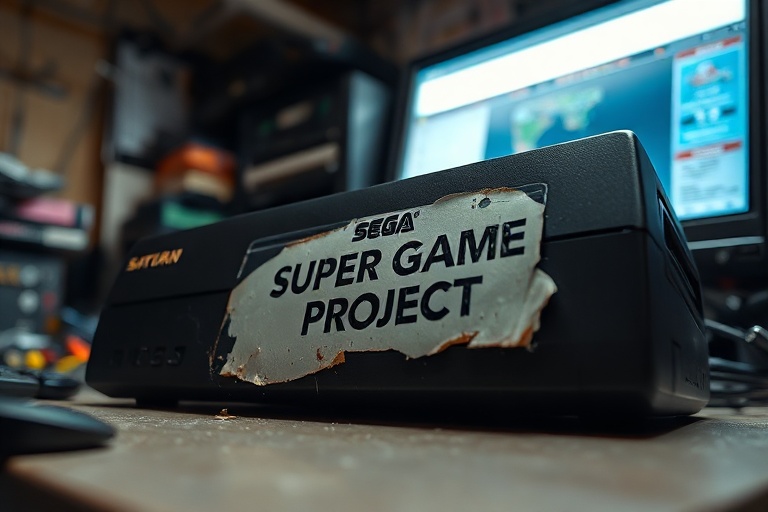
SEGA’s Cancelled Super Game Project: The Console That Could Have Changed Gaming
SEGA’s Phantom Project: The Cancelled Super Game That Could Have Changed Everything
In the mid-1990s, SEGA was locked in a fierce battle with Nintendo for dominance in the console wars. The Sega Saturn had launched in 1994, but it was struggling against the PlayStation’s momentum. Amid this high-stakes rivalry, whispers began circulating about a secretive project codenamed “SEGA Super Game”—a console so ambitious it might have redefined gaming forever. Yet, as quickly as it emerged, the project vanished into obscurity, leaving behind only fragments of what could have been.
Decades later, the mysteries surrounding SEGA’s cancelled Super Game project continue to fascinate gamers and historians alike. Was it a revolutionary console, a groundbreaking handheld, or something even more unconventional? The answers reveal a company grappling with financial pressures, creative ambition, and the harsh realities of an industry in flux.
The Origins: A Console Born from Desperation
SEGA’s internal documents from the era paint a picture of a company under siege. The Sega Saturn, released in 1994 in Japan and 1995 in the West, was technically impressive but plagued by poor marketing and developer disinterest. Sony’s PlayStation, with its CD-based games and sleek marketing, was siphoning off SEGA’s core audience. Meanwhile, Nintendo’s upcoming Nintendo 64 promised cutting-edge 3D graphics.
Against this backdrop, SEGA began exploring radical alternatives. According to former employees and industry leaks, the Super Game project was envisioned as a next-generation hybrid system—one that could bridge the gap between SEGA’s arcade heritage and the emerging 3D gaming landscape. Rumors suggested it might have combined elements of a console, handheld, and even an arcade machine, all in one.
The project was reportedly codenamed “Blackbelt,” a nod to its rumored focus on 3D graphics and advanced processing power. Some insiders claimed it was designed to support both cartridges and CDs, allowing SEGA to hedge its bets against the shifting industry. Others speculated it was meant to be a direct competitor to the PlayStation, with a stronger emphasis on arcade-style gameplay.
The Cultural Context: Why SEGA Needed a Miracle
The mid-1990s were a turbulent time for SEGA. The company had built its reputation on aggressive marketing and edgy, fast-paced games, but its business model was showing cracks. The Saturn’s dual-CPU architecture, while powerful, alienated many Western developers who struggled to optimize for it. Meanwhile, Sony’s PlayStation was rapidly gaining traction with titles like Final Fantasy VII and Metal Gear Solid, which SEGA couldn’t easily match.
Globally, gaming culture was evolving. Arcades, once SEGA’s stronghold, were declining as home consoles grew more sophisticated. The rise of 3D gaming demanded new hardware, and SEGA was racing to keep up. The Super Game project, if it had materialized, might have given SEGA a unique identity in this shifting landscape. Imagine a console that played like an arcade machine but looked like a PlayStation—it could have carved out a niche between SEGA’s past and future.
Yet, SEGA’s financial struggles were mounting. The Saturn’s poor sales in the West, combined with internal mismanagement, left the company with dwindling resources. By 1998, SEGA’s leadership was forced to make a brutal decision: abandon the Super Game project and focus on the Dreamcast, which would become their final console.
The Dreamcast Connection: A What-If Scenario
Some gaming historians argue that the Super Game project was never meant to be a standalone console but rather an early iteration of what became the Dreamcast. The Dreamcast, released in 1998, was SEGA’s last-ditch effort to reclaim the market. It featured a powerful 128-bit processor, online capabilities via its built-in modem, and a library of arcade-style games that harkened back to SEGA’s roots.
If the Super Game had launched even a year earlier, it might have positioned SEGA as the true innovator of 3D gaming. Instead, the Dreamcast’s launch was marred by Sony’s PlayStation 2 announcement, which overshadowed it almost immediately. The Super Game project, if it existed, died alongside SEGA’s console ambitions.
Former SEGA employees have shared conflicting accounts of the project’s fate. Some claim it was scrapped due to technical limitations, while others suggest it was canceled because SEGA couldn’t secure enough third-party support. One thing is certain: the Super Game remains one of gaming’s greatest “what-if” stories.
The Legacy: What We Lost and What We Learned
The cancellation of SEGA’s Super Game project is more than just a footnote in gaming history—it’s a cautionary tale about ambition, timing, and the unpredictability of the industry. Had it succeeded, it might have given SEGA the edge it needed to fend off Sony and Nintendo. Instead, the company retreated from hardware entirely, focusing on software and licensing.
Today, the Super Game project lives on in the imaginations of gamers and the stories passed down by industry veterans. It serves as a reminder that even the most ambitious ideas can fall victim to circumstance. SEGA’s story is a testament to the fragility of innovation in an industry where timing is everything.
For those who grew up in the 1990s, the Super Game represents a lost opportunity—a console that could have redefined gaming. For modern gamers, it’s a fascinating “what-if” that highlights the risks and rewards of pushing boundaries.
Key Takeaways from SEGA’s Cancelled Super Game
To summarize the project’s significance, here are the key points:
- Radical Ambition: The Super Game was envisioned as a hybrid console/handheld/arcade machine, blending SEGA’s arcade heritage with cutting-edge 3D graphics.
- Desperate Times: SEGA needed a miracle to compete with Sony’s PlayStation and Nintendo’s upcoming Nintendo 64. The Super Game was that miracle—or so they hoped.
- Financial Straits: Internal struggles and poor Saturn sales left SEGA with little room for error. The Super Game project was likely canceled due to budget constraints.
- A Dream Deferred: Some believe the project evolved into the Dreamcast, but by then, the market had moved on.
- Cultural Impact: The Super Game’s cancellation marked the end of SEGA’s console ambitions, reshaping the company’s identity forever.
Where Do We Go From Here?
SEGA’s story is a reminder that even the most visionary companies can falter when the stars don’t align. The Super Game project may be lost to history, but its spirit lives on in the games we play today. Whether it was a console, a handheld, or something entirely different, its cancellation forced SEGA to reinvent itself—and in doing so, it left an indelible mark on gaming culture.
For fans of retro gaming, the Super Game is a tantalizing “what-if.” For industry observers, it’s a case study in ambition and failure. And for SEGA, it’s a chapter that could have rewritten its legacy—but didn’t. Instead, it remains a ghost story, a legend whispered among gamers who dare to imagine what might have been.