Published on
Understanding the Incident
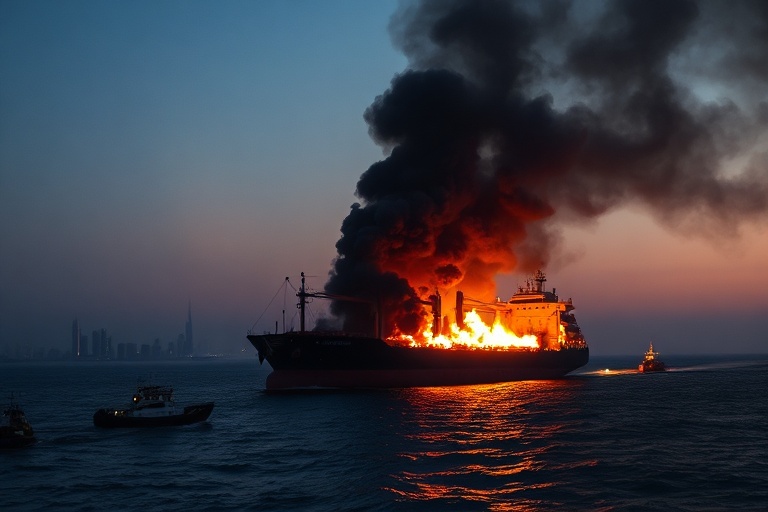
A fire broke out aboard a commercial vessel approximately 40 nautical miles off the coast of Qatar on June 12, 2024. The incident occurred at roughly 3:15 AM local time, prompting an immediate response from Qatari maritime authorities and neighboring Gulf states. The ship, identified as a general cargo vessel flying the Marshall Islands flag, was en route from Dubai to Mumbai when the fire erupted in the engine room.
Initial reports suggested the fire was contained within hours, but not before causing significant damage to the vessel’s superstructure. The crew of 23, all of whom were safely evacuated, were transferred to a nearby Qatari Coast Guard vessel and later flown to Doha for medical evaluations. While no fatalities were reported, two crew members sustained minor injuries from smoke inhalation.
Coordinated efforts between Qatar’s Marine Emergency Center, the Indian Navy, and commercial salvage teams prevented the fire from escalating into an environmental disaster. The vessel, now adrift but stable, is being towed to a Qatari port for further assessment.
Key Factors in the Response
The rapid and effective response to this incident highlights several critical elements of modern maritime safety protocols. Below are the primary factors that contributed to the successful containment and evacuation:
- Regional Cooperation: Qatar’s pre-existing agreements with neighboring Gulf states facilitated cross-border coordination, ensuring a swift exchange of resources and information.
- Advanced Detection Systems: The vessel was equipped with state-of-the-art fire detection and suppression technology, which likely minimized the spread of the blaze.
- Crew Training: The training of the crew in emergency protocols and evacuation procedures proved essential, as evidenced by the orderly evacuation.
- Maritime Surveillance: Continuous monitoring of shipping lanes in the region allowed authorities to pinpoint the vessel’s location quickly and dispatch resources accordingly.
- Salvage Expertise: The involvement of specialized salvage teams ensured that the vessel could be stabilized and towed without risking further environmental damage.
These factors underscore the importance of investment in maritime safety infrastructure and international collaboration. The incident also serves as a case study for how preparedness can mitigate even the most unpredictable emergencies.
Broader Implications for Maritime Safety
The fire off Qatar’s coast is not an isolated event but part of a growing pattern of maritime incidents that demand closer examination. According to data from the News section of Dave’s Locker, the number of reported fires aboard commercial vessels has increased by 12% over the past five years. This trend has raised concerns among industry experts about the adequacy of current safety regulations and the preparedness of the global shipping fleet.
One of the most pressing issues is the aging infrastructure of many commercial vessels. A significant portion of the world’s merchant fleet consists of ships that are 20 years or older, designed before modern fire suppression systems became standard. While retrofitting these vessels can be costly, the alternative—leaving them as they are—poses unacceptable risks. The incident off Qatar’s coast should serve as a catalyst for stricter enforcement of maintenance and inspection protocols.
Another critical factor is the human element. Crew training varies widely depending on the vessel’s flag state and the shipping company’s policies. The incident in Qatar demonstrated the value of rigorous training, but it also highlighted disparities in safety cultures across the industry. Ensuring that all crew members, regardless of nationality, receive standardized emergency response training could drastically reduce the severity of future incidents.
Environmental concerns also loom large. While this particular fire did not result in a spill, the potential for disaster is always present. The Gulf region, a critical chokepoint for global oil transportation, cannot afford a major environmental catastrophe. The incident serves as a reminder of the need for enhanced environmental safeguards, including improved containment and cleanup capabilities.
What’s Next for the Industry?
The aftermath of the ship fire off Qatar’s coast is likely to prompt several immediate and long-term responses from the maritime industry and regulatory bodies. Here’s what stakeholders should watch for in the coming months:
- Regulatory Reforms: The International Maritime Organization (IMO) is expected to revisit its safety regulations, particularly those governing fire safety and crew training. There may be calls for mandatory upgrades to older vessels and stricter penalties for non-compliance.
- Insurance and Liability Shifts: Insurance providers may reassess their risk models, leading to higher premiums for vessels that do not meet updated safety standards. This could incentivize shipowners to invest in modern safety equipment.
- Technology Investments: The incident may accelerate the adoption of new technologies, such as autonomous fire detection systems and AI-driven risk assessment tools, to enhance real-time monitoring and response.
- Industry Collaboration: Shipping companies, insurers, and maritime authorities may form new alliances to share best practices and resources, particularly in high-risk regions like the Gulf.
- Environmental Protocols: There could be increased pressure to implement stricter environmental protocols, including mandatory spill response plans and regular drills for crew members.
For those interested in the intersection of technology and maritime safety, Dave’s Locker’s Technology section offers deeper insights into how innovation is reshaping the industry. From blockchain-based supply chain tracking to AI-driven predictive maintenance, the tools available today could redefine safety standards for the next generation of seafarers.
The ship fire off Qatar’s coast serves as a stark reminder of the vulnerabilities within the global maritime industry. While the response was commendable, the incident also exposed systemic gaps that demand urgent attention. Moving forward, the focus must be on proactive measures—upgrading infrastructure, enhancing crew training, and fostering international cooperation—to ensure that such incidents become increasingly rare. The lessons learned from this event should not be confined to the Gulf but must resonate across the entire maritime community.