The Grand National: History, Challenges, and Cultural Impact
The Grand National is more than just a horse race. Held annually at Aintree Racecourse near Liverpool, England, it is one of the most iconic events in the sporting calendar. With a history stretching back to 1839, the race has evolved into a cultural institution, drawing millions of viewers from around the world. Its unique blend of drama, tradition, and unpredictability makes it a spectacle unlike any other.
A Brief History of the Grand National
The Grand National was first run in 1839, though its origins trace back to informal races held in the early 19th century. The race was initially conceived as a cross-country steeplechase, where riders navigated natural obstacles rather than the structured fences seen today. Over time, it transformed into the structured, high-stakes event we recognize now.
One of the most famous chapters in the race’s history occurred in 1967 when Foinavon won at odds of 100/1. The horse and jockey, John Buckingham, avoided a massive pile-up at the 23rd fence, a moment that remains etched in racing lore. Such underdog stories have become a hallmark of the Grand National, reinforcing its reputation as a race where anything can happen.
The event has also faced challenges, including concerns over horse welfare and safety. In recent years, organizers have implemented stricter regulations, including reduced field sizes and modifications to fences to minimize risk. These changes reflect a broader shift in how the sport balances tradition with ethical considerations.
The Unique Challenges of the Grand National
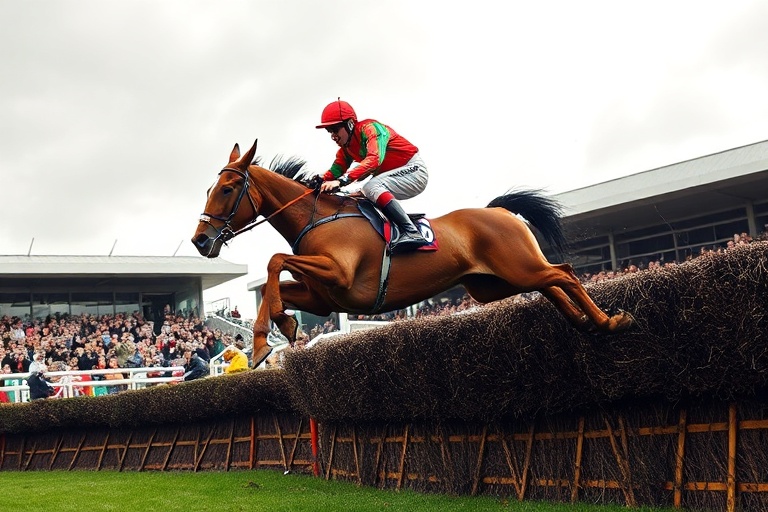
The Grand National is 4 miles and 514 yards long, making it the longest horse race in the UK. It features 30 fences, each with its own character and difficulty. Becher’s Brook, for example, is notorious for its steep drop on the landing side, while the Chair is the tallest fence on the course at 5 feet 2 inches. These obstacles test both horse and rider, demanding exceptional skill and endurance.
Weather plays a critical role in the race’s unpredictability. The course is notorious for its muddy, often treacherous conditions, which can turn a straightforward race into a grueling test of stamina. In 1993, the race was famously declared void after a false start, and only 11 of the 30 horses completed the course. Such moments underscore the race’s reputation for chaos and drama.
For jockeys, the Grand National is as much about mental fortitude as it is about physical ability. The pressure to perform, combined with the race’s unpredictable nature, can be overwhelming. Many jockeys describe the experience as exhilarating yet terrifying, a paradox that adds to the race’s allure.
Key Fences That Define the Race
- Becher’s Brook: One of the most famous fences, known for its steep drop on the landing side, which can unseat even experienced riders.
- The Chair: The tallest fence on the course, measuring 5 feet 2 inches. It’s positioned after a sharp left turn, adding to its difficulty.
- Valentine’s Brook: Named after a horse that famously jumped it diagonally in 1840, this fence requires precision and timing.
- Canal Turn: A sharp left turn after the 6th fence, where horses must navigate a tight bend while maintaining speed.
The Grand National’s Cultural Impact
The Grand National transcends sport, embedding itself in British culture and beyond. It’s a day when offices empty, pubs fill, and families gather around televisions to watch the race. The event’s traditions, from the singing of “The Grand National” anthem to the consumption of mint tea (a nod to the race’s history as a steeplechase), add to its charm.
Betting is another cornerstone of the Grand National’s appeal. With millions wagered on the race, it’s one of the busiest days of the year for bookmakers. The unpredictability of the race makes it a favorite among punters, who revel in the chance to back a long-shot winner. This betting culture has helped cement the race’s status as a national pastime.
The Grand National has also inspired countless works of art, literature, and film. From the 1930s classic The Grand National to modern-day documentaries, the race’s drama and history have captivated audiences. Even those who aren’t horse racing fans often find themselves drawn into the spectacle.
Modern Changes and the Future of the Grand National
In recent years, the Grand National has undergone significant changes to address concerns about horse welfare and safety. In 2012, the race was moved to a later date to avoid clashing with the Cheltenham Festival, reducing fatigue for competing horses. Additionally, the fences have been modified to make them more forgiving, with softer landings and reduced heights.
Technology has also played a role in modernizing the race. High-definition broadcasts, live streaming, and social media have expanded its reach, allowing fans worldwide to engage with the event in real time. The use of data analytics has also become more prevalent, with trainers and jockeys using performance metrics to refine their strategies.
Despite these changes, the Grand National remains rooted in tradition. Organizers have been careful to preserve its unique character while adapting to modern expectations. This balance is key to ensuring the race’s longevity and continued relevance in an ever-evolving sporting landscape.
For those interested in the broader context of horse racing, the Sports section on Dave’s Locker offers deeper insights into the sport’s history and culture. Similarly, the Entertainment section explores how major sporting events like the Grand National influence popular culture.
Conclusion: Why the Grand National Endures
The Grand National is more than a race; it’s a celebration of tradition, unpredictability, and human endeavor. Its unique blend of drama, history, and cultural significance sets it apart from other sporting events. While the race has evolved over the years, its core appeal remains unchanged: the chance to witness the extraordinary.
As the Grand National continues to captivate audiences, it serves as a reminder of the power of sport to unite, inspire, and entertain. Whether you’re a seasoned racing fan or a casual observer, the race offers something for everyone. It’s a testament to the enduring allure of the Grand National that, after nearly two centuries, it remains as thrilling and unpredictable as ever.