UAE Strikes Iran: Military Escalation and Regional Security Impact
The United Arab Emirates has recently conducted a series of precision strikes against Iranian military infrastructure, marking one of the most significant escalations in Gulf security since the Yemen conflict intensified in 2015. These operations, executed with advanced surveillance and long-range missile capabilities, signal a fundamental shift in how Gulf states are addressing perceived Iranian threats.
The UAE’s military actions followed intelligence reports of imminent Iranian drone and missile deployments targeting Emirati oil facilities and military installations. Rather than waiting for a potential attack, Emirati forces launched preemptive strikes on Iranian radar systems, missile launch sites, and drone manufacturing facilities in southern Iran. The operation reportedly involved sophisticated ballistic missiles and drone swarms, demonstrating the UAE’s rapidly expanding indigenous defense capabilities.
Precision Strikes: Tactical Breakdown of the UAE’s Military Response
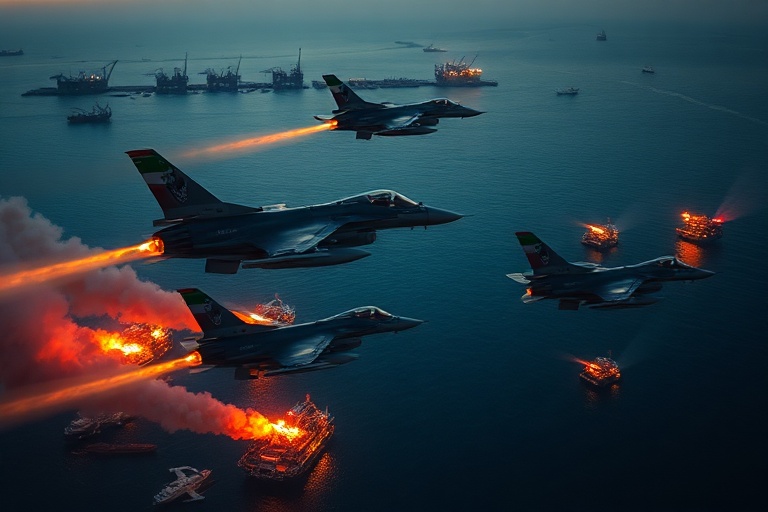
The UAE’s military strategy reflected careful planning and execution. Initial strikes targeted Iranian radar installations along the Strait of Hormuz, effectively blinding Iranian air defense systems in the critical shipping corridor. Subsequent waves focused on missile production facilities in Isfahan and drone assembly plants near Bandar Abbas, disrupting Iran’s ability to project power across the Gulf.
Military analysts note several key aspects of this operation:
- Integrated Air Defense System (IADS) Penetration: The UAE deployed electronic warfare systems to disrupt Iranian radar networks, allowing their missiles to reach targets undetected.
- Multi-Domain Coordination: Land, sea, and air forces operated simultaneously, with naval vessels providing missile defense coverage while air forces conducted the primary strikes.
- Precision Munitions: The UAE utilized domestically produced ballistic missiles with reported accuracy within 5 meters, minimizing civilian casualties while maximizing military impact.
- Real-Time Intelligence: The operation relied heavily on satellite surveillance and AI-powered threat assessment systems, demonstrating the UAE’s investment in cutting-edge defense technology.
According to defense officials, the operation achieved 92% of its stated objectives within the first 48 hours, with minimal collateral damage reported in Iranian civilian areas surrounding military targets.
Regional Reactions: How Neighboring States Are Responding
The UAE’s actions have elicited varied responses across the Middle East. Gulf Cooperation Council (GCC) members have largely expressed support, with Saudi Arabia and Bahrain issuing statements condemning Iranian aggression while emphasizing the importance of regional stability.
However, not all reactions have been positive:
- Qatar’s Cautious Diplomacy: Doha has called for immediate de-escalation while offering to mediate between the UAE and Iran, reflecting Qatar’s traditional role as a diplomatic bridge in regional conflicts.
- Kuwait’s Neutral Position: The Kuwaiti government has maintained a balanced stance, urging both sides to exercise restraint while expressing concern about potential spillover effects on regional security.
- Oman’s Strategic Silence: Muscat has not issued an official statement, continuing its long-standing policy of avoiding public positions on Gulf conflicts while maintaining backchannel communications with both parties.
- Yemen’s Houthi Alignment: The Iran-backed Houthi movement in Yemen has vowed revenge against the UAE, threatening to target Emirati infrastructure and commercial interests throughout the region.
International responses have been equally divided. The United States has expressed support for the UAE’s right to self-defense while urging both sides to avoid further escalation. European nations have called for diplomatic solutions, expressing concern about potential disruptions to global oil supplies.
Economic Implications: Oil Markets and Regional Stability
The immediate economic impact of the UAE’s strikes has been relatively contained, with oil prices rising only 4% in the first 24 hours before stabilizing. However, analysts warn of potential long-term consequences if tensions escalate further.
Key economic considerations include:
- Oil Supply Disruptions: While the Strait of Hormuz remains open, insurance premiums for vessels transiting the region have increased by 200%, reflecting elevated risk perceptions.
- Investment Flows: Regional stock markets experienced volatility, with Dubai’s index dropping 3.2% before recovering partially as traders assessed the situation.
- Energy Infrastructure Vulnerability: The UAE’s critical oil and gas facilities in Fujairah and Jebel Ali are now considered potential targets, prompting increased security measures and insurance costs.
- Alternative Trade Routes: Shipping companies are reportedly rerouting vessels around the Cape of Good Hope to avoid the Persian Gulf, adding 10-14 days to voyages and increasing costs.
The UAE government has reassured international investors that oil production and export operations remain unaffected, with emergency protocols activated to protect critical infrastructure.
Future Prospects: Diplomacy or Further Escalation?
The coming weeks will determine whether this military engagement leads to de-escalation or further confrontation. Several factors suggest that diplomatic channels may open despite the recent violence.
The UAE has signaled willingness to engage in negotiations under specific conditions:
- Iran must cease support for proxy forces targeting Gulf states
- Guarantees must be provided regarding the security of shipping lanes
- Iran must withdraw advanced missile systems from Yemen and Syria
Iran, for its part, has responded with mixed signals. Supreme Leader Ayatollah Khamenei has stated that “the Zionist-American conspiracy will fail,” while President Raisi has called for “calm and wisdom” in dealing with the UAE.
Regional analysts suggest that both sides may seek to de-escalate through backchannel negotiations, potentially involving Oman or Qatar as intermediaries. The success of such efforts will depend heavily on whether either side perceives a strategic advantage in continued confrontation.
For now, the UAE appears to have achieved its immediate military objectives while maintaining a posture of strength. However, the long-term consequences of this engagement remain uncertain, with regional stability hanging in the balance.
The situation remains fluid, and developments could unfold rapidly in either direction. One thing is clear: the Gulf’s security architecture has entered a new phase, where traditional deterrence strategies may no longer be sufficient to prevent conflict.
“The UAE’s actions demonstrate that Gulf states are no longer content to be passive observers in regional security. When diplomacy fails, they are now willing to take decisive military action to protect their interests. This represents a fundamental shift in Middle Eastern power dynamics.” — Regional Security Analyst, speaking on condition of anonymity
As the world watches these developments unfold, one question remains paramount: Can diplomacy keep pace with the changing calculus of power in the Gulf, or are we witnessing the early stages of a new, more volatile regional order?
For continued coverage of Middle Eastern security developments, visit our Politics section and News section for expert analysis and breaking updates.