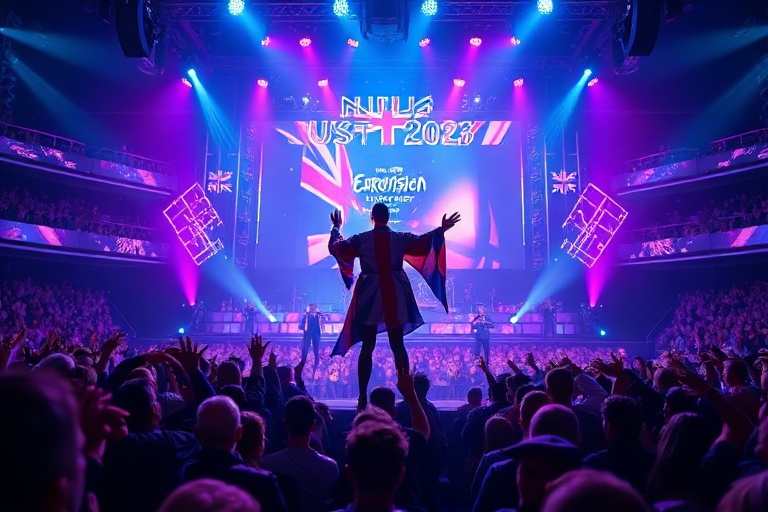
The UK’s relationship with the Eurovision Song Contest has been a tale of near-misses, bold experiments, and lingering questions about ambition. As the dust settles on the 2025 contest, all eyes are turning toward 2026. Will the BBC double down on a winning formula? Or will a new creative direction redefine the nation’s approach to the world’s biggest music competition? Rumors, industry whispers, and fan campaigns are already shaping the narrative—and the stakes have never been higher.
For decades, the UK has oscillated between indifference and last-minute panic in its Eurovision strategy. The 2025 entry, while well-received by fans, finished in the lower half of the scoreboard—a result that has sparked fresh debate about what the UK truly wants from Eurovision: artistic credibility, pop dominance, or simply a moment in the spotlight?
The BBC’s Selection Process: Tradition Meets Innovation
The BBC has historically used internal selections for its Eurovision entries, a method praised for its efficiency but criticized for lacking transparency. In 2025, the broadcaster took a step toward openness by hosting a public submission period—though the final decision still rested with a small panel. For 2026, insiders suggest a hybrid model may emerge: a televised national final for song selection, coupled with a public vote for the performer.
This potential shift reflects broader trends in the music industry, where fan engagement drives visibility. A recent survey by a major UK music platform found that 68% of 18–34-year-olds believe public involvement should play a bigger role in choosing the UK’s act. Yet, the BBC remains cautious. A source within the corporation told us, “We want to balance democracy with quality control. Eurovision isn’t just a popularity contest—it’s a performance judged on stage presence, staging, and songwriting.”
- Internal Selection (2010–2024): Fast, controlled, but often criticized for lack of freshness.
- Public Submission (2025): First major step toward inclusivity—over 300 entries reviewed.
- Proposed 2026 Model: Public vote for performer, professional jury for song—hybrid approach in testing.
The Songwriter Pool: Who’s Behind the Next UK Bid?
Behind every UK Eurovision entry stands a team of songwriters, producers, and vocal coaches. For 2026, industry insiders point to a crop of rising talents who blend pop sensibilities with Eurovision’s signature flair. Names like Grace Davies—who co-wrote the UK’s 2024 entry—and Milly Alcock, a young producer known for her work with UK artists who topped international charts, are frequently mentioned.
But the real wildcard could be collaboration with international writers. In 2023, the UK partnered with Swedish hitmakers for its entry, a move that elevated its production value. For 2026, rumors suggest a possible tie-up with a Dutch or Italian songwriter—countries known for crafting Eurovision hits that resonate across borders. “The UK needs a song that sounds like a winner from the first note,” said one industry analyst. “That means leveraging global songwriting networks.”
The lyrical direction is also under scrutiny. After years of generic pop anthems, there’s a quiet push for storytelling—songs that reflect British identity, humor, or social commentary. Could 2026 be the year the UK finally embraces a theme beyond “upbeat and inoffensive”?
Fan Campaigns and Public Pressure: The Role of Social Media
No discussion of the UK’s Eurovision future would be complete without acknowledging the power of fan movements. In 2024, the #UK4Eurovision campaign amassed over 50,000 signatures, demanding a public selection process. That momentum hasn’t faded. By early 2025, grassroots groups like EuroVoice UK and BBC Eurovision Watch had already launched petitions and social media drives calling for greater transparency.
These campaigns aren’t just about democracy—they’re about visibility. Eurovision is the world’s third-most-watched annual TV event, with an audience of over 160 million. For emerging UK artists, Eurovision offers a global stage. But without a transparent selection process, many fear talent is being overlooked in favor of safer choices.
A recent viral TikTok trend—#FindTheNextUKEurostar—encouraged artists to submit performances for a chance to be scouted. The campaign gained traction among indie musicians, proving that the public appetite for involvement is stronger than ever. Whether the BBC will respond with structural change remains uncertain, but the pressure is undeniable.
Financial and Creative Stakes: Why 2026 Matters More Than Ever
The UK’s investment in Eurovision has grown incrementally. In 2024, the BBC allocated £1.2 million to its entry—up from £800,000 in 2020. For 2026, sources indicate a budget increase of at least 20%, with a focus on staging, choreography, and international promotion. The goal? To secure a top-10 finish—a benchmark the UK hasn’t achieved since 2022.
But money alone won’t guarantee success. The contest’s voting system remains a puzzle: juries favor acts with strong live performances, while public votes skew toward fan favorites. The UK must navigate both. This dual-pressure system explains why nations like Sweden and Italy consistently place high—they balance artistic merit with mass appeal.
There’s also the matter of cultural representation. In 2025, the UK’s entry featured a South Asian lead singer, reflecting the nation’s diversity. For 2026, calls for greater inclusion are louder than ever. Will the UK finally present an act that truly represents its multicultural identity? Or will it default to a safe, market-tested choice?
The stakes extend beyond the competition itself. A strong result in 2026 could secure the UK hosting rights in 2027—a financial and cultural windfall. London, Manchester, and Liverpool have all expressed interest. But hosting requires a top-6 finish. Every point counts.
What Fans Are Demanding
- A transparent selection process with public participation.
- A song that balances catchiness with Eurovision-worthy production.
- Diversity in both artist and creative team.
- Investment in staging and performance coaching.
- A clear long-term strategy—no more last-minute scrambles.
Conclusion: The UK’s Eurovision Crossroads
The UK stands at a crossroads as it prepares for Eurovision 2026. The path forward requires balancing tradition with innovation, fan demands with artistic integrity, and national pride with global appeal. The BBC’s decisions over the coming months will shape not just the 2026 entry, but the UK’s Eurovision legacy for years to come.
One thing is certain: the eyes of the world will be watching. Whether that scrutiny results in celebration or criticism depends entirely on the choices made today. For the UK, Eurovision 2026 isn’t just another contest—it’s an opportunity to redefine its role in a competition that has captivated audiences for nearly seven decades.
The countdown has begun. And this time, the UK can’t afford to be anything less than prepared.