Understanding ENSO: How El Niño and La Niña Shape Global Climate
The El Niño–Southern Oscillation: A Global Climate Dance with Far-Reaching Effects
Every few years, the planet experiences a climatic seesaw that reshapes weather patterns, disrupts economies, and even influences cultural traditions across continents. Known as the El Niño–Southern Oscillation (ENSO), this cyclical phenomenon originates in the tropical Pacific Ocean but sends ripples across the globe. Its alternating phases—El Niño, La Niña, and neutral conditions—create a domino effect of atmospheric and oceanic changes that governments, farmers, and communities must prepare for. Understanding ENSO is not just a scientific endeavor; it is a necessity for global resilience in an era of climate uncertainty.
ENSO’s influence extends beyond meteorology. It has shaped agricultural calendars, inspired folklore in coastal communities, and even altered the outcomes of historical events. From the collapse of ancient civilizations to modern-day trade disruptions, the oscillation leaves an indelible mark on human history. As climate change intensifies, the stakes for predicting and adapting to ENSO’s behavior grow higher. This article explores the science behind the phenomenon, its cultural and economic impacts, and why it remains one of Earth’s most consequential climate patterns.
The Science Behind the Oscillation: A Delicate Ocean-Atmosphere Balance
At its core, ENSO is a natural climate cycle driven by interactions between the ocean and the atmosphere in the equatorial Pacific. The cycle operates on timescales of two to seven years, with three primary phases: El Niño, La Niña, and neutral conditions. During neutral conditions, trade winds blow westward across the Pacific, pushing warm surface water toward Asia and allowing cooler water to upwell along the coasts of South America. This setup creates a relatively stable climate pattern.
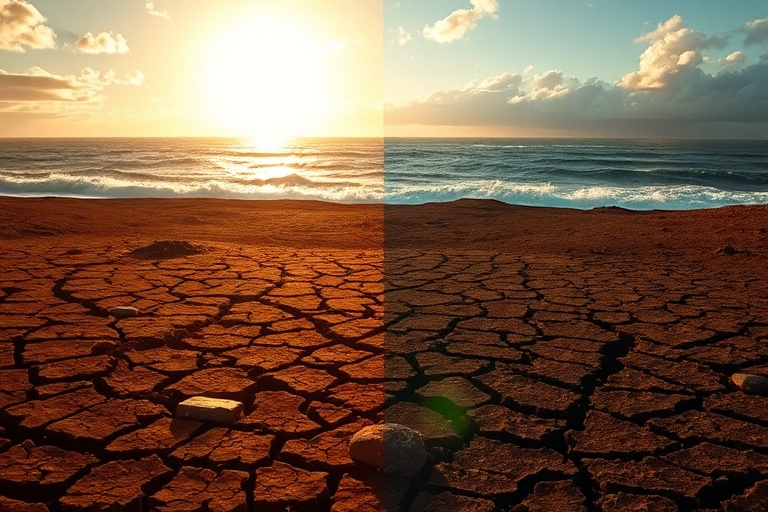
El Niño occurs when these trade winds weaken or reverse, causing warm water to slosh eastward toward the Americas. The shift disrupts atmospheric circulation, leading to altered jet streams and weather extremes. Rainfall patterns flip: droughts plague Australia and Southeast Asia, while heavy downpours inundate parts of South America. La Niña, the opposite phase, strengthens the trade winds, pushing warm water westward and intensifying the upwelling of cold water near the Americas. The result is drier conditions in the southern United States and increased rainfall in Australia.
The Southern Oscillation Index (SOI), which measures air pressure differences between Tahiti and Darwin, Australia, is a key indicator of ENSO’s state. Negative SOI values typically signal El Niño, while positive values suggest La Niña. Satellites, buoys, and climate models now provide real-time data to track these shifts, but predicting ENSO remains a challenge due to its inherent complexity.
The Global Domino Effect: Weather, Agriculture, and Economic Fallout
ENSO’s reach is global, affecting everything from monsoon seasons in India to hurricane frequency in the Atlantic. During El Niño years, the southern United States often experiences wetter winters, while Indonesia and Australia face severe droughts that spark wildfires and threaten food security. Conversely, La Niña can amplify Atlantic hurricane activity, as seen in the record-breaking 2020 season. These patterns have cascading effects on industries reliant on predictable weather.
Agriculture is particularly vulnerable. In 2015–2016, one of the strongest El Niño events on record caused maize and wheat yields to plummet in southern Africa, leading to food shortages and price spikes. Coffee growers in Colombia and Vietnam, where rainfall is critical, faced losses that rippled through global commodity markets. Meanwhile, rice farmers in Thailand and Vietnam benefitted from La Niña-enhanced monsoons, but the volatility made long-term planning difficult.
The economic toll extends beyond farming. Energy markets react to ENSO-driven temperature shifts—warmer winters in the northern U.S. reduce natural gas demand, while colder La Niña winters in the Midwest drive up heating costs. Insurance industries brace for increased claims from floods and storms linked to ENSO. Even global shipping routes are affected; the Panama Canal faced water shortages in 2019 due to drought, partially attributed to El Niño, forcing vessels to carry lighter loads and raising freight costs.
For communities in the Pacific Islands, ENSO is a way of life. In Tuvalu and Kiribati, rising sea levels during El Niño years exacerbate coastal erosion, threatening homes and freshwater supplies. Traditional knowledge, passed down through generations, often includes strategies for coping with ENSO’s extremes. In Peru, fishermen have long relied on the periodic arrival of warm currents during El Niño, which disrupts anchovy populations but brings new marine species closer to shore. These adaptations highlight humanity’s enduring relationship with ENSO.
Cultural Echoes: How ENSO Shaped History and Tradition
ENSO’s fingerprints are visible in history, often in unexpected places. Some researchers link the decline of the Maya civilization in the 9th century to prolonged droughts associated with El Niño-like conditions. The Anasazi people of the American Southwest also faced severe droughts during ENSO-active periods, prompting migrations to more sustainable regions. These historical connections underscore how climate variability has shaped human civilization for millennia.
In the modern era, ENSO has influenced political decisions and cultural practices. In Indonesia, farmers have developed traditional irrigation systems, or subak, to mitigate droughts during El Niño years. In Peru, the phenomenon is so ingrained in local culture that the term “El Niño” itself originates from Spanish fishermen who noticed the Christ Child’s timing—the warm currents often appeared around Christmas. Even contemporary art and music reflect ENSO’s impact, with musicians like Peruvian folk artists composing songs about its unpredictable nature.
Globally, ENSO has inspired festivals and rituals. In India, the monsoon’s behavior during ENSO phases is celebrated in religious ceremonies, as farmers pray for rains that will determine their harvests. In Australia, Indigenous communities have long used oral traditions to predict weather patterns tied to ENSO, integrating scientific observation with cultural wisdom. These traditions highlight how societies have adapted to the oscillation’s rhythms, blending empirical knowledge with spiritual beliefs.
Adapting to an Unpredictable Future: Science, Policy, and Resilience
As climate change alters ocean temperatures and atmospheric patterns, scientists are racing to refine ENSO predictions. Warmer oceans may intensify El Niño events, while shifting wind patterns could make La Niña more frequent. The scientific community is leveraging advanced models and machine learning to improve forecasting accuracy, but uncertainties remain. Policymakers, meanwhile, are focusing on resilience-building measures, such as drought-resistant crops and early warning systems for extreme weather.
International cooperation is critical. Organizations like the World Meteorological Organization (WMO) and regional climate centers collaborate to share data and best practices. In the Pacific, the Pacific Islands Forum has prioritized climate adaptation strategies to address ENSO-related challenges, from coastal infrastructure to water security. These efforts reflect a growing recognition that ENSO is not just a scientific curiosity but a global challenge requiring collective action.
For individuals, awareness is the first step. Understanding ENSO’s phases can help communities prepare for potential disruptions, whether by storing water during La Niña forecasts or securing flood insurance ahead of El Niño predictions. In an era of climate change, ENSO serves as a reminder of nature’s power—and our need to adapt.
As the planet continues to warm, the dance of El Niño and La Niña will only grow more complex. Yet, for all its unpredictability, ENSO offers a lesson in interconnectedness. The ocean’s currents, the atmosphere’s winds, and human societies are all part of a single, dynamic system. By studying this phenomenon, we gain not only scientific insights but also a deeper appreciation for the fragile balance that sustains life on Earth.