The United States Air Force (USAF) stands as one of the most advanced and influential military branches in the world. Since its establishment in 1947 as a separate branch of the U.S. Armed Forces, the USAF has evolved into a technological powerhouse responsible for air, space, and cyberspace operations. Its mission extends far beyond traditional aerial combat, encompassing intelligence, surveillance, reconnaissance, and rapid global mobility.
With a budget exceeding $200 billion annually and a fleet of over 5,000 aircraft, including cutting-edge stealth fighters and strategic bombers, the USAF remains a cornerstone of American military dominance. But its role goes deeper than hardware and budgets—it represents a commitment to technological superiority, strategic deterrence, and rapid response capabilities that shape global security dynamics.
The Evolution of the USAF: From Propeller Planes to Hypersonic Weapons
The origins of the USAF trace back to World War I, when military aviation was in its infancy. By the time World War II began, the Army Air Forces had already demonstrated the critical role of air power in modern warfare. The post-war era solidified this need, leading to the creation of an independent Air Force in 1947, signaling the dawn of a new strategic era.
Over the decades, the USAF has continuously adapted. The Cold War era saw the development of long-range bombers like the B-52 Stratofortress and intercontinental ballistic missiles (ICBMs), ensuring nuclear deterrence. The Vietnam War introduced precision-guided munitions, revolutionizing battlefield effectiveness. Today, the service is investing heavily in fifth-generation fighters like the F-35 Lightning II and sixth-generation platforms such as the Next Generation Air Dominance (NGAD) program.
Emerging technologies are reshaping the USAF’s future. Hypersonic missiles, artificial intelligence-driven command systems, and autonomous drones are no longer speculative—they are in active development. The service’s focus has expanded from merely controlling the skies to dominating all domains: air, space, and cyberspace.
Key Milestones in USAF History
- 1947: The National Security Act establishes the U.S. Air Force as an independent branch.
- 1954: First flight of the Boeing B-52 Stratofortress, a long-range nuclear bomber still in service today.
- 1989: Operation Just Cause in Panama marks the first combat use of the F-117 Nighthawk stealth fighter.
- 2005: The USAF deploys the first unmanned aerial vehicle (UAV) in combat with the MQ-1 Predator.
- 2020: The X-37B Orbital Test Vehicle completes a record 780-day mission, advancing space-based military operations.
Technology and Innovation: The Backbone of USAF Dominance
Technology is the lifeblood of the USAF. Unlike other branches, the Air Force has always been at the forefront of technological innovation, often serving as a bridge between civilian and military R&D. This dual-use approach accelerates development while maintaining national security.
For example, the Global Positioning System (GPS), originally a military project, now underpins global navigation for everything from smartphones to commercial aviation. Similarly, advances in satellite technology and cyber defense originated within USAF research labs before becoming essential to modern infrastructure.
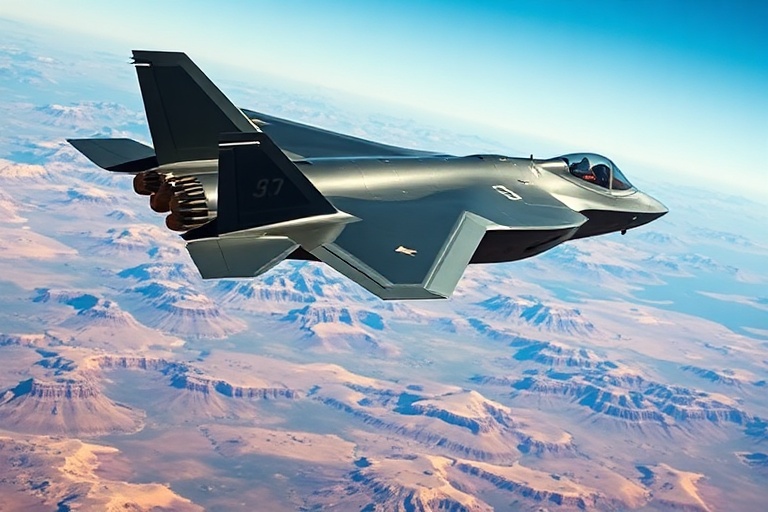
The service’s investment in stealth technology remains unmatched. The F-22 Raptor and F-35 Lightning II represent the pinnacle of radar-evading design, enabling pilots to penetrate sophisticated air defense systems. These aircraft are not just weapons—they are integrated sensor platforms capable of sharing real-time data across a networked battlefield.
Looking ahead, the USAF is prioritizing several transformative initiatives:
- Autonomous Systems: Development of AI-powered drones and unmanned wingmen that can operate alongside piloted aircraft in high-risk environments.
- Hypersonic Weapons: Missiles capable of traveling at speeds exceeding Mach 5, reducing response time and increasing survivability.
- Space Superiority: Expansion of the Space Force (originally a USAF branch) to protect satellites and ensure freedom of operation in the space domain.
- Quantum Computing: Research into quantum sensors and secure communications to counter emerging threats from near-peer adversaries.
These innovations are not developed in isolation. The USAF collaborates closely with defense contractors such as Lockheed Martin, Boeing, and Northrop Grumman, as well as academic institutions and international allies. This ecosystem fosters rapid prototyping and reduces the time from concept to deployment.
The USAF’s Global Role and Strategic Implications
The USAF’s reach is truly global. With air bases in over 40 countries and the ability to project power across continents within hours, it serves as the military’s primary tool for rapid deployment and deterrence. Whether responding to humanitarian crises, conducting counterterrorism operations, or executing large-scale combat missions, the Air Force provides the backbone of U.S. military agility.
One of the most visible demonstrations of this capability is the Rapid Global Mobility mission, executed primarily by the C-17 Globemaster III and KC-135 Stratotanker. These aircraft enable the U.S. to deliver troops, equipment, and humanitarian aid anywhere in the world within 48 hours—a logistical feat unmatched by any other nation.
But the USAF’s influence extends beyond physical presence. Its intelligence, surveillance, and reconnaissance (ISR) platforms, such as the U-2 Dragon Lady and RQ-4 Global Hawk, provide critical data that shapes U.S. foreign policy and military strategy. Satellite constellations operated by the Air Force also monitor global threats, from missile launches to cyber intrusions.
This global posture has significant geopolitical implications. The USAF’s presence in regions like the South China Sea and Eastern Europe serves as a deterrent against aggression. Its ability to conduct long-range strikes with minimal warning reinforces U.S. commitments to allies such as Japan, South Korea, and NATO members.
However, this dominance is not without challenges. Rising powers like China and Russia are investing heavily in anti-access/area-denial (A2/AD) systems designed to limit U.S. freedom of movement. In response, the USAF is shifting toward a more distributed and resilient operational model, emphasizing smaller, harder-to-target units and enhanced cyber defenses.
Challenges and the Future of the USAF
Despite its strengths, the USAF faces significant challenges. Aging aircraft, such as the B-1 Lancer and KC-135, require costly upgrades or replacement. Pilot shortages and high operational tempos contribute to burnout and retention issues. Meanwhile, budget constraints and competing national priorities force difficult trade-offs in modernization and readiness.
The service is also adapting to new forms of conflict. The rise of cyber warfare and electronic attacks means that air superiority no longer depends solely on superior aircraft—it also requires dominance in the electromagnetic spectrum. The USAF’s recent creation of the Cyber Warfare Operations career field reflects this shift.
Looking forward, the USAF must balance modernization with sustainability. The Next Generation Air Dominance (NGAD) program aims to replace the F-22 by the 2030s, but development costs and technical hurdles remain formidable. Similarly, the B-21 Raider, slated to replace the aging B-2 Spirit, represents a generational leap in stealth and networking—but delays could leave a capability gap.
Another critical challenge is recruitment and public perception. With fewer Americans having direct ties to military service, the USAF must work harder to attract diverse talent, especially in STEM fields. Promoting innovation and inclusivity within its ranks will be essential to maintaining its technological edge.
The future of the USAF will likely be defined by three key themes: integration, resilience, and adaptability. Integration across domains—air, space, and cyberspace—will ensure seamless operations in a contested environment. Resilience will be built through distributed basing, redundant systems, and hardened infrastructure. And adaptability will be fostered through continuous innovation and a culture that embraces rapid change.
Conclusion: The USAF in an Era of Uncertainty
As the world enters a new phase of strategic competition, the United States Air Force remains a linchpin of global stability. It is not merely a fighting force—it is a symbol of American technological prowess, operational excellence, and enduring commitment to global security.
From the skies over Europe during the Cold War to the battlefields of the Middle East and the vast expanse of space, the USAF has consistently demonstrated its ability to evolve and overcome. Its future will depend not only on the aircraft it flies or the weapons it deploys, but on the ingenuity of its people, the strength of its alliances, and the clarity of its strategic vision.
In an era where threats are increasingly complex and interconnected, the USAF’s role will only grow more vital. Whether defending against cyberattacks, deterring aggression in the Pacific, or delivering hope in the wake of a natural disaster, the Air Force will continue to soar as the guardian of peace and the engine of progress.
For more on military technology and defense innovation, visit Dave’s Locker Technology and explore the latest in aerospace developments.