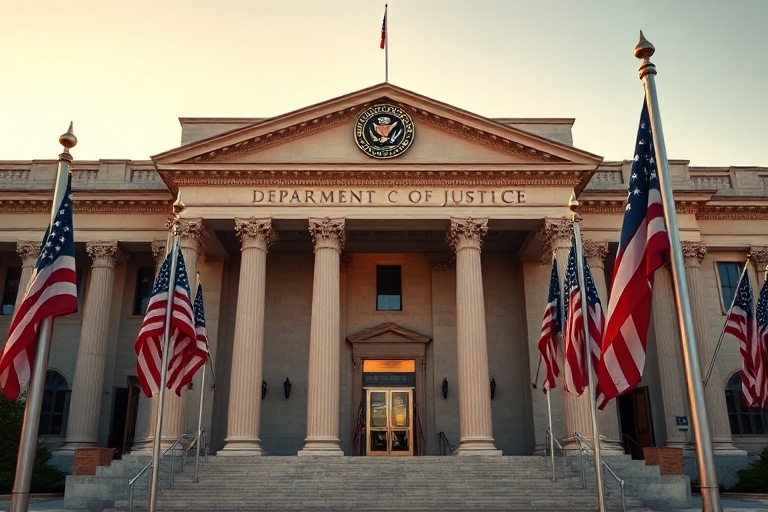
What Is the United States Department of Justice?
The United States Department of Justice (DOJ) serves as the nation’s principal federal law enforcement agency and legal arm. Established in 1870 under President Ulysses S. Grant, the DOJ operates under the guidance of the Attorney General, who is a member of the President’s Cabinet. Its mandate is broad: to uphold the rule of law, protect public safety, and ensure fair and impartial administration of justice.
Unlike many national ministries of justice around the world, the DOJ is not merely a policy advisor—it is a powerful enforcement body. It houses the Federal Bureau of Investigation (FBI), the Drug Enforcement Administration (DEA), and the Bureau of Alcohol, Tobacco, Firearms and Explosives (ATF), among other agencies. This structure reflects the DOJ’s dual role: as both a guardian of civil rights and a frontline defender against crime and corruption.
Core Functions and Organizational Structure
The DOJ’s responsibilities are organized into several key divisions, each addressing distinct legal and social challenges:
- Criminal Division: Prosecutes violations of federal criminal law, including white-collar crime, cybercrime, and human trafficking.
- Civil Rights Division: Enforces federal statutes protecting individuals from discrimination based on race, gender, religion, disability, and other protected classes.
- Environment and Natural Resources Division: Handles litigation involving environmental laws, wildlife protection, and natural resource management.
- Office of the Solicitor General: Represents the United States in cases before the Supreme Court and shapes the nation’s legal arguments on constitutional and statutory interpretation.
The DOJ also oversees the U.S. Attorneys’ offices across 94 federal judicial districts. These offices prosecute federal crimes and defend the United States in civil litigation, acting as the local face of federal law enforcement. This decentralized structure allows the DOJ to respond to regional issues while maintaining national legal coherence.
Global Reach and International Cooperation
While the DOJ’s authority is rooted in U.S. federal law, its impact extends well beyond national borders. Through agencies like the FBI and DEA, it collaborates with foreign governments, Interpol, and international tribunals to combat transnational crime, terrorism, and corruption. For example, the DOJ has played a critical role in dismantling global drug cartels and prosecuting cybercriminal syndicates that operate across multiple jurisdictions.
In the realm of human rights, the DOJ has worked with international partners to address crimes against humanity and war crimes. It has supported investigations into atrocities in places like Syria and Ukraine by sharing forensic expertise and evidence. This global engagement underscores a broader trend: modern justice systems are increasingly interconnected, requiring coordination across legal traditions and political systems.
Challenges in Cross-Border Justice
Despite these efforts, the DOJ faces persistent challenges in international cooperation. Jurisdictional conflicts, differing legal standards, and sovereignty concerns can hinder investigations. For instance, extradition requests often stall due to political tensions or incompatible legal frameworks. The case of Julian Assange highlighted these tensions, as his prosecution under the Espionage Act raised debates over press freedom versus national security.
Moreover, the rise of digital currencies and encrypted communications has complicated law enforcement efforts. Cybercriminals can exploit these tools to launder money or evade detection, forcing the DOJ to adapt with advanced forensic techniques and international task forces.
The DOJ in Cultural and Political Context
The Department of Justice does not operate in a vacuum—it reflects and shapes the cultural and political climate of the United States. During the Civil Rights Movement, the DOJ became a key ally in enforcing desegregation laws, sending federal marshals to protect students integrating schools in Little Rock, Arkansas. This legacy of using legal authority to advance social justice remains a defining aspect of its identity.
In recent decades, the DOJ has also become a focal point in political discourse. High-profile cases—such as the prosecution of corporate executives after the 2008 financial crisis or the investigation into Russian interference in the 2016 election—have fueled debates about accountability, transparency, and the independence of law enforcement. Critics argue that political influence can undermine the DOJ’s impartiality, while supporters emphasize its role as a check against abuse of power.
Public Trust and Reform Initiatives
Maintaining public trust is central to the DOJ’s mission. Scandals, such as the misconduct uncovered in the FBI’s handling of the 2016 election or the use of flawed forensic evidence in criminal cases, have eroded confidence in some quarters. In response, the DOJ has launched initiatives to improve transparency, such as the creation of the National Commission on Forensic Science and expanded use of body cameras in federal law enforcement.
Reform efforts also include calls to address systemic biases in policing and prosecution. The DOJ’s pattern-or-practice investigations, which examine systemic civil rights violations by local police departments, have led to consent decrees in cities like Ferguson, Missouri, and Baltimore, Maryland. These agreements aim to rebuild community trust through structural reforms in training, oversight, and accountability.
Conclusion: A Living Institution in a Changing World
The United States Department of Justice remains one of the most consequential legal institutions in the world. Its work spans the prosecution of street crime and corporate fraud, the defense of civil liberties, and the negotiation of international legal standards. As technology evolves and global challenges intensify, the DOJ’s ability to adapt will determine its relevance in the decades ahead.
What is clear is that the DOJ is more than a government agency—it is a reflection of the nation’s values, its contradictions, and its ongoing struggle to balance justice with power. In an era of rapid change, its role as a guardian of the rule of law has never been more vital, both at home and abroad.