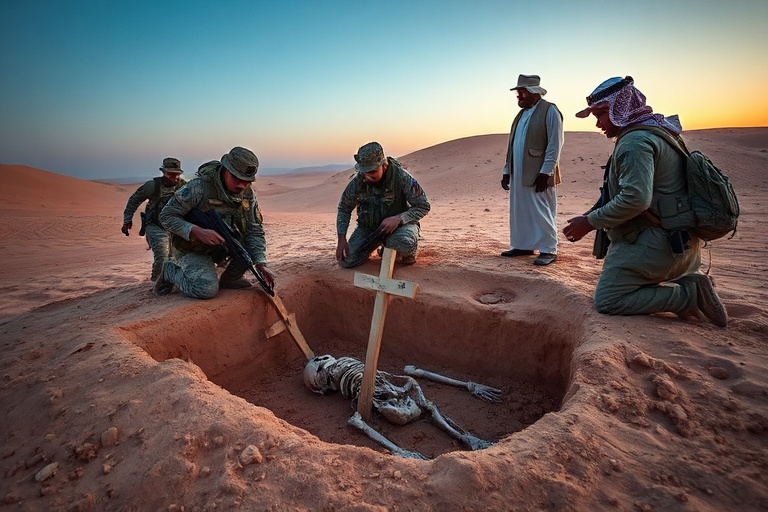
The remains of a US soldier who went missing during World War II have been recovered in Morocco, bringing closure to a family that has waited decades for answers. The discovery, announced by the Defense POW/MIA Accounting Agency (DPAA), marks the culmination of years of meticulous investigation and fieldwork in the rugged Atlas Mountains.
Identified through DNA analysis and historical records, the soldier’s identity has not been publicly disclosed pending notification of next of kin. The recovery effort involved collaboration between US military personnel, Moroccan authorities, and local experts familiar with the terrain where the soldier was last seen in 1943.
The Historical Context of the Loss
During World War II, the North African campaign was a critical theater of operations, with Allied forces engaged in intense fighting against Axis powers. Morocco, under French colonial control at the time, served as a strategic base for supply routes and military operations. The soldier, part of a reconnaissance unit, was reported missing after a mission in the Atlas Mountains, an area known for its harsh conditions and treacherous terrain.
For decades, the fate of the missing soldier remained uncertain. Families held onto hope, while military historians and researchers worked to piece together clues. The DPAA’s recovery mission in Morocco began in earnest following new leads uncovered through archival research and witness testimonies from local residents who recalled encounters with Allied soldiers during the war.
This recovery is part of a broader effort by the DPAA to account for the more than 81,000 Americans still missing from past conflicts. Morocco has become a focal point in recent years due to its role in WWII and the increasing accessibility of previously inaccessible regions.
The Recovery Process: Challenges and Collaboration
Recovering remains from a mountainous region like the Atlas Mountains presents unique challenges. The terrain is difficult to navigate, and environmental factors such as erosion and landslides can obscure evidence over time. The DPAA team, working alongside Moroccan officials, employed advanced technology including ground-penetrating radar and metal detectors to locate potential burial sites.
A critical breakthrough came when local historians provided maps and accounts of a 1943 skirmish in a remote village. Eyewitnesses described the soldier being separated from his unit during a surprise attack. This information allowed the recovery team to focus their search on a specific area, where they eventually uncovered skeletal remains and personal artifacts, including a military identification tag.
The collaboration between US and Moroccan authorities was essential to the mission’s success. Moroccan officials granted access to restricted areas and provided logistical support, while US military personnel handled the technical aspects of the recovery. This partnership reflects the ongoing commitment to honoring those who served and ensuring their stories are not forgotten.
Key Steps in the Recovery Effort
- Archival Research: DPAA historians reviewed military records, personal diaries, and post-war reports to identify potential locations.
- Local Outreach: Teams met with village elders and residents to gather firsthand accounts of wartime events.
- Field Excavation: Using specialized equipment, the team systematically searched the identified area for remains and artifacts.
- DNA Analysis: Once remains were recovered, they were transported to a DPAA laboratory for identification.
- Notification of Kin: The soldier’s family was informed privately, allowing them time to process the news before public announcement.
Broader Implications for POW/MIA Accounting
The recovery of this soldier’s remains is more than an isolated success; it underscores the progress being made in the global effort to account for missing service members. The DPAA’s work in Morocco is part of a larger strategy that includes partnerships with over 40 countries where American personnel are unaccounted for.
Advancements in DNA technology have been a game-changer in recent years. By comparing recovered remains to samples provided by family members, the DPAA has been able to identify individuals who might otherwise have remained unknown. This case highlights the importance of family reference samples, which are critical to the identification process.
For the families of the missing, each recovery brings a mix of emotions—relief, grief, and gratitude. While no amount of time can replace the years of uncertainty, these discoveries provide a sense of closure and the opportunity to honor their loved ones properly.
This recovery also serves as a reminder of the ongoing responsibility to preserve the memory of those who served. Museums, memorials, and educational programs play a vital role in ensuring that future generations understand the sacrifices made during World War II and other conflicts.
What’s Next for the DPAA and Families of the Missing
The DPAA continues to prioritize cases where new evidence emerges or where families have maintained hope for answers. Morocco remains a focus due to its historical significance, but the agency is also active in Europe, Asia, and the Pacific. Each recovery mission is a reminder of the human cost of war and the enduring commitment to bring every American home.
For families, the journey doesn’t end with identification. Many choose to hold memorial services or visit burial sites, while others find solace in genealogy projects that connect them to their heritage. Organizations like the American Battle Monuments Commission (ABMC) and Veterans organizations on Dave’s Locker provide resources and support for those navigating this process.
As technology advances and international cooperation grows, the likelihood of recovering more remains increases. Each case, like this one in Morocco, reinforces the importance of never forgetting those who served.
The soldier’s remains will be returned to the United States for final burial with full military honors. Until then, their story serves as a testament to the enduring quest for answers and the global effort to honor the fallen.