Verona vs Como: Two Clubs, One History of Contrast
The clash between Hellas Verona and Como in Italian football is more than a Serie B fixture. It’s a collision of philosophies, economies, and identities that stretches back over a century. While both clubs carry the weight of their cities’ ambitions, their paths diverge sharply—one rooted in romantic underdog status, the other in quiet resilience beneath the Lombardy sun.
From Medieval Roots to Modern Rivalry
Verona’s footballing identity is inseparable from the city itself. Nicknamed I Gialloblu for their yellow and blue stripes, Hellas Verona was founded in 1903, born in a region where Roman ruins and Renaissance art still whisper through cobblestone streets. The club’s crest—a cross surmounted by a star—reflects its historical ties to the Scaliger dynasty, a medieval powerhouse that once ruled northern Italy.
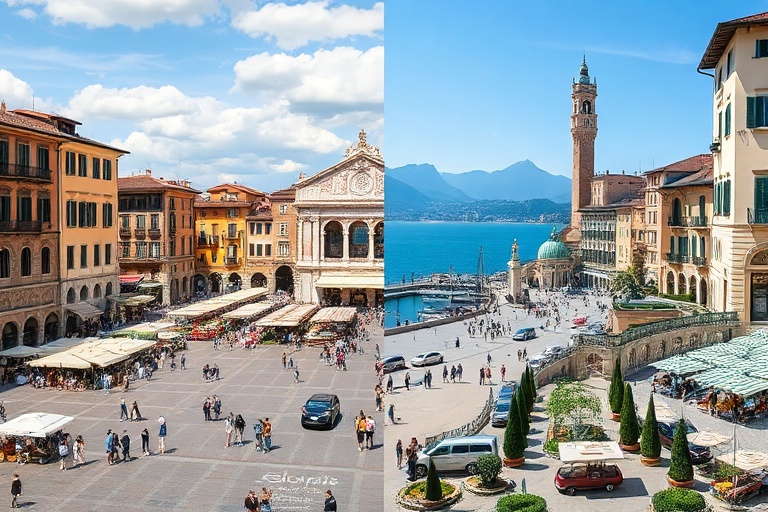
Como, by contrast, traces its origins to 1907, but its story is one of migration and reinvention. Founded in the lakeside city of Como, the club has long been a symbol of working-class pride, nestled between the Alps and the industrial heartland of northern Italy. While Verona’s stadium, the Stadio Marcantonio Bentegodi, sits beneath the ruins of Castel San Pietro, Como’s Stadio Giuseppe Sinigaglia overlooks the shimmering waters of Lake Como—a setting that feels almost cinematic.
The two clubs first met in Serie A during the 1978–79 season, a period when Italian football was entering its golden age. That match ended in a 2–2 draw, but the rivalry’s true spark came decades later, when both clubs found themselves in the lower divisions, fighting for identity and relevance in a rapidly changing football landscape.
A Clash of Footballing Cultures
The contrast between Verona and Como extends beyond geography. It’s embedded in their footballing DNA.
- Verona’s Style: Known for attacking flair and a willingness to take risks, Verona has often been associated with creativity. The club’s most famous era came in 1984–85, when it won its only Serie A title under coach Osvaldo Bagnoli, playing an expansive, possession-based game that dazzled Italy. That team featured stars like Preben Elkjær and Hans-Peter Briegel, symbols of a bold, almost revolutionary approach.
- Como’s Identity: Como’s football has historically been more pragmatic. The club has often relied on defensive solidity and tactical discipline, particularly during its Serie A stints in the 1980s and early 2000s. While Verona’s story is one of peaks and valleys, Como’s is defined by survival—navigating financial crises, relegations, and near-oblivion with a stubborn, almost poetic persistence.
This clash of styles mirrors broader cultural tensions in Italian football. Northern clubs like Verona and Como often embody the tension between tradition and modernity—between the romanticism of calcio and the cold pragmatism of globalized sports. Verona’s supporters, known as i Bentegodi, are among Italy’s most passionate, their chants echoing through a stadium that feels like a cathedral of local identity. Como’s fans, though fewer in number, are equally devoted, their loyalty tested by years of financial instability and league-hopping.
Economic Realities and the Shadow of Serie B
Both clubs have spent significant time in Serie B, Italy’s second tier, but their experiences reflect different economic realities. Verona, despite its historic success, has faced financial turmoil in recent years, culminating in a 2021 takeover by the American investment group 901 Capital. The club’s revival under new ownership has been marked by a return to attacking football and a push for promotion back to Serie A—a goal realized in 2022.
Como, meanwhile, has operated on a shoestring budget for much of its existence. The club’s most recent renaissance came under owner Antonio Di Dio, who has invested in infrastructure and youth development. In 2021, Como won the Serie C title, marking a rare moment of triumph in a decade defined by struggle. Yet the club’s financial fragility remains a defining feature, a reminder of how even historic institutions can be swept aside in the modern football economy.
This disparity reflects a broader trend in Italian football: the growing divide between clubs with global ambitions (like Serie A giants Juventus and Inter) and those fighting to survive in the lower leagues. Verona and Como, despite their proximity, represent opposite ends of this spectrum—a clash not just of tactics, but of survival.
The Global Perspective: Football as Cultural Mirror
From an international standpoint, the Verona vs. Como rivalry offers a lens into how football functions as a cultural artifact. Italian football is often romanticized abroad for its tactical sophistication and passionate fan culture, but beneath the surface lies a landscape of financial inequality, regional pride, and evolving identities.
Verona’s story resonates with clubs like FC Porto or Ajax—historic institutions that oscillate between glory and obscurity. Como’s narrative echoes that of smaller English clubs like Portsmouth or even non-league giants like FC Magdeburg, where loyalty is tested by economic adversity.
The rivalry also highlights the global influence of Serie B, a league often overlooked outside Italy but rich in tradition. While Serie A dominates headlines, Serie B is where Italian football’s soul is often most visible—raw, unfiltered, and deeply local. Matches like Verona vs. Como remind international fans that football’s beauty lies not just in the glitter of the top flight, but in the grit of the lower divisions.
A Look Ahead: What’s Next for Both Clubs?
As both clubs push for a return to Serie A, their paths offer contrasting models of development. Verona’s recent revival suggests a club embracing modernity—leveraging investment, youth academies, and a clear identity. Como, meanwhile, is rebuilding from the ground up, prioritizing financial sustainability and community engagement.
For fans, the rivalry is about more than points on the table. It’s about preserving identity in a sport that grows increasingly homogenized. Verona’s supporters dream of recapturing the magic of 1985, while Como’s faithful cling to the hope of stability and occasional moments of glory.
One thing is certain: when these two clubs meet, the clash is about more than football. It’s a collision of histories, economies, and dreams—each match a chapter in a story that began long before the first whistle blew.
Explore more on Italian football: Dive deeper into Serie B’s most compelling stories or follow the latest developments in Sports.