What Are Presidential Pardons and How Do They Work?
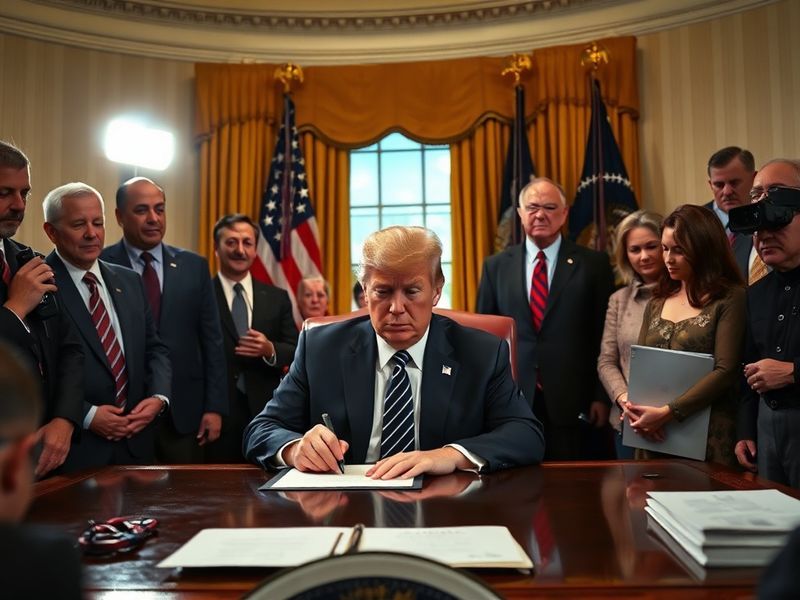
Presidential pardons are a constitutional power granted to the U.S. president under Article II, Section 2 of the Constitution. This authority allows the president to forgive individuals convicted of federal crimes, effectively erasing their sentences or reducing penalties. Pardons can be issued before or after conviction, and they do not require congressional approval. The process typically involves a request submitted to the Office of the Pardon Attorney, which reviews cases before making recommendations to the president.
While pardons are often associated with political figures, they can apply to any individual facing federal prosecution. The power has been used throughout U.S. history to address perceived injustices, reward loyalty, or signal a shift in policy. For example, President Gerald Ford famously pardoned Richard Nixon in 1974, ending the Watergate scandal’s legal fallout. Pardons can also be controversial, as they sometimes appear to favor allies or undermine judicial outcomes.
Internationally, the concept of a pardon varies. Some countries, like the United Kingdom, have similar royal pardons exercised by the monarch on the advice of government officials. Others, such as France, rely on judicial bodies to review clemency requests. The U.S. system stands out for its broad executive discretion, which has led to both praise for its flexibility and criticism for its potential misuse.
The Trump Presidency and Pardon Records
Donald Trump’s use of pardons during his single term in office drew significant attention, both domestically and abroad. He issued 94 pardons and 11 commutations, a mix of high-profile clemencies and obscure cases. Among the most notable were pardons for former political allies like Joe Arpaio, the controversial former sheriff of Maricopa County, Arizona, and Roger Stone, a longtime Trump associate convicted in the Mueller investigation.
Trump also pardoned figures with no direct political ties, such as Conrad Black, a media mogul convicted of fraud, and Jon Ponder, a former bank robber turned prison reform advocate. Critics argued that some pardons were politically motivated, rewarding loyalty over justice. Supporters, however, framed them as corrective measures for what they saw as unjust prosecutions.
Internationally, Trump’s pardons were scrutinized as part of a broader pattern of executive overreach. European media outlets often framed them as evidence of a presidency unconstrained by norms. Meanwhile, in countries with weaker separation of powers, such as Turkey or Russia, observers debated whether such sweeping clemency powers could be replicated in their own political systems.
Comparing Trump’s pardon record to predecessors reveals a few patterns. He pardoned individuals more frequently in his final weeks in office, a tactic some outgoing presidents use to shape the legacy of their tenure. His use of preemptive pardons—such as for his children and associates—was less common but not unprecedented. Historians noted that Trump’s approach reflected a transactional view of clemency, where pardons were sometimes exchanged for public support or personal favors.
Controversies and Legal Challenges
Trump’s pardons were not without legal and ethical controversies. One of the most contentious was the pardon of Joe Arpaio, who was convicted of criminal contempt for defying a court order to stop racial profiling in his sheriff’s department. Critics saw the pardon as an attack on judicial independence, while supporters praised it as a stand against what they viewed as politically motivated prosecutions.
Another flashpoint was the pardon of four former Blackwater contractors convicted in the 2007 Nisour Square massacre in Iraq, where 17 civilians were killed. The pardons sparked outrage in Iraq and among human rights organizations, who argued that they undermined accountability for war crimes. The U.S. State Department distanced itself from the decision, emphasizing that it did not reflect official policy.
Legal scholars have debated whether Trump’s pardons could face future challenges. Some argue that pardons for self-serving purposes—such as protecting the president from investigation—could be unconstitutional. Others point to the Supreme Court’s 2020 decision in Trump v. Vance, which reaffirmed that presidents are not immune from criminal investigation, as a potential limit on pardon power. However, no legal mechanism currently exists to overturn a pardon once issued.
The political fallout from Trump’s pardons extended beyond U.S. borders. In Mexico, where cartel violence remains a persistent issue, some officials expressed concern that pardons could embolden criminal networks. Meanwhile, in Europe, commentators framed the pardons as part of a broader erosion of democratic norms, where executive power increasingly trumps institutional checks and balances.
Cultural and Global Perspectives on Pardons
Culturally, pardons have long captured the public imagination as symbols of mercy, justice, or corruption. From Shakespeare’s Measure for Measure to modern films like The pardoner’s Tale, literature and art have explored the moral complexities of forgiveness. Trump’s pardons added a contemporary twist to this narrative, blending politics, celebrity, and legal drama.
Globally, the U.S. pardon system is often contrasted with other models of clemency. In Canada, for example, pardons (now called record suspensions) are granted by an independent agency rather than the prime minister, reducing perceptions of political influence. Japan’s pardon system is similarly structured, with the cabinet playing a formal role in the process. These differences highlight how cultural attitudes toward forgiveness and authority shape legal frameworks.
In authoritarian regimes, pardons can serve as tools of control rather than mercy. China’s “special pardon” system, for instance, has been used to reward political loyalty or mark national events like the founding of the People’s Republic. Such examples underscore the risks of unchecked executive power, a concern that resonates in debates about Trump’s pardons.
Public opinion on pardons is often divided. Polls in the U.S. have shown that while Americans broadly support the idea of mercy, they are skeptical of pardons perceived as politically motivated. Internationally, reactions to Trump’s pardons varied widely. In some Latin American countries, where U.S. influence is strong, the pardons were seen as hypocritical given America’s historical support for authoritarian regimes. Meanwhile, in Europe, they were often framed as evidence of a presidency unmoored from democratic norms.
As the U.S. grapples with the legacy of Trump’s pardons, the debate over executive clemency continues to evolve. Some advocates push for reforms to limit partisan influence, such as requiring congressional approval for controversial pardons. Others argue that the current system, with its broad presidential discretion, remains a vital safeguard against unjust prosecutions. The global conversation about pardons reflects deeper questions about power, justice, and the role of mercy in modern governance.
- Explore more on U.S. political history and its global impact
- Read about other legal controversies and their cultural significance
For further reading on related topics, visit Dave’s Locker.