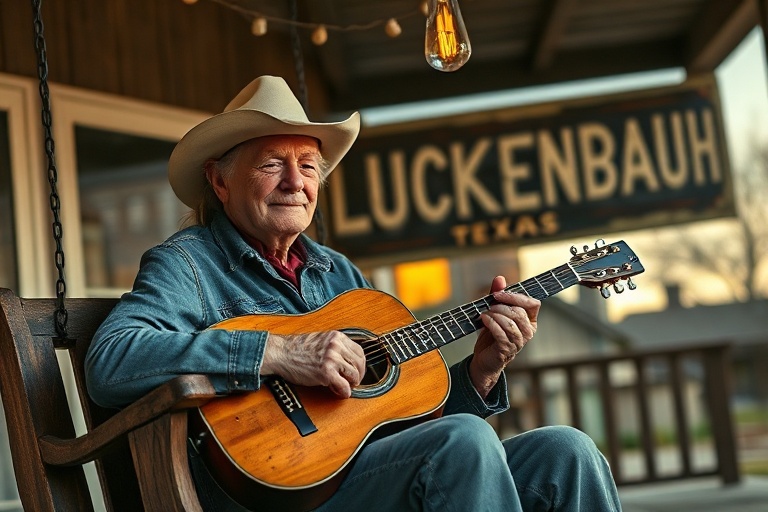
Few figures in American music have left a mark as indelible as Willie Nelson. For over seven decades, the songwriter, musician, and activist has not only shaped the sound of country music but has redefined what it means to be an artist in America. His raspy voice, unmistakable phrasing, and rebellious spirit have made him a living legend, transcending genres and generations.
From Texas Roots to National Icon
Born in Abbott, Texas, in 1933, Nelson’s early life was marked by hardship and music. Raised by his grandparents after his parents divorced, he learned to play guitar by age six and wrote his first song at seven. By his teens, he was performing in honky-tonks and local radio stations, absorbing the raw, storytelling essence of country music.
Nelson’s songwriting prowess became evident early. Hits like Crazy (made famous by Patsy Cline) and Hello Walls (a top 10 hit for Faron Young) established him as a formidable talent behind the scenes. But it wasn’t until the late 1960s and early 1970s that he stepped into the spotlight as a performer in his own right. His 1973 album Shotgun Willie marked a turning point, blending traditional country with a grittier, more personal sound.
This period also saw Nelson’s rise as a countercultural figure. His long hair, bandanas, and outspoken advocacy for marijuana and progressive causes set him apart from the polished image of Nashville’s establishment. By 1975, he’d become the unofficial leader of the “Outlaw Country” movement, a rebellion against the slick, formulaic sound dominating country radio at the time.
Defining the Outlaw Movement
The Outlaw Country movement wasn’t just a musical shift—it was a cultural one. Nelson, along with Waylon Jennings, Johnny Cash, and others, rejected the industry’s constraints, embracing artistic freedom and authenticity. This ethos resonated deeply with fans who felt alienated by the commercialization of country music.
Key elements of the Outlaw Country aesthetic included:
- Raw, unpolished production: Nelson’s albums often featured live recording sessions and minimal studio interference, creating a sense of spontaneity.
- Lyrical honesty: Songs like Whiskey River and Mammas Don’t Let Your Babies Grow Up to Be Cowboys tackled real-life struggles and relationships with unflinching honesty.
- Visual rebellion: Nelson’s bandanas, tattoos, and laid-back demeanor became symbols of defiance against Nashville’s conservative norms.
- Collaborative spirit: Outlaw artists frequently worked together, blending their talents in ways that defied genre boundaries.
Nelson’s 1976 album Wanted! The Outlaws, the first platinum-certified country album, cemented the movement’s legacy. It featured collaborations with Jennings, Jessi Colter, and Tompall Glaser, proving that country music could thrive outside the Nashville machine.
Beyond Music: The Activist and Entrepreneur
Nelson’s influence extends far beyond his music. A lifelong advocate for social justice, environmental causes, and marijuana legalization, he has used his platform to challenge the status quo. In 1985, he co-founded Farm Aid, a nonprofit that supports family farmers and promotes sustainable agriculture. The annual concert series, which has raised over $70 million to date, remains one of the most enduring charity events in music.
His activism isn’t limited to farming. Nelson has been a vocal critic of war, corporate greed, and political corruption, often using his songs and public appearances to amplify marginalized voices. In 2016, he endorsed Bernie Sanders’ presidential campaign, aligning himself with progressive causes at a time when his voice carried significant weight.
Nelson’s entrepreneurial ventures are equally impressive. He’s launched his own brands, including Willie’s Reserve (a cannabis company) and Willie’s Roadhouse (a SiriusXM radio channel). His business acumen reflects his ability to turn rebellion into opportunity—a trait that has kept him relevant across decades.
The Enduring Legacy of Willie Nelson
At 90 years old, Nelson shows no signs of slowing down. In 2023, he released Bluegrass*, his first bluegrass album in nearly two decades, proving his adaptability and enduring appeal. His annual Fourth of July picnics, which began in 1973, remain a pilgrimage for fans, offering a mix of music, activism, and community.
Nelson’s legacy is more than just his music or his activism—it’s a testament to the power of authenticity. In an industry often driven by trends and commercialism, he has remained true to himself, inspiring generations of artists to do the same. His influence can be heard in the work of artists as diverse as Merle Haggard, John Prine, and Sturgill Simpson, as well as in the broader Americana and folk scenes.
As country music continues to evolve, Nelson’s impact looms large. He has bridged the gap between traditional and modern sounds, proving that country music isn’t confined to one era or style. Whether he’s performing at the Grammys or advocating for farmers in Washington, D.C., Nelson embodies the spirit of an artist who refuses to be boxed in.
“Once you replace negative thoughts with positive ones, you’ll start having positive results.” — Willie Nelson
For those who’ve followed his career, Nelson’s story is a reminder that art and activism are not mutually exclusive. He has shown that music can be a force for change, and that an artist’s voice can extend far beyond the stage. As long as there are listeners who crave honesty and rebellion, Willie Nelson’s music will endure.
Why Willie Nelson Matters Today
In an era where artists are increasingly expected to conform to algorithms and trends, Nelson’s career offers a blueprint for staying true to oneself. His willingness to take risks—whether in his music, his politics, or his business ventures—has made him a model for artists navigating an ever-changing industry.
Moreover, his activism reminds us that music and social justice are intrinsically linked. From Farm Aid to his advocacy for cannabis legalization, Nelson has used his platform to address issues that matter, proving that art can be both a mirror and a catalyst for change.
As we look to the future of music, Willie Nelson’s legacy challenges us to ask: What does it mean to be an artist in today’s world? For Nelson, the answer has always been clear—it’s about authenticity, courage, and a willingness to stand up for what you believe in.
For further exploration of Nelson’s influence on country music and activism, visit our Music and Culture sections.