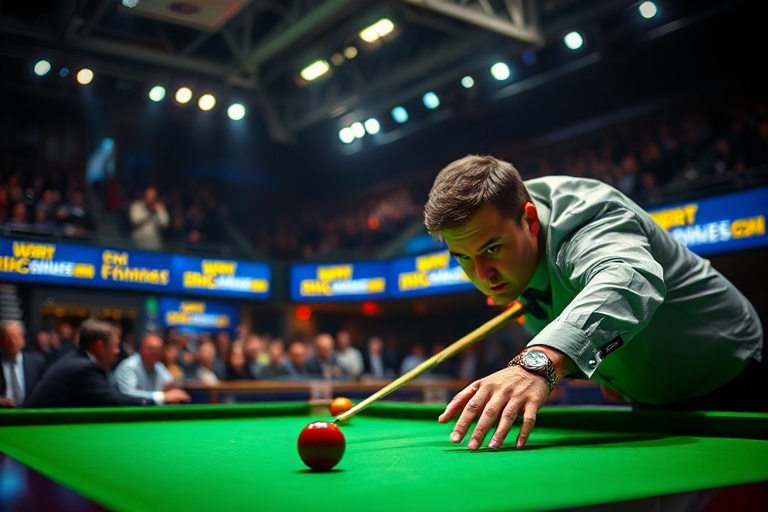
World Snooker Championship: Tradition, Talent, and Global Growth
The World Snooker Championship isn’t just a sporting event; it’s a cultural institution that weaves together the precision of a cue sport with the drama of a global stage. Since its inception in 1927, the tournament has evolved from a modest gathering of British professionals into one of the most-watched and respected sporting events worldwide. Held annually at the Crucible Theatre in Sheffield, England, the championship has become synonymous with high stakes, legendary performances, and moments that transcend the sport itself.
The Crucible Theatre: A Stage for Legends
Since 1977, the Crucible Theatre has been the hallowed ground where snooker’s greatest battles unfold. The intimate setting of the venue—capable of seating just over 900 spectators—creates an atmosphere unlike any other in professional sports. For the players, the Crucible is both a fortress and a crucible (pun intended), where the pressure of the occasion can amplify even the smallest mistakes.
The theatre’s history is rich with iconic moments. In 1985, Dennis Taylor defeated Steve Davis in perhaps the most dramatic final in the tournament’s history, with the last ball of the deciding frame played under the gaze of millions in the middle of the night. That match remains a touchstone for snooker’s global appeal, illustrating how the sport can captivate audiences far beyond its traditional fanbase.
For the local community in Sheffield, the Crucible is more than a venue; it’s a source of pride. The tournament brings economic benefits to the city, drawing visitors from across the UK and beyond. Yet its significance extends beyond economics. The Crucible embodies the global reach of snooker, attracting fans from China, Thailand, and across Europe, each bringing their own traditions and expectations to the event.
A Global Sport with Deep Cultural Roots
Snooker’s origins trace back to the late 19th century in British Army garrisons in India, where it evolved from earlier billiards games. By the early 20th century, it had developed into a structured sport in the UK, but it wasn’t until the mid-20th century that snooker began to expand internationally. Today, the World Snooker Championship reflects this global evolution, with players from over 30 countries competing at the highest level.
China, in particular, has become a powerhouse in modern snooker. Players like Ding Junhui and Liang Wenbo have not only won tournaments but have inspired a generation of young players in a country where snooker is now a mainstream sport. The rise of Chinese players has reshaped the competitive landscape, forcing traditional powerhouses like England, Scotland, and Wales to adapt or be left behind.
Beyond China, Thailand has also emerged as a snooker hotbed, producing talents like James Wattana and more recently, Thepchaiya Un-Nooh. In Europe, countries like Belgium and Malta have seen steady growth in participation, while in Africa, snooker is slowly gaining traction, particularly in South Africa and Egypt. This global expansion speaks to snooker’s adaptability as both a competitive sport and a cultural export.
- United Kingdom: The traditional heartland of snooker, home to legends like Ronnie O’Sullivan, Judd Trump, and Mark Selby.
- China: A rising force with multiple champions and a rapidly growing fanbase.
- Thailand: Known for its attacking style, producing players who redefine the game’s tempo.
- Europe: Countries like Belgium and Malta contribute emerging talents and host key tournaments.
- Africa: Emerging markets with increasing participation, particularly in South Africa and Egypt.
The Business of Glory: Prize Money and Sponsorships
The World Snooker Championship is not just a sporting spectacle; it’s a multi-million-pound industry. In 2023, the total prize fund exceeded £2.5 million, with the winner taking home £500,000. This financial growth reflects snooker’s increasing commercial appeal, driven by television deals, sponsorships, and digital streaming platforms.
Television rights have played a pivotal role in snooker’s expansion. The BBC’s coverage of the World Championship in the UK remains a cornerstone, but international broadcasters in China, Thailand, and the Middle East have also invested heavily. Platforms like Eurosport and Discovery+ have brought the tournament to new audiences, while social media has amplified its reach, with clips of incredible shots and dramatic comebacks going viral worldwide.
Sponsorship deals have further professionalized the sport. Brands like Betfred, Cazoo, and WST (World Snooker Tour) have invested in tournaments, player endorsements, and grassroots development. Yet the financial side of snooker is not without challenges. Critics argue that the sport remains overly reliant on a few top players for its popularity, while others point to the need for greater investment in coaching and infrastructure outside traditional markets.
The Future: Innovation and Tradition
As snooker looks to the future, it faces a delicate balance between preserving its traditions and embracing innovation. The World Snooker Championship’s move to a new venue—planned for 2025 at the Utilita Arena in Sheffield—signals a shift toward larger capacities and modern amenities. This transition raises questions about whether the intimate atmosphere of the Crucible can be replicated elsewhere.
Technological advancements are also transforming the sport. From high-definition broadcasts to AI-powered analytics for players, technology is changing how snooker is played, watched, and analyzed. Yet purists argue that the soul of snooker lies in its simplicity: two players, 22 balls, and a table. The challenge for organizers is to integrate innovation without losing sight of what makes the sport special.
Grassroots development remains another critical focus. Programs like the World Snooker Federation’s global initiatives aim to grow participation in underrepresented regions, ensuring that the next generation of champions comes from diverse backgrounds. The success of these efforts will determine whether snooker can sustain its global momentum or risk stagnation in an increasingly competitive sporting landscape.
Why the World Snooker Championship Matters
The World Snooker Championship is more than a tournament; it’s a celebration of skill, strategy, and resilience. For the players, it represents the pinnacle of a career that often begins in dimly lit clubs or on makeshift tables. For the fans, it’s a chance to witness history, whether through a flawless century break or a last-ball decider that leaves the entire room in stunned silence.
Culturally, snooker occupies a unique space. It’s a sport that demands quiet focus yet thrives on drama. It’s a game of precision that rewards patience and creativity in equal measure. And in an era where sports often chase spectacle, snooker remains a bastion of tradition, where the weight of history is felt with every shot.
As the 2024 championship approaches, the questions are familiar: Who will rise to the occasion? Which underdog will defy the odds? And how will the next generation of players carry the torch forward? One thing is certain: at the Crucible Theatre or its future home, snooker will continue to captivate, challenge, and inspire.