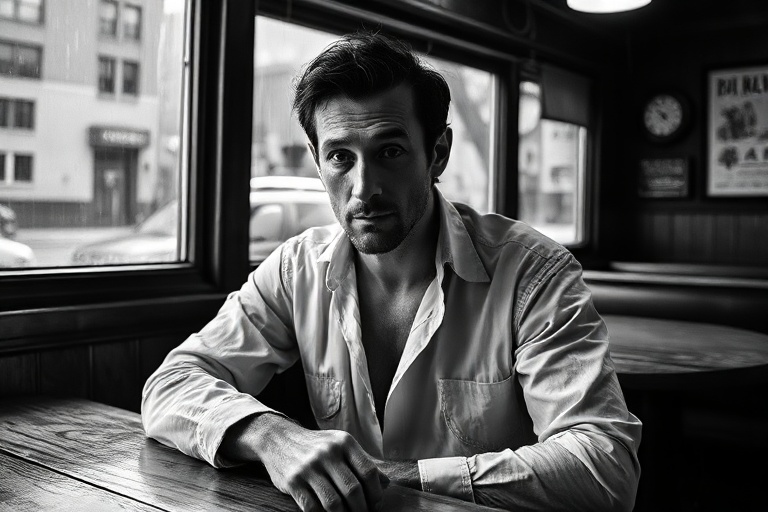
adrien brody
Few actors in Hollywood have balanced intensity with versatility as seamlessly as Adrien Brody. From his early struggles to his historic Oscar win, Brody’s career reflects a deliberate choice to avoid the trappings of typecasting. His willingness to take risks—both in his roles and in his personal life—has cemented his reputation as one of the most unpredictable figures in modern cinema.
Breaking the Mold: Early Career and Defiance of Expectations
Brody’s entrance into Hollywood was not marked by overnight success but by calculated persistence. After appearing in minor roles in the late 1980s and early 1990s, he began to attract attention for his raw, unpolished performances. His breakthrough came with The Thin Red Line (1998), where his portrayal of a traumatized soldier hinted at the emotional depth he would later perfect. Yet even then, Brody refused to be confined to war films or brooding characters—he sought roles that challenged audiences and himself.
His most defining decision came in 2002, when he lost 30 pounds to play the emaciated Władysław Szpilman in The Pianist. The transformation was more than physical; it was a rejection of Hollywood’s superficial standards. Brody’s Oscar win for Best Actor at age 29 made him the youngest winner in that category, but the victory was bittersweet. He later admitted that the win boxed him into a new kind of expectation—one he had to actively resist.
A Career of Contrasts: From Oscars to Indie Gems
Unlike many Oscar winners who struggle to find roles post-award, Brody used his platform to explore diverse projects. He alternated between blockbusters like King Kong (2005) and intimate indie films such as The Darjeeling Limited (2007), directed by Wes Anderson. This range demonstrated his refusal to be pigeonholed. His collaboration with Anderson became particularly notable, as Brody brought a deadpan charm to roles that balanced eccentricity with humanity.
Brody’s choices often defy industry logic. He starred in Predators (2010), a sci-fi action film, and then segued into the arthouse drama The Grand Budapest Hotel (2014). Such versatility is rare, especially among actors who achieve early acclaim. His filmography reveals a pattern: he gravitates toward projects that are visually striking, narratively ambitious, or thematically bold—never settling for safe or commercial.
The Persona Beyond the Screen: Public Image and Privacy
Brody’s public persona has always been as carefully curated as his roles. Known for his intense gaze and disciplined demeanor, he has cultivated an image of an artist who prioritizes craft over fame. This extends to his personal life, which he has guarded with unusual fervor for a Hollywood figure of his stature. Unlike contemporaries who thrive on tabloid attention, Brody has maintained a relatively low profile outside of his work.
His occasional forays into public statements often carry a philosophical tone. In interviews, he has spoken about the fleeting nature of celebrity and the importance of artistic integrity. This self-awareness sets him apart in an industry often criticized for its shallowness. Brody’s approach suggests a belief that true success lies not in awards or box office numbers, but in the impact of the work itself.
Broader Implications: What Brody’s Career Teaches About Hollywood
Adrien Brody’s career offers a case study in resisting industry pressure. His refusal to conform to expectations—whether by losing weight for a role, choosing unconventional projects, or avoiding the spotlight—challenges the conventional wisdom of Hollywood success. In an era where actors often become brands, Brody’s insistence on artistic freedom is a quiet rebellion.
His trajectory also highlights the tension between critical acclaim and commercial viability. While The Pianist was a critical triumph, it was not a financial blockbuster. Yet Brody’s subsequent choices proved that artistic credibility could coexist with mainstream success. This duality is increasingly rare in an industry dominated by franchise films and algorithm-driven casting.
Brody’s influence extends beyond acting. His presence in films like The French Dispatch (2021) and Asteroid City (2023) underscores his role as a bridge between old Hollywood craftsmanship and contemporary indie sensibilities. Directors seek him out not just for his talent, but for his ability to elevate material through sheer commitment.
Key Takeaways from Adrien Brody’s Career
- Defiance of Typecasting: Brody has consistently chosen roles that defy expectations, from war dramas to Wes Anderson’s whimsical films.
- Physical and Emotional Transformation: His dedication to roles, such as losing 30 pounds for The Pianist, sets a standard for method acting in modern cinema.
- Balancing Critical and Commercial Success: He has navigated awards recognition with mainstream appeal, avoiding the trap of being labeled a “one-hit wonder.”
- Privacy as a Statement: His guarded personal life contrasts with industry norms, reinforcing his image as an artist rather than a celebrity.
- Collaborative Spirit: His partnerships with directors like Wes Anderson and Roman Polanski demonstrate a commitment to creative synergy over individual glory.
Conclusion: The Enduring Relevance of a Maverick
Adrien Brody’s career is a testament to the power of artistic integrity in an industry that often prioritizes profit over passion. His choices—whether in film selection, physical transformation, or public engagement—reflect a deep respect for the craft of acting. In an era where actors are increasingly treated as content producers or influencers, Brody’s career stands as a reminder of what it means to be a true artist.
As he continues to take on new projects, from high-profile dramas to experimental indie films, Brody remains a compelling figure. He is not just an actor who has won an Oscar; he is a symbol of resistance against the homogenization of modern cinema. His legacy may not be measured in box office numbers, but in the way he has inspired others to pursue their artistic vision without compromise.
For aspiring actors and fans alike, Brody’s career offers a simple yet profound lesson: success is not about fitting into a mold, but about breaking it.