Air India’s Revival: How Tata Group Is Reshaping India’s Flagship Airline
Once synonymous with India’s post-independence industrial ambitions, Air India has spent decades oscillating between national pride and financial distress. Today, the airline stands at a pivotal juncture, its future shaped by bold strategic moves, global competition, and shifting consumer expectations. This isn’t merely a story of corporate revival—it’s a reflection of India’s evolving aviation sector and its ambitions on the world stage.
The Revival Plan: What’s Changing at Air India
Under the Tata Group’s stewardship since 2022, Air India has embarked on one of the most ambitious turnaround plans in global aviation history. The airline, previously marred by debt and inefficiency, is now investing over $2.5 billion to modernize its fleet, upgrade services, and streamline operations. A fleet renewal program is underway, with 470 new aircraft on order—including Boeing 787s and Airbus A350s—aimed at replacing aging Boeing 777s and 737s.
Customer experience is another focal point. The airline has introduced premium economy seating, enhanced in-flight dining, and digital upgrades like mobile app improvements and AI-driven customer service. These changes target both domestic travelers and international passengers, positioning Air India as a competitive alternative to Gulf carriers and Southeast Asian airlines on long-haul routes.
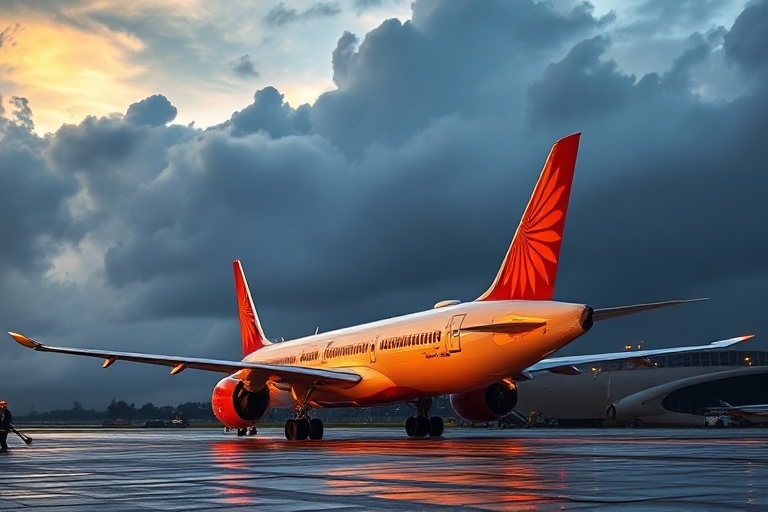
Yet the transformation extends beyond hardware. Air India is rebranding itself as a modern, customer-centric airline. A new livery—featuring a bold “AI” logo and a vibrant color palette—was unveiled in 2023, symbolizing a break from its bureaucratic past. The airline’s loyalty program, Flying Returns, has been revamped to offer more flexible redemption options and partnerships with global brands.
Key Pillars of Air India’s Revival Plan
- Fleet Modernization: Replacing 70% of its fleet with next-gen aircraft, reducing maintenance costs and improving fuel efficiency.
- Route Expansion: Launching non-stop flights to North America and Europe, including San Francisco and London Heathrow, to tap into high-yield markets.
- Operational Efficiency: Reducing turnaround times, optimizing crew scheduling, and investing in predictive maintenance technology.
- Brand Repositioning: Moving from a state-run legacy carrier to a globally competitive airline with a focus on digital innovation and service quality.
The Broader Impact: Why Air India’s Revival Matters
Air India’s revival isn’t just about one airline—it’s a bellwether for India’s aviation ambitions. India is now the world’s third-largest domestic aviation market, with passenger traffic expected to double by 2030. Yet, despite this growth, Indian carriers have long struggled to compete internationally. Air India’s success could shift that narrative, demonstrating that Indian companies can build world-class airlines capable of challenging established players like Emirates, Singapore Airlines, and Lufthansa.
Economically, the airline’s revival could stimulate demand across sectors—tourism, hospitality, and trade. A stronger Air India could help position India as a global hub, connecting South Asia to North America, Europe, and Australia more efficiently. This aligns with India’s broader geopolitical strategy of strengthening ties through connectivity, particularly in the Indo-Pacific region.
There are risks, however. The airline industry remains volatile, with fuel prices, geopolitical tensions, and economic downturns posing constant threats. Additionally, Air India faces stiff competition from low-cost carriers like IndiGo, which dominates the domestic market with over 50% market share. Balancing premium service with affordability will be critical.
Challenges and Criticisms: Is the Turnaround Sustainable?
Despite the optimism, skepticism persists. Critics argue that the Tata Group’s investment is a high-stakes gamble, given the airline’s history of financial losses and operational inefficiencies. The integration of Air India with Vistara (Tata’s joint venture with Singapore Airlines) and AirAsia India (a low-cost carrier) presents logistical and cultural challenges. Merging disparate fleets, crew, and corporate cultures is no small feat.
Moreover, Air India’s debt burden remains significant. While the government has written off much of the airline’s debt, converting it into equity, the path to profitability is still uncertain. Industry analysts estimate that the airline may not turn a profit until at least 2026, assuming all goes according to plan. Delays in aircraft deliveries, labor disputes, or macroeconomic shocks could derail the timeline.
Another concern is the airline’s ability to retain talent. Aviation is a high-skill industry, and Air India’s decades of underinvestment have left gaps in leadership, technical expertise, and customer service training. The Tata Group has hired industry veterans and invested in training programs, but rebuilding institutional knowledge takes time.
The Road Ahead: What’s Next for Air India?
Looking forward, Air India’s success will depend on execution. The airline must deliver on its promises—modern aircraft, reliable service, and competitive pricing—while navigating a complex global landscape. One opportunity lies in leveraging India’s growing middle class. Domestic travel is booming, and Air India is well-positioned to capture this market, especially as it expands its regional connectivity through its subsidiary, AIX Connect (formerly AirAsia India).
Internationally, Air India is betting on the “Star Alliance” membership—a global airline network—to offer seamless connections. This could attract business travelers and frequent flyers who value integrated loyalty programs and smoother transit experiences. However, integrating with such a large alliance requires meticulous coordination and service consistency.
The airline’s digital transformation is another area to watch. Air India has partnered with tech firms to implement AI-driven customer service, dynamic pricing, and personalized travel recommendations. These tools could differentiate it from competitors still relying on traditional models. Yet, digital adoption must be paired with genuine customer engagement—technology alone won’t fix service issues.
Ultimately, Air India’s revival is as much about ambition as it is about execution. The Tata Group has shown willingness to invest heavily, but success will hinge on sustained effort, adaptability, and a customer-first mindset. If it succeeds, Air India could become a model for how legacy carriers can reinvent themselves in a modern, competitive landscape.
What to Watch in the Coming Years
- Fleet Delivery Timelines: Delays in receiving new aircraft could disrupt expansion plans.
- Profitability Milestones: The airline’s first profitable quarter will be a key indicator of long-term viability.
- Customer Feedback Trends: Rising Net Promoter Scores (NPS) would signal genuine improvement in service quality.
- Competitive Responses: How rivals like Emirates and Qatar Airways adjust their pricing and service offerings will impact Air India’s market share.
- Regulatory Environment: Government policies on aviation fuel taxes, airport fees, and foreign investment could influence costs and competitiveness.
As Air India embarks on this journey, it carries the hopes of millions of travelers, employees, and stakeholders. More than just an airline, it represents India’s aspirations in a globalized world—a chance to reclaim a legacy while building a future that’s efficient, innovative, and inclusive.
For now, the skies seem clearer than they have in decades. But the real test lies ahead.
Explore more on India’s aviation sector and global travel trends: