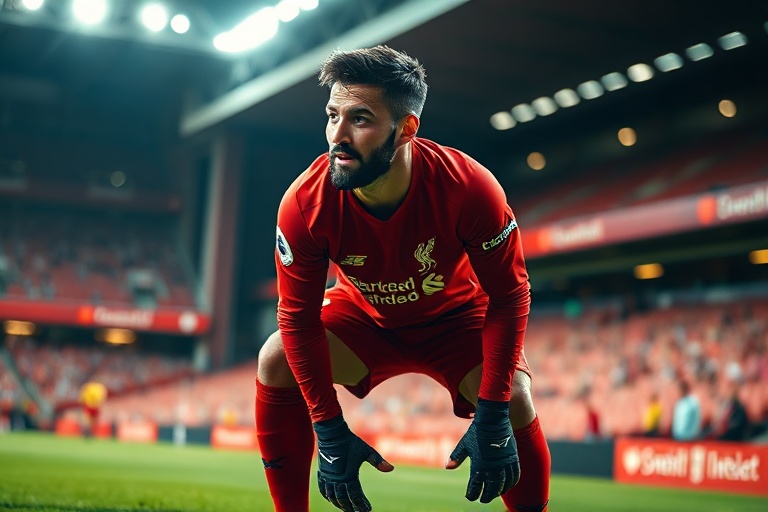
Alisson Becker: How the Brazilian Keeper is Changing Football
Few names in football carry the weight of expectation that Alisson Becker does. Since arriving in Europe from Brazil, the Liverpool goalkeeper has transformed from a promising talent into one of the most influential figures in modern goalkeeping. His rise mirrors broader shifts in the sport, where technical precision and psychological resilience have become as crucial as reflexes.
Born in Novo Hamburgo, Brazil, Alisson’s journey to the top was not linear. He began his career at Internacional before moving to Roma, where his performances caught the attention of Liverpool. The Reds signed him in 2018 for a reported £66.8 million, making him the most expensive goalkeeper at the time. That transfer fee alone signaled a changing tide: clubs were no longer merely buying shot-stoppers; they were investing in complete goalkeepers.
From Brazil to Europe: A Career Built on Precision
Alisson’s style is often described as calm under pressure, a trait that defines his presence in goal. His ability to read the game, distribute the ball with accuracy, and command his defensive line has set new standards. These qualities are not accidental; they are the result of meticulous training and a deep understanding of positional play—a philosophy that has reshaped how goalkeepers are perceived in elite football.
His technical evolution reflects broader trends in South American football. Brazilian goalkeepers have historically been known for their athleticism and flair, but Alisson represents a more disciplined, tactical approach. This shift mirrors Brazil’s own footballing identity, where creativity has often been prioritized over structure. Alisson’s success suggests that the future of Brazilian goalkeeping may lie in blending tradition with modern demands.
Key Attributes of Alisson’s Goalkeeping
- Positional Awareness: Alisson’s ability to stay on his line and cut out through balls has saved Liverpool countless times. His understanding of angles and timing is reminiscent of legends like Manuel Neuer, who redefined the sweeper-keeper role.
- Distribution: Equally comfortable launching counterattacks with long passes or playing short to defenders, Alisson’s distribution is a tactical weapon. This aspect of modern goalkeeping has become essential, especially for teams like Liverpool that prioritize possession and quick transitions.
- Leadership: His vocal presence organizes defenders, and his composure in high-pressure moments has been crucial in Liverpool’s Champions League and Premier League triumphs.
- Reflexes and Aerial Dominance: While not his most celebrated trait, Alisson’s reflex saves and command of the box remain vital. His 6’3” frame allows him to dominate aerial duels, a skill that is increasingly important in modern football.
The Cultural Impact of Alisson’s Success
Alisson’s rise has resonated beyond the pitch. In Brazil, where football is more than a sport—it’s a cultural institution—his success has been celebrated as a reflection of the country’s potential. Brazilians have long produced world-class forwards and midfielders, but high-profile goalkeepers have been rarer. Alisson’s achievements have inspired a new generation of Brazilian keepers, proving that excellence in goal is not limited by geography.
His influence extends to Europe, where his success has reinforced the value of technical goalkeeping. Clubs are increasingly seeking keepers who can play out from the back, a trend that has reshaped academy training programs. Alisson’s partnership with Liverpool’s defense has become a model for how modern goalkeepers integrate with their teams.
A Global Perspective on Goalkeeping Trends
Alisson’s career coincides with a broader evolution in football tactics. The decline of the traditional shot-stopper and the rise of the “sweeper-keeper” have been documented in leagues worldwide. In Germany, Manuel Neuer pioneered this role, while in Spain, Marc-André ter Stegen has adapted it to Barcelona’s possession-based style. Alisson, however, has brought something uniquely Brazilian to this role: a blend of flair and structure.
This global shift is not just tactical but cultural. Football is increasingly a globalized sport, where players from different backgrounds bring diverse skills. Alisson’s success in Europe has highlighted the importance of adaptability, a trait that resonates in an era where players move across continents at younger ages.
Beyond the Pitch: Alisson’s Role as a Leader
Alisson’s influence extends beyond his performances. His humility and professionalism have made him a respected figure in the footballing world. He is often cited by teammates and rivals alike for his work ethic and dedication. In an era where footballers are scrutinized for their off-field behavior, Alisson’s image as a family man and a focused athlete has been a refreshing contrast.
His charitable work, including donations to hospitals in Brazil during the COVID-19 pandemic, has further cemented his status as a role model. This aspect of his career reflects a growing trend among athletes, who are increasingly expected to use their platform for social good.
The Future of Alisson and Liverpool
As Alisson enters the latter stages of his career, questions arise about his legacy. At 31, he remains Liverpool’s first-choice goalkeeper, but the club’s transfer strategy will inevitably shape his future. With young talents emerging in goalkeeping, the question of succession looms large. However, Alisson’s influence on Liverpool’s younger players, such as Caoimhin Kelleher, underscores his role as a mentor.
For Brazil, Alisson remains a cornerstone of their national team. His experience in high-pressure tournaments like the World Cup and Copa América is invaluable. As Brazil looks to reclaim its status as a global footballing powerhouse, Alisson’s leadership will be crucial.
Conclusion: Redefining the Goalkeeper’s Role
Alisson Becker’s career is a testament to the evolving demands of modern goalkeeping. His success has not only redefined what it means to be a top-class goalkeeper but has also highlighted the global nature of football. From the streets of Novo Hamburgo to the grand stages of Anfield and the World Cup, Alisson’s journey reflects the sport’s ability to transcend borders and cultures.
As football continues to evolve, Alisson’s legacy will be measured not just by trophies but by his impact on the next generation of goalkeepers. His blend of technical skill, leadership, and cultural significance makes him a figure who transcends the sport itself. For aspiring goalkeepers, Alisson is proof that greatness is not confined to a single style or background—it is forged through dedication, adaptability, and a relentless pursuit of excellence.
In a sport where change is constant, Alisson Becker stands as a symbol of how goalkeepers can redefine their roles and, in doing so, shape the future of football.