On a clear night, when the sky stretches endlessly above us, it’s easy to forget that our planet shares its cosmic neighborhood with thousands of rocky travelers. These aren’t the kind of travelers that pack suitcases or check into hotels—they’re asteroids, ancient relics of the solar system’s violent birth, silently orbiting the sun. While Hollywood often dramatizes their potential for destruction, the reality is far more nuanced. Some asteroids pose real risks, while others could become valuable resources for future space exploration. Understanding these celestial objects isn’t just about fear; it’s about preparedness, innovation, and the future of humanity beyond Earth.
What Exactly Are Asteroids, and Where Do They Come From?
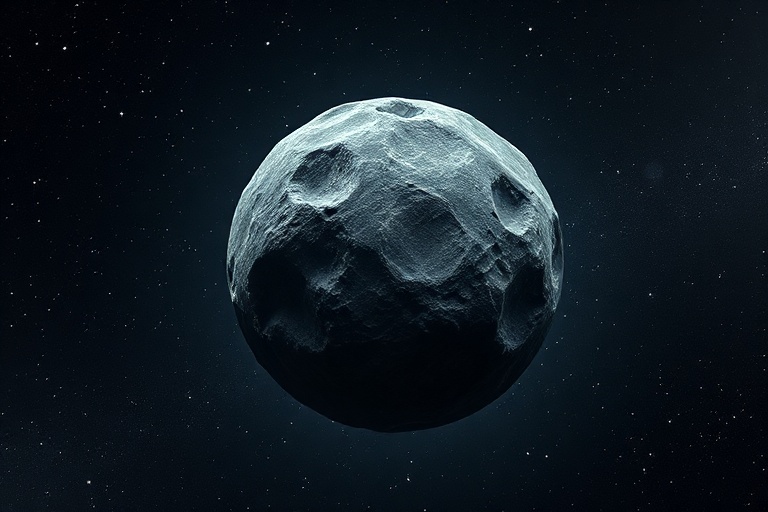
Asteroids are rocky fragments left over from the formation of the solar system roughly 4.6 billion years ago. Unlike planets, which have undergone dramatic changes over time, asteroids remain largely unchanged, making them time capsules of the early solar system. They vary widely in size, from pebble-sized objects to massive bodies like Ceres, which is so large it’s considered a dwarf planet. Most asteroids reside in the asteroid belt, a region between Mars and Jupiter, but their orbits can bring them much closer to Earth.
Their origins trace back to the solar nebula, a swirling disk of gas and dust that surrounded the young sun. Not all material coalesced into planets—some remained scattered, forming asteroids. Over time, collisions and gravitational interactions sent some of these objects hurtling into the inner solar system. Today, near-Earth objects (NEOs) are asteroids whose orbits bring them within 1.3 astronomical units of the sun, putting them on a potential collision course with Earth.
A Brief Classification of Asteroids
- Carbonaceous (C-type): The most common type, rich in carbon compounds and often dark in appearance. These asteroids are thought to contain water and organic materials.
- Silicaceous (S-type): Composed primarily of silicate minerals and nickel-iron, these asteroids are brighter and more reflective.
- Metallic (M-type): Rare asteroids that are almost entirely made of metals like iron and nickel. They could one day serve as mining targets for space-based industries.
Studying these classifications helps scientists not only understand the solar system’s history but also assess which asteroids might be viable for future exploration or mining missions. For instance, a metallic asteroid could be a goldmine—or rather, a platinum-mine—for spacefaring civilizations.
The Double-Edged Sword: Asteroid Threats and Deflection Strategies
While the odds of a catastrophic asteroid impact are low on any given year, the consequences could be devastating. The most famous example is the Chicxulub impactor, which struck Earth 66 million years ago and contributed to the extinction of the dinosaurs. Though such events are exceedingly rare, smaller impacts are more common. In 2013, a 20-meter-wide asteroid exploded over Chelyabinsk, Russia, injuring over 1,500 people and causing significant property damage. Events like these underscore the importance of tracking and studying these objects.
NASA and other space agencies have established programs like the Planetary Defense Coordination Office (PDCO) to detect and monitor potentially hazardous asteroids. The goal isn’t just to predict impacts but to develop strategies to deflect them if necessary. Several concepts have been proposed, ranging from the pragmatic to the speculative:
- Kinetic Impactors: A spacecraft is deliberately crashed into an asteroid to alter its trajectory. NASA’s Double Asteroid Redirection Test (DART) mission successfully demonstrated this technique in 2022 by altering the orbit of the asteroid Dimorphos.
- Gravity Tractors: A spacecraft flies alongside an asteroid for an extended period, using its gravitational pull to gradually change the asteroid’s path.
- Nuclear Explosives: A last-resort option, where a nuclear device is detonated near or on the asteroid to fragment or deflect it. This approach carries significant risks, including the potential to create multiple hazardous fragments.
- Solar Sails: Theoretical proposals suggest attaching large reflective sails to asteroids, using solar radiation pressure to nudge them off course over time.
The key challenge isn’t just technological—it’s timing. Even with decades of warning, executing a deflection mission requires precision and international cooperation. Organizations like the United Nations Office for Outer Space Affairs (UNOOSA) are working to establish frameworks for global responses to asteroid threats.
Asteroids as Resources: The Next Frontier in Space Mining
Beyond their potential to destroy, asteroids could play a pivotal role in the future of space exploration. The resources locked within these rocky bodies—water, metals, and rare minerals—could sustain human colonies on the moon or Mars, or even be transported back to Earth. Water, for instance, can be split into hydrogen and oxygen for rocket fuel, while metals could be used for construction in space.
This isn’t just science fiction. Companies like Planetary Resources and AstroForge have already begun exploring the feasibility of asteroid mining. In 2023, NASA’s OSIRIS-REx mission successfully collected a sample from the asteroid Bennu, bringing it back to Earth for study. The sample contained high concentrations of carbon and water, reinforcing the idea that asteroids could serve as off-world resource depots.
Yet, the path to asteroid mining is fraught with challenges. The technology for extracting and processing materials in space is still in its infancy. Legal frameworks are another hurdle—while the Outer Space Treaty of 1967 prohibits nations from claiming ownership of celestial bodies, it doesn’t explicitly address the extraction of resources. The Artemis Accords, a set of principles for lunar and Martian exploration, represent a step toward clarifying these issues, but much work remains.
Economic and Ethical Considerations
- Economic Viability: The cost of sending mining equipment to an asteroid and returning resources to Earth must be balanced against the value of those resources. Platinum-group metals, for example, could be worth trillions, but the logistics are daunting.
- Environmental Impact: While asteroid mining could reduce the need for terrestrial mining, the environmental impact of space-based operations—such as debris from failed missions—must be carefully managed.
- Geopolitical Tensions: As with any resource, competition for access to valuable asteroids could lead to geopolitical conflicts. International agreements will be crucial to prevent a “space gold rush.”
The potential payoff, however, could redefine humanity’s relationship with the cosmos. Imagine a future where space stations are built using materials mined from asteroids, or where fuel depots in Earth’s orbit enable deeper exploration of the solar system. Asteroids might just be the stepping stones that propel us into a new era of spacefaring civilization.
Looking Ahead: Why Asteroids Matter More Than Ever
Asteroids are more than just celestial hazards or potential goldmines—they are a reminder of our place in the universe. They connect us to the violent, dynamic history of our solar system and offer a glimpse into its future. Whether as objects of scientific study, targets for planetary defense, or resources for space-based industries, asteroids are a focal point for some of the most pressing questions of our time.
As technology advances, our ability to study and interact with these objects will only improve. Missions like NASA’s upcoming NEO Surveyor, a space telescope designed to detect and characterize near-Earth objects, will enhance our early warning systems. Meanwhile, private companies and international collaborations are laying the groundwork for a future where asteroid mining becomes a reality.
For now, asteroids remain silent guardians of the solar system’s secrets, drifting in the void. But their silence won’t last forever. Whether we’re prepared for the next big impact or the next big discovery, one thing is certain: asteroids will continue to shape the destiny of our planet and our species.
As we gaze up at the night sky, we’re not just looking at distant points of light. We’re looking at our past, our future, and the endless possibilities that lie between.
For those interested in staying updated on space-related news and analysis, visit Dave’s Locker Science category for more articles on the latest discoveries and innovations in space exploration.