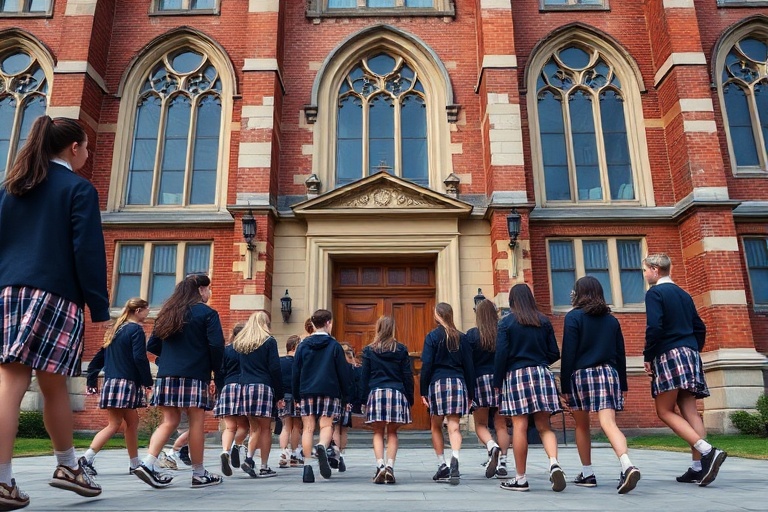
catholic school
History and Tradition of Catholic Schools
Catholic schools have played a pivotal role in education for centuries, blending spiritual development with academic rigor. Their origins trace back to the early days of the Catholic Church, when monasteries and cathedral schools served as centers of learning. By the Middle Ages, these institutions had evolved into formal schools, often attached to cathedrals or run by religious orders. The Council of Trent in the 16th century further solidified their importance, encouraging the establishment of parish schools to combat illiteracy and strengthen Catholic identity.
In the United States, Catholic schools emerged in the 19th century as waves of Irish, Italian, and other European immigrants sought educational opportunities while preserving their cultural and religious heritage. Parochial schools became a cornerstone of immigrant communities, offering not just education but also a sense of belonging. Many of these schools were founded by religious orders, such as the Jesuits, Christian Brothers, and Sisters of Mercy, who dedicated themselves to teaching and service.
The Global Reach of Catholic Education
Today, Catholic schools operate in nearly every country, from the Philippines to Poland, reflecting the Church’s global presence. In countries like Italy and Spain, Catholic schools often receive state funding but maintain religious autonomy. Meanwhile, in nations with large Catholic populations, such as Brazil and Mexico, these schools serve as a bridge between faith and modern education. In some regions, like Sub-Saharan Africa, Catholic schools provide critical access to education in areas where public schooling is limited.
The diversity of Catholic education is striking. In India, for example, institutions like St. Xavier’s College in Mumbai blend Western-style education with Indian cultural values. In Lebanon, Catholic schools cater to both Christian and Muslim students, fostering interfaith dialogue and understanding. This adaptability has allowed Catholic schools to thrive in a variety of social and political contexts.
Academic Excellence and Discipline
Catholic schools are often praised for their high academic standards and disciplined environments. Research has shown that students in Catholic schools tend to perform better on standardized tests and have higher graduation rates compared to their peers in public schools. A study by the National Catholic Educational Association (NCEA) found that Catholic school students are 20% more likely to graduate from college than the national average.
Discipline is another hallmark of these institutions. Uniforms, strict codes of conduct, and a focus on moral development create an environment conducive to learning. Teachers often act as mentors, emphasizing not just academic success but also personal growth. This holistic approach has made Catholic schools a popular choice for parents seeking structure and values-based education.
The Role of Religious Education
At the core of Catholic schooling is religious education, which is integrated into daily curricula. Students study theology, participate in Mass, and engage in service projects that reinforce Catholic teachings. This spiritual foundation is designed to shape not just scholars but also morally responsible citizens. In countries like Poland, where Catholicism is deeply tied to national identity, these schools play a key role in preserving religious traditions.
However, the emphasis on religious education can also be a point of contention. In secular societies, some parents and educators question whether Catholic schools impose their beliefs on students. Others argue that the moral framework provided by these schools is invaluable in an increasingly secular world. The debate continues, particularly in countries where religious freedom and secular education are highly valued.
Challenges and Adaptations
Despite their strengths, Catholic schools face significant challenges. Declining enrollment is a pressing issue, driven by factors such as rising tuition costs, competition from charter schools, and changing demographics. In the United States, the number of Catholic schools has dropped by nearly 20% since 2000, according to the NCEA. Many schools have been forced to close or merge with others to survive.
Financial sustainability is another major concern. Catholic schools traditionally rely on tuition, parish subsidies, and fundraising. However, as parishes face their own financial struggles, many schools have had to increase tuition or seek alternative funding sources. Some have turned to endowments, grants, or partnerships with universities to stay afloat.
The COVID-19 pandemic further exacerbated these challenges. Schools had to quickly adapt to remote learning, invest in technology, and address the emotional toll of the pandemic on students. Despite these obstacles, many Catholic schools demonstrated resilience, finding innovative ways to maintain community and academic excellence.
Innovation and Modernization
To remain relevant, many Catholic schools are embracing modernization. Some have incorporated STEM (Science, Technology, Engineering, and Mathematics) programs to prepare students for the digital economy. Others have expanded extracurricular offerings, including sports, arts, and debate teams, to attract a broader range of students.
Hybrid models, combining in-person and online learning, are also becoming more common. These approaches allow schools to reach students who may not be able to attend classes on campus. Additionally, some institutions are exploring partnerships with public schools or businesses to share resources and reduce costs.
The use of technology extends beyond academics. Many Catholic schools now use digital platforms for prayer and reflection, allowing students to engage with their faith in new ways. Virtual retreats, online Bible study groups, and digital sacramental preparation are just a few examples of how technology is enhancing spiritual development.
Cultural Impact and Legacy
Catholic schools have left an indelible mark on global education and culture. Alumni of these institutions include some of the most influential figures in history, from politicians like Newt Gingrich and Joe Biden to artists like Andy Warhol and actors like Denzel Washington. These individuals often cite their Catholic education as a defining influence on their lives and careers.
The schools themselves have also shaped local communities. In many cities, Catholic schools serve as cultural hubs, hosting events like festivals, concerts, and lectures that bring people together. They often become centers of social justice, advocating for the poor and marginalized through service-learning programs and outreach initiatives.
The Future of Catholic Education
The future of Catholic schools will depend on their ability to adapt to changing times while staying true to their mission. One promising trend is the growth of lay leadership. As fewer religious orders take on teaching roles, laypeople—many of whom are former students—are stepping into leadership positions. This shift brings fresh perspectives and energy to these institutions.
Another key factor will be community engagement. Schools that actively involve parents, alumni, and local organizations in their operations tend to thrive. Fundraising campaigns, volunteer programs, and partnerships with businesses can help ensure financial stability and long-term success.
Ultimately, the enduring appeal of Catholic schools lies in their ability to offer more than just an education. They provide a values-based environment where students can grow intellectually, spiritually, and emotionally. In an era of uncertainty, these schools continue to offer a sense of stability and purpose.
As Catholic schools look to the future, they must balance tradition with innovation. By doing so, they can continue to serve as beacons of learning and faith for generations to come.