Danhausen: How a Wrestling Clown Became a Global Pop Culture Icon
Danhausen: The Cosmic Clown Redefining Wrestling’s Global Reach
Danhausen, the neon-lit, rabidly grinning villain of modern professional wrestling, has become more than just a character. He represents a shift in how wrestling promotions blend performance art, digital culture, and global storytelling. Born from the mind of wrestler and performer Matthew Polinsky, Danhausen arrived in WWE in 2021, but his roots stretch back to independent circuits where his manic energy first captivated audiences.
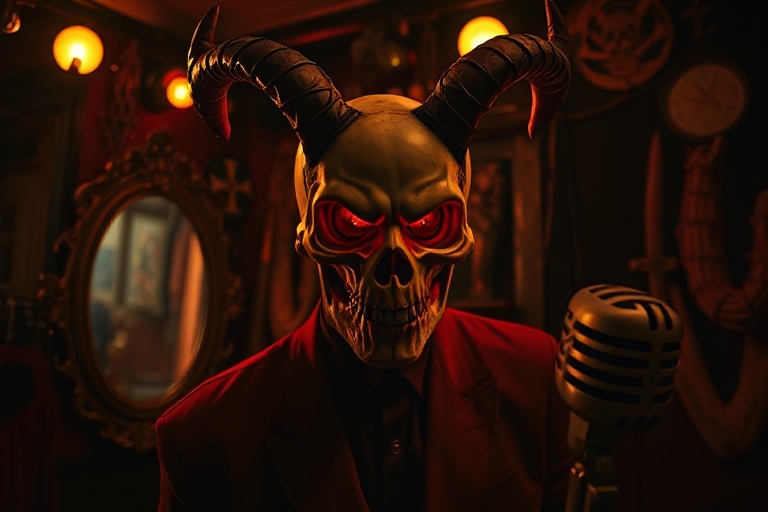
His aesthetic—a fusion of 1980s horror, German expressionism, and internet meme culture—resonates far beyond the ring. Danhausen isn’t merely a gimmick; he’s a carefully constructed persona that thrives on contradiction. He’s both terrifying and absurd, a demonic clown who quotes Shakespeare and offers “curses” in all caps. This duality makes him a cultural bridge between wrestling’s traditional fanbase and younger, digitally native audiences who consume wrestling through clips on TikTok and YouTube.
The Evolution of a Global Wrestling Persona
Polinsky’s journey to creating Danhausen began long before WWE. After training under Josh Prohibition and working on the independent circuit under his real name, he experimented with various characters. It wasn’t until he adopted Danhausen—a name inspired by the phrase “dancehausen,” a playful nod to his love of 80s music—that his career took a transformative turn.
Danhausen debuted in 2016 on the independent scene, wearing a mask inspired by classic horror villains like Freddy Krueger and Leatherface. The look was completed with a tattered cape, glowing green face paint, and a cackling, chant-like entrance. His promos were a mix of faux-German gibberish, internet slang, and surreal threats. Local crowds were immediately drawn to his unhinged energy, and word spread quickly through wrestling forums and social media.
By 2019, Danhausen had become a breakout star on platforms like Entertainment highlights and wrestling podcasts. His ability to blend wrestling theatrics with viral moments—such as his “Danhausen Curse” segments where he’d dramatically place cursed objects in opponents’ bags—made him a favorite among fans who appreciated meta-humor and fourth-wall-breaking storytelling.
From Indie Sensation to WWE Mainstream
WWE took notice. In January 2021, Danhausen made his debut on NXT, immediately standing out in a roster dominated by more traditional characters. His first feud was against Cameron Grimes, a battle between supernatural mysticism and capitalist greed. The contrast highlighted Danhausen’s ability to play with themes of fate, curses, and irony—all delivered with a wink to the audience.
His WWE run accelerated his global profile. Danhausen’s promos, often delivered in a guttural, chanting voice, became instant highlights. They were shared widely on platforms like Twitter and Instagram, where fans dissected every syllable for hidden meanings or meme potential. His feud with LA Knight, which culminated in a match at WrestleMania 38, was particularly notable. The storyline played into Danhausen’s role as an underdog outsider—a cosmic fool fighting against the establishment.
Internationally, Danhausen’s appeal has grown through WWE’s global broadcasts and localized social media content. Fans in Japan, Mexico, and Europe have embraced him not just as a wrestler, but as a pop culture icon. His aesthetic aligns with global horror and fantasy fandoms, making him a natural fit for conventions and crossover appearances.
The Cultural Significance of Danhausen
Danhausen’s success reflects broader trends in modern wrestling entertainment. The character embodies the blurring line between sports entertainment and performance art. He’s not just a wrestler—he’s a multimedia experience. His presence online extends beyond matches. He appears in podcasts, meme pages, and even music. In 2023, he released a single titled “Danhausen’s Anthem,” a synthwave track that topped wrestling-themed music charts.
His influence can be seen in the rise of other eccentric characters across wrestling promotions worldwide. Wrestlers like AEW’s “Hangman” Adam Page and NJPW’s Great-O-Khan have drawn comparisons in terms of persona-driven storytelling. But Danhausen stands apart due to his unapologetic embrace of absurdity and self-awareness.
Culturally, Danhausen represents a generation that values authenticity through artifice. He’s a clown who knows he’s a clown—but demands respect anyway. This paradox resonates in an era where audiences crave depth beneath surface spectacle. He’s also a reflection of wrestling’s democratization. No longer limited to traditional TV broadcasts, characters like Danhausen rise through digital word-of-mouth, fan edits, and viral moments.
What’s Next for Danhausen?
As of 2024, Danhausen remains a key player in WWE’s midcard, continuing to build his legacy. Rumors persist about potential main roster moves or even international appearances outside WWE. His character is flexible enough to adapt to new storylines, whether as a villain, antihero, or even an unlikely hero.
Looking ahead, Danhausen’s impact may extend beyond wrestling. There’s potential for merchandise, animated content, or even a crossover into gaming—imagine a Danhausen DLC pack in a wrestling video game. His brand is strong enough to support such ventures, especially given his loyal fanbase known as the “Cult of Danhausen.”
What makes Danhausen enduring isn’t just his look or his promos—it’s his consistency. He delivers the same energy, every time. Whether he’s cursing a fan in the front row or defeating a top star, he remains unmistakably himself. In a world of ever-changing wrestling trends, that kind of authenticity is rare.
A Final Reflection: Why Danhausen Matters
Danhausen is more than a wrestling character. He’s a symbol of how modern storytelling can thrive at the intersection of tradition and innovation. He honors the past—through his horror aesthetic and wrestling psychology—while embracing the future through digital culture and global connectivity.
He also reminds us that wrestling can be fun without sacrificing depth. His “curses” are jokes, but they’re delivered with such conviction that they feel real. That commitment to the bit is what makes him unforgettable. In an era where wrestling often chases relevance through realism or shock value, Danhausen offers something different: joy in the performance.
As wrestling continues to evolve, characters like Danhausen will play a crucial role. They remind fans that at its heart, wrestling is theater. And sometimes, the most compelling theater comes dressed as a neon-green demon clown with a microphone and a grudge.