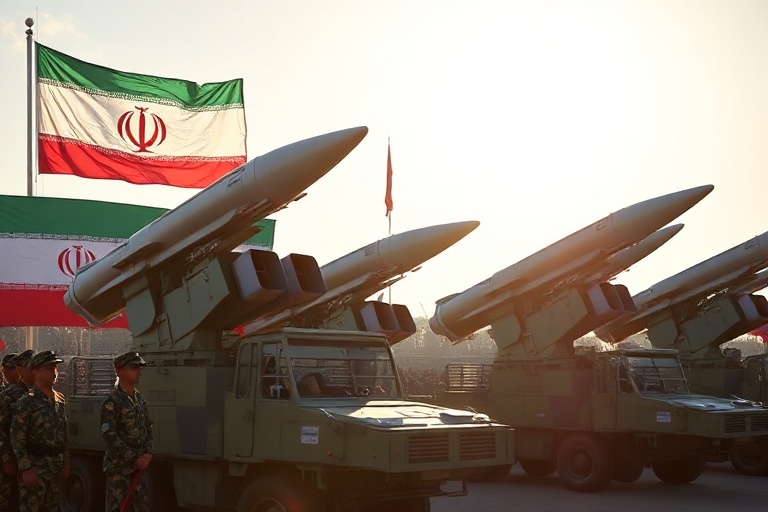
Iran’s Missile Program: Capabilities, Threats, and Global Impact
Iran’s Ballistic Missile Arsenal: A Technical Overview
The Islamic Republic of Iran has spent decades developing one of the Middle East’s most extensive ballistic missile programs. Unlike many nations that focus on longer-range intercontinental missiles, Iran’s arsenal prioritizes precision, mobility, and regional deterrence capabilities. The country’s missile program traces its origins to the Iran-Iraq War of the 1980s, when Iraqi Scud-B missiles rained down on Iranian cities.
Today, Iran’s missile inventory includes several families of short- and medium-range ballistic missiles. The Shahab series, derived from North Korean designs, includes the Shahab-1 (300 km range), Shahab-2 (500 km range), and Shahab-3 (1,000–1,300 km range). More recent additions like the Emad and Sejjil missiles demonstrate advancements in accuracy and solid-fuel technology, reducing reliance on vulnerable liquid-fuel systems.
Iran has also developed cruise missiles such as the Soumar and Ya Ali, which offer lower radar signatures and greater maneuverability compared to ballistic counterparts. These systems are often launched from mobile platforms, including trucks and ships, complicating detection and targeting by adversaries. The evolution from rudimentary Scud derivatives to precision-guided missiles reflects both indigenous innovation and foreign technical assistance.
Technological Advancements and Indigenous Development
- Solid-fuel propulsion: The Sejjil-2, with a range exceeding 2,000 km, represents a leap in solid-fuel technology, enabling faster deployment and improved storage.
- MIRV potential: Reports suggest Iran is exploring multiple independently targetable reentry vehicle (MIRV) technology, which would allow a single missile to carry multiple warheads.
- Satellite guidance: Missiles like the Emad incorporate inertial navigation systems and satellite corrections, achieving accuracy within tens of meters.
- UAV integration: Some Iranian missiles, such as the Fattah, are designed for dual-use roles, integrating with unmanned aerial systems for extended strike ranges.
Regional Security Implications of Iran’s Missile Program
The proliferation of Iran’s ballistic missiles has reshaped the strategic calculus across the Middle East. Israel, Saudi Arabia, and the United Arab Emirates view these systems as existential threats, prompting accelerated missile defense programs and regional security pacts. The Israel Defense Forces have repeatedly conducted strikes against Iranian missile production sites and supply lines in Syria and Iraq, signaling a willingness to preemptively disrupt missile development.
In response, Gulf Cooperation Council states have invested in advanced air defense systems such as the THAAD and Patriot batteries, while also pursuing indigenous missile defense programs. The Israel-Saudi-Emirati defense axis has increasingly coordinated efforts to counter Iran’s missile capabilities, reflecting a shared perception of threat.
Iran’s missile exports have further destabilized the region. Groups like Hezbollah in Lebanon and Houthi rebels in Yemen have received advanced missile technology, including the Zolfaghar and Qiam systems. The Houthi’s repeated strikes on Saudi oil infrastructure and Abu Dhabi using Iranian missiles have demonstrated the weaponization of these systems beyond Iran’s borders.
Escalation Dynamics and Deterrence Theory
Analysts debate whether Iran’s missile program serves as a deterrent or a provocative tool. Proponents argue that these missiles are designed to prevent regime change by raising the cost of military intervention. Critics, however, contend that Iran’s missile tests and transfers exacerbate regional tensions and invite counterbalancing military actions.
A 2023 report by the International Institute for Strategic Studies highlighted that Iran’s missile arsenal has grown by approximately 30% since 2018, despite international sanctions. This expansion coincides with a shift in Iran’s foreign policy strategy, which now emphasizes “forward defense” through proxy networks rather than direct confrontation.
International Reactions and Diplomatic Responses
The United Nations Security Council has repeatedly condemned Iran’s ballistic missile activities, particularly through Resolution 2231, which endorses the Joint Comprehensive Plan of Action (JCPOA) nuclear deal. However, the resolution’s language on missiles remains non-binding, limiting its enforcement power. The U.S. has imposed unilateral sanctions targeting Iranian missile entities, including the Islamic Revolutionary Guard Corps (IRGC) and the Ministry of Defense and Armed Forces Logistics.
Despite these measures, key U.S. allies in Europe have adopted a more nuanced stance. France, Germany, and the UK have expressed concerns over Iran’s missile program but have refrained from endorsing military action. Instead, they have pursued diplomatic channels to curb missile proliferation, including the European Union’s ballistic missile sanctions regime.
Russia and China have taken a different approach, framing Iran’s missile program as a matter of national sovereignty. Both countries have continued trade relations with Iran’s missile industry, providing technical expertise and diplomatic cover in international forums.
Key International Responses to Iran’s Missile Program
- United States: Imposed sanctions on over 50 entities linked to Iran’s missile program; conducted cyber operations targeting missile development.
- European Union: Established autonomous sanctions on Iranian individuals and entities involved in missile proliferation.
- United Nations: Passed Resolution 2231, calling on Iran to refrain from activities related to ballistic missiles designed to deliver nuclear weapons.
- Israel: Conducted covert operations to disrupt missile supply chains; developed layered missile defense systems.
- Gulf States: Purchased advanced air defense systems; participated in joint military exercises with U.S. forces.
Future Trajectories: What Lies Ahead?
Looking forward, Iran’s missile program is poised for further evolution. Analysts anticipate continued development of hypersonic glide vehicles, which could evade current missile defense systems. Additionally, Iran’s growing partnership with Russia and North Korea may accelerate technological transfers, particularly in solid-fuel propulsion and guidance systems.
The potential resumption of nuclear negotiations under a future U.S. administration could influence Iran’s missile strategy. A revived JCPOA might include restrictions on missile development, though past negotiations have shown limited success in curbing Iran’s ballistic ambitions.
Meanwhile, Israel’s military doctrine increasingly emphasizes preemptive strikes against emerging threats. The 2024 strikes on Iranian missile facilities in Isfahan and Kermanshah underscore a willingness to act unilaterally to degrade Iran’s capabilities. Such actions risk escalation but also signal a determination to maintain qualitative military superiority in the region.
Strategic Considerations for the Coming Decade
Several factors will shape the future of Iran’s missile program:
- Technological maturity: Continued advancements in propulsion, guidance, and warhead miniaturization could expand Iran’s missile range and payload capacity.
- Alliance dynamics: Strengthened ties with Russia and China may provide Iran with advanced technologies and diplomatic protection.
- Regional arms race: Saudi Arabia and the UAE are investing in longer-range strike capabilities, including ballistic missiles and cruise missiles, to counter Iran.
- Internal politics: Iran’s leadership faces pressure to project strength amid economic hardship and internal dissent, potentially accelerating missile tests and deployments.
Conclusion: A Complex Legacy
Iran’s ballistic missile program stands as a testament to resilience and ingenuity in the face of international isolation. It serves multiple purposes: deterring external aggression, projecting regional influence, and providing a bargaining chip in diplomatic negotiations. Yet its proliferation has also fueled arms races, provoked military strikes, and deepened sectarian divides across the Middle East.
As geopolitical tensions rise and new technologies emerge, the challenge of managing Iran’s missile capabilities will remain a defining issue for global security. Diplomacy, deterrence, and defense must converge to prevent further escalation while addressing the underlying security concerns that drive missile development.
For policymakers, the path forward demands a balance between containment and engagement. Sanctions alone have proven insufficient, while military action carries significant risks. The international community must explore innovative frameworks that address Iran’s legitimate security interests without enabling the unchecked expansion of its missile arsenal.
Ultimately, the story of Iran’s missiles is not just a technical narrative—it is a reflection of the broader struggles for power, sovereignty, and survival in a volatile region. Understanding this program requires more than a glance at missile ranges and payloads; it demands a reckoning with the strategic choices that have shaped the Middle East for decades.
To stay updated on Iran’s military developments and regional security dynamics, follow our Analysis and Politics sections for in-depth reporting and expert commentary.