Devil May Cry Season 2: A Revival for Global Fans of Demon Slaying Anime
Devil May Cry Season 2: A Global Revival for Fans of Stylish Demon Slaying
The announcement of Devil May Cry Season 2 has sent ripples through gaming communities worldwide. Since its debut in 2001, the franchise has carved out a distinct identity in the action genre, blending supernatural themes with over-the-top combat. The original anime adaptation in 2007 introduced Dante and his world to a broader audience, but the upcoming season promises something far more immersive. With renewed interest in anime adaptations of video games, this revival arrives at a pivotal moment for both the series and its global fanbase.
Set in a modernized version of Dante’s universe, the second season expands beyond the confines of the first anime. Creators are leveraging advanced animation techniques and a more serialized storytelling approach. This evolution reflects broader trends in Japanese animation, where long-running franchises are being reimagined with cinematic depth. The global success of entertainment properties like Cyberpunk: Edgerunners has shown that anime audiences crave high-quality visuals and narrative ambition—elements that Devil May Cry is well-positioned to deliver.
The Creative Vision: From Game to Screen
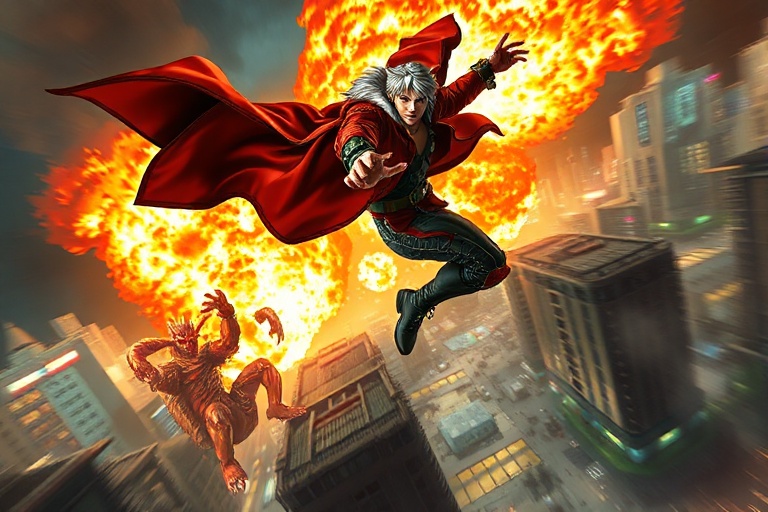
The transition from video game to anime is never straightforward. Developers at Capcom have maintained close collaboration with the animation studio behind the series, ensuring that Dante’s signature flair—his rebellious attitude, iconic weapons, and devil-trigger transformations—remain intact. The first season’s reception was mixed, with praise for its animation but criticism for deviating from the source material. Season 2 aims to address these concerns by grounding its narrative more closely in the lore while still allowing creative freedom.
Anime adaptations often face the challenge of balancing fidelity with innovation. For Devil May Cry, this means preserving the essence of the games while embracing the visual storytelling unique to animation. Early teasers suggest a darker tone, with more emphasis on the demonic underworld and Dante’s internal struggle. This shift aligns with global audience preferences for darker, serialized narratives in action anime—a trend evident in shows like Demon Slayer and Jujutsu Kaisen.
Global Reception and Cultural Impact
The original Devil May Cry anime had a cult following, particularly in North America and Europe, where the franchise gained traction through localized releases. Today, the anime’s global reach extends far beyond its origins. Streaming platforms in Asia, Latin America, and the Middle East are increasingly investing in gaming adaptations, recognizing their potential to attract diverse audiences. The success of Devil May Cry Season 2 could further validate this strategy, encouraging more studios to explore similar cross-media projects.
Culturally, the series resonates with fans who appreciate its blend of Western and Japanese influences. Dante’s character—rooted in Italian mythology and punk aesthetics—stands out in a genre often dominated by samurai or shonen tropes. This fusion appeals to international viewers seeking fresh perspectives. Additionally, the demon-hunting premise offers universal themes of good versus evil, making it accessible across cultures.
Here’s a look at how Devil May Cry compares to other gaming anime adaptations:
- Visual Style: The franchise’s exaggerated action sequences and high-energy choreography set it apart from more grounded adaptations like Pokémon or Yugioh.
- Narrative Depth: Unlike episodic adaptations such as Sonic X, Season 2 promises an ongoing storyline with character arcs that evolve over multiple episodes.
- Fan Service: The anime caters to long-time fans with cameos, Easter eggs, and lore expansions that reward familiarity with the games.
- Cultural Hybridity: The series’ Italian-American protagonist and global setting provide a unique backdrop compared to traditional Japanese-centric anime.
What’s Next for Dante and the Franchise?
With production underway and a confirmed release window, anticipation is building. Fans are speculating about potential plotlines, including the return of familiar faces like Nero and Vergil, as well as new characters that could expand the demon-hunting universe. The anime’s soundtrack, a hallmark of the franchise, is also expected to play a significant role, with composer Hideaki Takatori returning to craft a score that blends rock, electronic, and orchestral elements.
The broader implications for the Devil May Cry franchise are noteworthy. A successful Season 2 could pave the way for more animated content, spin-offs, or even a reboot of the live-action film project that has lingered in development for years. For Capcom, this adaptation serves as a bridge between its gaming legacy and its expanding multimedia presence.
The stakes are high, but the potential rewards are even greater. If executed well, Devil May Cry Season 2 could cement the franchise’s status as a staple of action anime, appealing to both longtime fans and newcomers alike. As global audiences continue to embrace gaming-inspired narratives, this revival arrives at a perfect moment to leave a lasting mark.
A Look Ahead: The Future of Gaming Anime
The success of Devil May Cry Season 2 may influence how other gaming franchises approach anime adaptations. With the medium’s growing popularity, studios are increasingly willing to take creative risks. Franchises like Persona, Resident Evil, and Ghost of Tsushima have already been discussed in relation to potential animated projects. For fans, this means a wealth of content to look forward to—but also the challenge of discerning which adaptations will deliver on their promises.
Ultimately, Devil May Cry Season 2 is more than just a follow-up to an old anime. It represents a convergence of gaming culture, global entertainment trends, and the enduring appeal of a character who refuses to be bound by rules. Whether it will surpass expectations remains to be seen, but one thing is certain: Dante’s legacy is far from over.