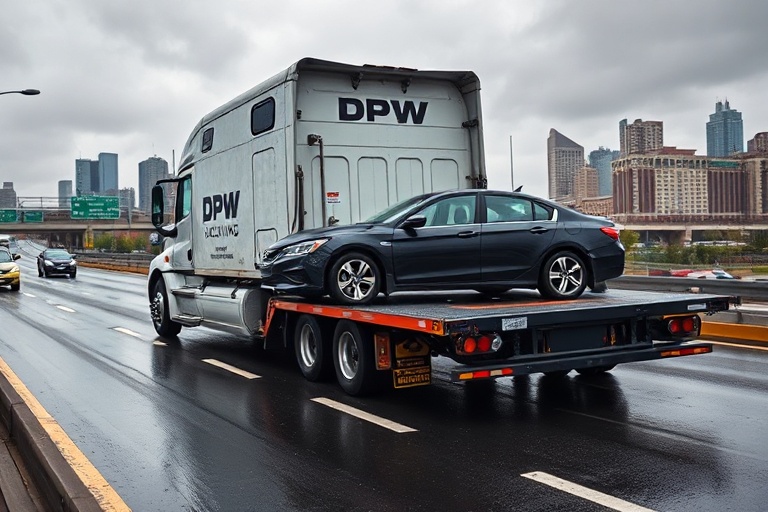
dpw trucking $46k towing bill
DPW Trucking’s $46K Towing Bill: A Symptom of Global Towing Industry Challenges
In late October 2023, DPW Trucking, a regional towing and transport company based in Pennsylvania, found itself at the center of an industry-wide conversation when it issued a $46,000 invoice for a single towing job. The bill, which covered the transport of an oversized load from Philadelphia to Chicago, included $36,000 in towing fees and $10,000 in administrative costs. While the company defended the charges as necessary to cover specialized equipment, route planning, and compliance with state and federal regulations, the incident has sparked broader discussions about transparency, pricing standards, and the economic pressures facing towing operators around the world.
The incident is not isolated. Similar cases have emerged in Canada, where municipal governments have faced public outrage over towing fees that exceed $20,000 for long-distance relocations. In the United Kingdom, the Freight Transport Association has raised concerns about the volatility of towing costs due to fluctuating fuel prices and regulatory changes. These global patterns suggest that the DPW Trucking case is part of a larger structural issue within the towing and heavy transport industry.
The Hidden Costs Behind the $46K Invoice
DPW Trucking’s invoice breakdown reveals the complex economics of heavy transport. According to company statements, the $36,000 towing fee covered several critical components:
- Specialized Equipment: Oversized loads require multi-axle trailers, reinforced rigging, and sometimes pilot vehicles to ensure safe passage through urban corridors and highway systems.
- Route Permits and Coordination: Each state and municipality charges fees for oversized load permits, and coordination with local authorities can add thousands to the total cost.
- Fuel and Labor: Long-distance towing consumes significant fuel, and the journey from Philadelphia to Chicago would have taken multiple days, requiring driver lodging and meal allowances.
- Insurance and Liability: Towing companies operating in the commercial sector must carry high-limit insurance policies to cover potential accidents, damage, or environmental hazards.
- Administrative Overhead: Tracking permits, coordinating with state agencies, and managing compliance documentation requires significant back-office support.
Critics argue that these costs are not always communicated transparently to clients, leaving businesses and municipalities vulnerable to unexpected financial burdens. In some cases, the lack of standardized pricing across states and countries exacerbates confusion and frustration.
A Global Perspective: Towing Fees and Infrastructure Realities
The DPW Trucking incident reflects a broader trend in the global towing industry, where the cost of transporting oversized loads is influenced by a web of interrelated factors. In Europe, for example, stringent environmental regulations and urban congestion have driven up the cost of permits and route planning. In Germany, towing companies report that compliance with emissions standards can add up to 15% to total project costs.
In Asia, rapid urbanization and infrastructure development have created both opportunities and challenges for towing operators. In China, the demand for heavy transport has surged alongside the expansion of high-speed rail and expressway networks. However, inconsistent enforcement of oversized load regulations has led to disputes over pricing and accountability. In Japan, where space is at a premium, towing companies must navigate dense urban corridors and strict noise ordinances, often requiring nighttime operations that inflate labor and equipment costs.
Meanwhile, in North America, the patchwork of state and provincial regulations creates a fragmented landscape where towing companies must adapt their pricing models to local conditions. The result is a system where a load transported from Texas to New York could incur wildly different fees depending on the jurisdictions it passes through.
The Human Factor: Drivers, Owners, and Economic Pressures
Behind the invoices and regulatory frameworks are the people who make the industry function: truck drivers, dispatchers, permit coordinators, and small business owners. Many towing company owners operate on thin margins, especially in regions with high fuel costs or intense competition. The DPW Trucking case has highlighted the tension between survival in a competitive market and maintaining public trust.
In the United States, the towing industry employs over 100,000 people, many of whom are small business owners or independent contractors. The rise of ride-hailing and delivery services has increased demand for towing in urban areas, but it has also intensified competition and driven down prices in some segments. For owners of heavy transport companies, the challenge is balancing competitive pricing with the need to invest in specialized equipment and compliance infrastructure.
Globally, the towing industry is also grappling with a shortage of skilled drivers. In Australia, for example, the National Road Transport Association has warned that an aging workforce and lack of training programs could exacerbate capacity issues, leading to higher costs and longer wait times for clients. Similarly, in South Africa, the industry faces challenges related to road safety and regulatory enforcement, which can delay projects and increase operational costs.
Calls for Reform: Transparency, Standardization, and Accountability
The DPW Trucking incident has prompted calls for greater transparency in the towing industry. Advocacy groups and business associations are pushing for standardized pricing models, clearer communication of fees, and better dispute resolution mechanisms. In the United States, the American Towing and Recovery Association (ATRA) has advocated for federal guidelines to streamline permit processes and reduce administrative burdens for operators.
In Europe, the European Transport Safety Council has called for harmonized regulations across member states to reduce confusion and ensure fair pricing. Meanwhile, in Canada, provincial governments are exploring the creation of regional pricing benchmarks to provide clients with clearer expectations.
Technology is also playing a role in reshaping the industry. Digital platforms that connect clients with towing providers are emerging, offering transparent pricing and real-time tracking. These innovations could help standardize costs and improve accountability, particularly for clients unfamiliar with the complexities of oversized load transport.
Lessons for Businesses and Governments
The DPW Trucking case serves as a reminder of the importance of due diligence for businesses and governments that rely on heavy transport services. For companies planning large-scale logistics projects, it is essential to:
- Request detailed quotes that break down all potential fees, including permits, fuel surcharges, and administrative costs.
- Verify the credentials and insurance coverage of towing providers to avoid liability issues.
- Plan routes in advance to identify jurisdictions with the most favorable regulations and fees.
- Consider alternative transport methods, such as rail or barge, for exceptionally large or heavy loads.
Governments, too, have a role to play in fostering a more efficient and equitable towing industry. By streamlining permit processes, investing in infrastructure, and promoting transparency, policymakers can reduce the economic and operational burdens on businesses and the public.
A Path Forward
While the $46,000 towing bill from DPW Trucking has drawn attention for its sheer scale, it is ultimately a symptom of deeper issues within the global towing and heavy transport industry. As businesses and governments navigate the complexities of logistics, infrastructure, and regulation, the need for transparency, standardization, and collaboration has never been clearer. The DPW Trucking case may well serve as a turning point—one that sparks meaningful change and sets a new standard for fairness and accountability in the industry.
For now, the conversation continues. Businesses are reevaluating their transport strategies, towing companies are reassessing their pricing models, and policymakers are exploring reforms. One thing is certain: the global towing industry is at a crossroads, and the choices made today will shape its future for years to come.
Explore more articles on automotive industry challenges and trends.
For additional insights into business and finance, visit our business category.