uss cleveland
USS Cleveland: A Legacy of Service and Innovation at Sea
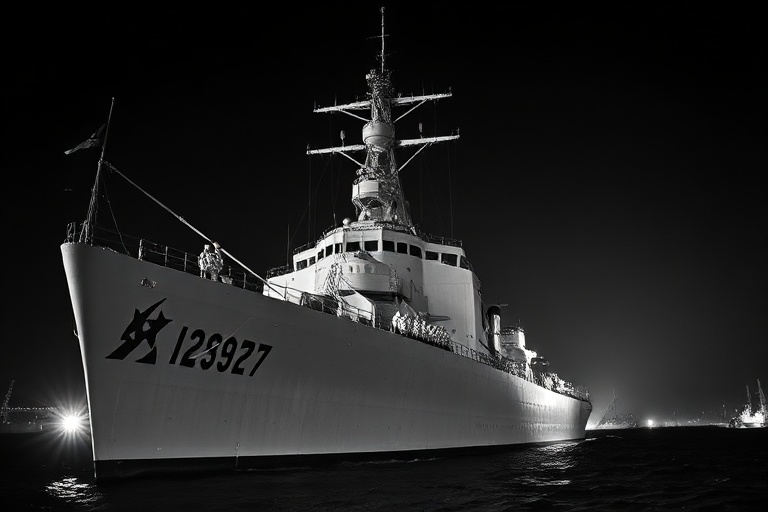
The USS Cleveland has earned its place in naval history as a symbol of American maritime strength and adaptability. Commissioned in 1942, this light cruiser played a pivotal role in World War II, demonstrating both tactical precision and technological innovation. Its service spanned critical battles in the Pacific, where it contributed to the Allied effort with resilience and firepower. Today, the legacy of the USS Cleveland endures not only in naval museums but also in the broader context of 20th-century military engineering and global conflict.
The cruiser’s origins trace back to the early 1930s, when naval planners recognized the need for vessels that balanced speed, armor, and armament. The Cleveland-class cruisers were designed to outmaneuver enemy ships while delivering devastating broadsides. This philosophy reflected a global shift in naval warfare, where traditional battleships were giving way to faster, more versatile combatants. The USS Cleveland embodied this transition, serving as both a combat platform and a technological showcase of American industrial might during wartime.
Beyond its wartime contributions, the USS Cleveland represents a cultural artifact of mid-century America. Its story intersects with broader themes of national identity, technological progress, and the human experience in wartime. By examining its history, we gain insight into how military vessels shaped—and were shaped by—the geopolitical forces of their era.
The USS Cleveland in World War II: A Frontline Cruiser
Commissioned on June 10, 1942, the USS Cleveland entered service at a pivotal moment in the Pacific Theater. Assigned to Task Force 18, it participated in the Guadalcanal campaign, a brutal six-month struggle that tested Allied resolve. The cruiser’s 6-inch guns provided crucial support during night battles, a domain where visibility and precision often decided outcomes. Its radar and communication systems, advanced for the time, allowed it to coordinate with carrier groups and submarines effectively.
One of its most notable engagements occurred during the Battle of Empress Augusta Bay in November 1943. As part of a larger Allied force, the USS Cleveland helped repel a Japanese counterattack, damaging multiple enemy ships and securing a critical victory. This battle highlighted the cruiser’s role not only as a combatant but also as a stabilizing force in fleet operations. Such engagements underscored the importance of adaptability in naval warfare, where even minor technological advantages could shift the balance of power.
The USS Cleveland also participated in the Battle of Leyte Gulf, one of the largest naval battles in history. Operating alongside carriers and battleships, it contributed to the Allied victory that effectively crippled Japan’s naval capabilities. These operations were not merely military victories; they were symbols of Allied unity and technological superiority in the face of global conflict.
Technological and Design Innovations
The Cleveland-class cruisers were distinguished by several key innovations that set them apart from earlier designs. Their hulls incorporated a “clipper bow,” which improved speed and stability in rough seas—a critical advantage in the vast expanses of the Pacific. The integration of advanced fire-control systems allowed for more accurate long-range gunnery, reducing waste and increasing lethality. These features reflected a broader trend in mid-20th-century naval engineering, where speed, precision, and firepower converged to redefine combat effectiveness.
Another hallmark of the USS Cleveland was its emphasis on crew comfort and efficiency. Unlike earlier warships, which often prioritized raw firepower over habitability, the Cleveland-class incorporated improved ventilation, lighting, and living spaces. This shift mirrored broader societal changes in the 1930s and 1940s, where industrial design began to consider the human element alongside mechanical performance. The result was a ship that was not only lethal in battle but also sustainable over long deployments.
These innovations were not developed in isolation. The USS Cleveland benefited from collaborations between naval architects, engineers, and industrial manufacturers across the United States. This collective effort reflected the scale of American wartime production, where entire industries pivoted to support the war effort. The cruiser’s design thus serves as a case study in how wartime necessity can drive technological and organizational breakthroughs.
Cultural and Historical Significance
The USS Cleveland’s legacy extends beyond its combat record. It represents a tangible connection to the World War II generation, a cohort that endured global conflict while shaping the postwar world. For many veterans, the ship was more than a machine—it was a home, a workplace, and a symbol of duty. Oral histories and memoirs from crew members reveal a complex tapestry of camaraderie, sacrifice, and resilience. These personal narratives add depth to our understanding of the cruiser’s role, transforming it from a static artifact into a living testament to human experience.
In the decades following the war, the USS Cleveland became a cultural touchstone in discussions about military history and national identity. It appeared in documentaries, books, and even popular media, often romanticized as a symbol of American ingenuity and resolve. However, its story also invites critical reflection on the costs of war, the ethics of naval combat, and the long-term impact of military technology on global politics. These themes resonate today, as nations grapple with the legacies of 20th-century conflicts and the evolving nature of warfare.
The ship’s eventual fate—decommissioned in 1947 and scrapped in 1972—mirrors the broader cycle of wartime vessels, many of which were retired as technology advanced. Yet, its memory persists in museums, archives, and the collective consciousness of naval enthusiasts. The USS Cleveland serves as a reminder of how material culture can encapsulate historical moments, bridging the gap between past and present.
Lessons from the USS Cleveland for Modern Naval Strategy
The story of the USS Cleveland offers valuable insights for contemporary naval strategy and military technology. One key lesson is the importance of adaptability in design. The Cleveland-class cruisers were conceived in the 1930s but proved effective in the 1940s, demonstrating how forward-thinking engineering can extend a vessel’s relevance. Today, navies around the world face a similar challenge: balancing current needs with future uncertainties. The rise of hypersonic missiles, autonomous systems, and cyber warfare demands vessels that can evolve alongside emerging threats.
Another lesson lies in the interplay between technology and human factors. The USS Cleveland’s success was not solely due to its firepower but also its ability to sustain a motivated and skilled crew. Modern naval operations, increasingly reliant on automation and artificial intelligence, must not lose sight of the human dimension. Training, morale, and adaptability remain critical components of combat readiness, regardless of technological advancements.
Finally, the USS Cleveland’s history underscores the global interconnectedness of military innovation. The ship’s design and deployment were shaped by international tensions, industrial capacities, and geopolitical alliances. In an era where naval power is once again a focal point of global competition, understanding these historical dynamics can inform contemporary policy and strategy. The lessons of the past, after all, are not relics—they are tools for navigating the challenges of the future.
Conclusion: Honoring a Naval Icon
The USS Cleveland stands as a monument to the ingenuity, sacrifice, and complexity of mid-20th-century naval warfare. Its service during World War II was marked by technical innovation, strategic brilliance, and human resilience. Today, it serves as a reminder of the enduring role of naval power in shaping global history. By studying its legacy, we not only pay tribute to those who served aboard it but also gain a deeper appreciation for the interplay between technology, culture, and conflict.
For historians, naval enthusiasts, and general readers alike, the USS Cleveland offers a compelling narrative that transcends its era. It challenges us to consider how material culture reflects broader historical forces and how the lessons of the past can inform the challenges of the present. As we look to the future of naval warfare, the story of the USS Cleveland reminds us that innovation, adaptability, and human ingenuity remain the cornerstones of maritime strength.