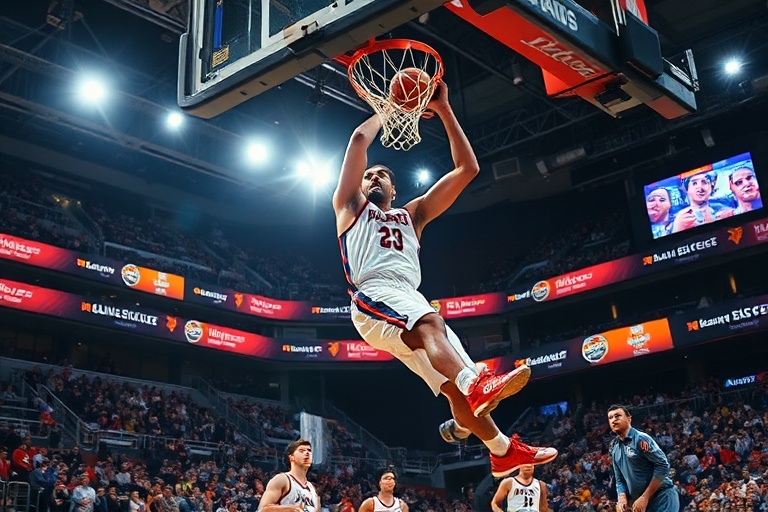
EuroLeague Basketball: Europe’s Elite Competition and Global Influence
The EuroLeague: A Stage for Europe’s Finest Basketball Talent
The EuroLeague stands as the pinnacle of professional basketball in Europe, a league where the continent’s most elite teams and players converge to compete at the highest level. Unlike domestic leagues that focus solely on national competition, the EuroLeague serves as a global showcase for European basketball, blending athletic prowess with strategic depth. Its history stretches back to 1958, though it has evolved significantly over the decades into the modern, multi-national spectacle it is today.
For fans of the sport, the EuroLeague offers more than just games; it provides a cultural tapestry where history, rivalry, and innovation intertwine. The league’s influence extends far beyond the court, shaping basketball’s evolution in Europe and beyond. With teams from powerhouse basketball nations like Spain, Greece, Turkey, and Russia, the EuroLeague is a melting pot of styles, tactics, and traditions.
The Structure and Global Reach of the EuroLeague
The EuroLeague operates under a unique format that balances tradition with innovation. The league comprises 18 teams, selected through a combination of domestic league performance and historical prestige. These teams compete in a regular season followed by playoffs, culminating in the EuroLeague Final Four—a weekend of high-stakes basketball that draws global attention.
One of the league’s defining features is its international appeal. Players from the NBA, Australia, and Africa often join European stars, creating a dynamic mix of athleticism and experience. This global talent pool ensures that the EuroLeague remains competitive and entertaining, attracting viewers from across the world. The league’s partnerships with broadcasters like EuroLeague TV and DAZN have further expanded its reach, making games accessible to millions of fans.
Beyond the court, the EuroLeague has become a cultural bridge. Games are held in iconic arenas like Madrid’s WiZink Center, Istanbul’s Ülker Sports Arena, and Moscow’s Megasport Sport Palace, each venue steeped in local history and basketball lore. The league’s presence in these cities fosters a sense of pride and identity, uniting communities around the sport.
Rivalries and Iconic Moments in EuroLeague History
The EuroLeague’s legacy is built on legendary rivalries that have defined eras of the sport. Matches between Real Madrid and CSKA Moscow, for example, are not just games; they are battles of ideologies, with the Spanish giants representing technical precision and the Russian club embodying physical dominance. Similarly, the rivalry between Olympiacos and Panathinaikos in the Greek League spills over into the EuroLeague, creating an electric atmosphere whenever these teams meet.
These rivalries have produced some of the most iconic moments in basketball history. The 2018 EuroLeague Final Four in Belgrade saw Real Madrid defeat Fenerbahçe in a thrilling overtime, solidifying their status as the league’s most successful team with 10 titles. That same year, Luka Dončić, then a rising star, announced himself to the world with a dominant performance against CSKA Moscow, foreshadowing his eventual NBA stardom.
The EuroLeague has also been a stage for underdog stories. In 2016, CSKA Moscow, led by the indomitable Nando de Colo, claimed their first title in a decade, proving that consistency and teamwork can overcome even the most star-studded opponents. These moments remind fans that the EuroLeague is not just about individual brilliance but also about the collective spirit of the game.
Here are some of the most unforgettable moments in EuroLeague history:
- 2001: Kinder Bologna’s Miraculous Run – A relatively unknown Italian team, led by future NBA coach Sasha Djordjevic, upended all expectations to win the title, showcasing the unpredictability of European basketball.
- 2007: Panathinaikos’ Last-Minute Heroics – In a dramatic final against CSKA Moscow, Dimitris Diamantidis hit a clutch three-pointer at the buzzer to secure the championship for the Greens.
- 2014: Galatasaray’s Cinderella Story – The Turkish team, led by the charismatic coach Ergin Ataman, defied the odds to reach the Final Four, captivating fans with their relentless energy.
- 2019: Alba Berlin’s Historic Run – The German team, playing in front of raucous home crowds, made a surprising Final Four appearance, signaling a resurgence in European basketball outside traditional powerhouses.
The EuroLeague’s Impact on Global Basketball
The EuroLeague’s influence extends well beyond Europe. For decades, it has served as a proving ground for players who later become NBA stars. Toni Kukoč, Manu Ginóbili, and Juan Carlos Navarro all honed their skills in the EuroLeague before making their mark in the NBA. Today, players like Nikola Mirotić and Vasilije Micić use the league as a stepping stone to greater heights.
The league’s relationship with the NBA is complex. While some view the EuroLeague as a direct competitor to the NBA’s global ambitions, others see it as a complementary entity. The NBA’s decision to allow its players to participate in the EuroLeague during the 2022-23 season, following the suspension of the NBA’s regular season due to labor disputes, highlighted the league’s growing importance. Players like Nikola Jokić and Rudy Gobert have expressed admiration for the EuroLeague’s intensity and tactical depth, further blurring the lines between the two leagues.
Culturally, the EuroLeague has played a pivotal role in popularizing basketball in regions where the sport was once overshadowed by football. In countries like Lithuania, Serbia, and Slovenia, basketball is more than a pastime; it is a national obsession. The EuroLeague’s presence in these nations has fueled grassroots development, inspiring young players to dream of wearing their national team’s jersey or competing in the league’s arenas.
Looking Ahead: The Future of the EuroLeague
The EuroLeague’s future is shaped by both opportunity and challenge. On one hand, the league’s expanding global audience and commercial partnerships signal a bright future. The introduction of new technologies, such as virtual reality broadcasts and advanced analytics, promises to enhance the fan experience and attract younger audiences.
On the other hand, the league faces challenges, including financial disparities between teams and the ever-present competition from the NBA. The EuroLeague’s decision to adopt a franchise-style model, similar to major American sports leagues, has sparked debate. While some argue that this approach ensures stability and financial sustainability, others worry it may dilute the league’s traditional identity.
One thing is certain: the EuroLeague will continue to evolve as a cultural and sporting force. With initiatives like the EuroLeague Basketball Next Generation Tournament, which provides a platform for young talent, the league is investing in its future. The recent expansion of the EuroLeague Women, which has gained significant traction, further underscores the league’s commitment to growth and inclusivity.
As basketball’s global landscape shifts, the EuroLeague remains a vital institution. It is more than a league; it is a celebration of the sport’s diversity, a testament to its resilience, and a beacon for the next generation of players and fans. Whether you are a die-hard basketball enthusiast or a casual observer, the EuroLeague offers something for everyone—drama, skill, and a sense of belonging to something bigger than the game itself.