The Italian Open Tennis Rain Delay: A Test of Patience and Tradition
The Italian Open, known as the Internazionali BNL d’Italia, is one of tennis’s most prestigious clay-court tournaments. Held annually in Rome, it attracts top players and a global audience eager to witness high-stakes matches. Yet, the tournament’s rich history is punctuated by an inevitable challenge: rain delays. These pauses disrupt the rhythm of play, test the endurance of athletes and fans alike, and add an unpredictable layer to an otherwise meticulously planned event.
Rain delays are not unique to the Italian Open, but their impact here feels particularly pronounced. The tournament’s clay courts, known for their slow playing surface, amplify the delays. Matches can stretch for hours or even days, forcing players to adapt their strategies and spectators to reconsider their plans. This unpredictability has become a defining characteristic of the event, shaping its identity as much as the fierce rallies and stunning upsets that unfold on court.
The Science and Strategy Behind Rain Delays
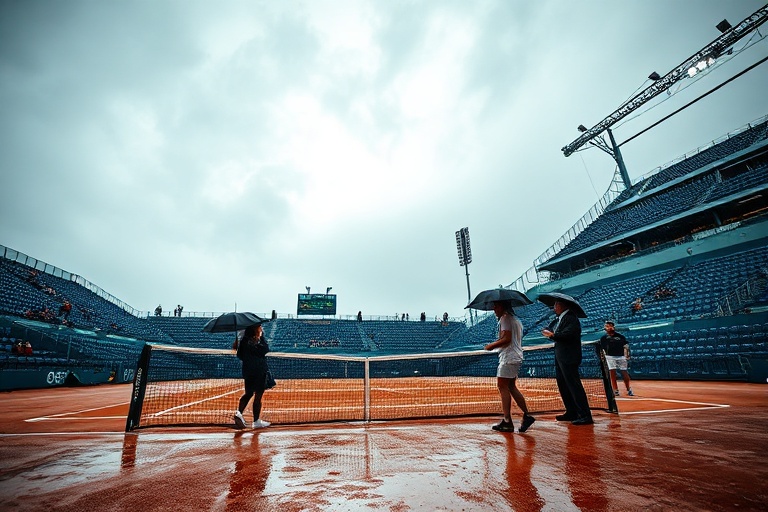
Tennis is a sport deeply affected by weather, and clay courts exacerbate the issue. When rain interrupts play, the court’s surface absorbs moisture, slowing down the ball and altering its bounce. This change can favor players with defensive skills or those who excel in longer rallies, while aggressive baseliners may struggle to generate pace. The Italian Open’s organizers have implemented measures to mitigate these effects, such as covering the courts with retractable roofs and advanced drainage systems. However, the sheer volume of rain in Rome during May—when the tournament takes place—often tests these systems to their limits.
For players, rain delays require mental and physical adjustments. A match suspended at 6-5 in the third set forces athletes to reset their focus entirely when play resumes. Some players use the break to hydrate, stretch, or review footage, while others prefer to rest or even nap to conserve energy. The psychological toll is significant. A player leading comfortably may find their advantage evaporate if the delay disrupts their momentum. Conversely, a player trailing might see an opportunity to regroup and mount a comeback.
Organizers face their own set of challenges. Scheduling becomes a logistical puzzle, with matches often pushed into late-night sessions or even the following day. Broadcast partners must adjust programming, and fans must decide whether to wait it out or return another day. The Italian Open’s reputation for drama is partly built on these moments of uncertainty, where the outcome of a tournament can hinge as much on adaptability as on skill.
A Global Perspective: How Other Tournaments Handle Rain
The Italian Open is not alone in its battle against rain. Other major clay-court tournaments, such as the French Open, grapple with similar issues. However, the French Open’s outdoor setting and lack of a retractable roof mean delays can stretch for days, creating logistical nightmares. In contrast, the Italian Open’s partially covered courts offer some respite, though they are not foolproof. Hard-court tournaments like the US Open and Australian Open also face rain delays, but their faster surfaces dry more quickly, reducing downtime.
Indoor tennis, such as the ATP Finals, eliminates weather-related interruptions entirely. Yet, purists argue that the outdoor experience is an integral part of the sport’s charm. The Italian Open strikes a balance, embracing its outdoor roots while investing in modern infrastructure to minimize disruptions. This approach reflects a broader trend in global sports: blending tradition with innovation to enhance the fan experience.
Culturally, rain delays add a layer of unpredictability that resonates with audiences worldwide. In a sport often governed by precision and routine, these pauses introduce an element of suspense. Fans are forced to embrace uncertainty, whether they’re watching from the stands or on television. For broadcasters, these moments become opportunities to engage viewers with analysis, interviews, or even lighthearted commentary about the weather—a shared human experience that transcends the game itself.
The Fan Experience: Waiting for the Storm to Pass
For spectators at the Italian Open, rain delays are a test of patience and endurance. The Foro Italico, the tournament’s iconic venue, is a stunning backdrop, but its beauty is no match for the frustration of a delayed match. Fans who have traveled from across the globe find themselves weighing their options: wait it out in the stands, seek shelter in nearby cafes, or abandon the day’s play entirely. The tournament’s organizers have attempted to ease the burden by offering refunds or exchanges for affected tickets, but the experience is still far from ideal.
Social media amplifies the collective experience of waiting. Fans share updates, jokes, and complaints about the weather, creating a sense of community around the shared inconvenience. Memes and viral posts often emerge, with humorous takes on the inevitability of rain in Rome. This digital camaraderie transforms a potential negative into a shared moment of connection, reinforcing the Italian Open’s place in the global tennis calendar.
For those who persevere, the reward is often a match for the ages. Rain delays can lead to epic comebacks, dramatic shifts in momentum, and unforgettable performances. The 2019 Italian Open final between Rafael Nadal and Novak Djokovic was delayed multiple times due to rain, yet it delivered one of the greatest matches in tennis history—a three-set battle that lasted over three hours. Such moments underscore the resilience of the sport and its ability to turn adversity into artistry.
The Future of Rain Delays in Tennis
As climate change intensifies, the frequency and severity of rain delays are likely to increase. The Italian Open and other tournaments must adapt, whether through further investment in covered courts, improved drainage systems, or innovative scheduling. Some have proposed shorter best-of-three-set matches for early rounds to reduce the risk of prolonged delays, though this would fundamentally alter the sport’s traditional structure.
Technology may also offer solutions. Advanced weather prediction tools could help organizers make more informed decisions about when to suspend play. Meanwhile, fans may soon have access to real-time updates and interactive tools to enhance their experience during delays, from augmented reality replays to virtual meet-and-greets with players.
The Italian Open’s relationship with rain delays is a microcosm of the broader challenges facing modern sports. Balancing tradition with innovation, spectacle with practicality, and unpredictability with control is no easy task. Yet, it is these very challenges that make the tournament so compelling. The Italian Open is not just a showcase of tennis skill; it is a testament to the human capacity to adapt, endure, and find beauty in the unexpected. As players and fans alike learn to navigate the rain, they also embrace the spirit of resilience that defines the sport.
For those who love tennis, the Italian Open’s dance with the elements is part of its allure. It reminds us that even in a sport governed by rules and precision, nature retains the final say—and that is where the magic lies.
To stay updated on the latest sports news and analysis, visit Dave’s Locker Sports.