What Is the EuroLeague and Why It Matters
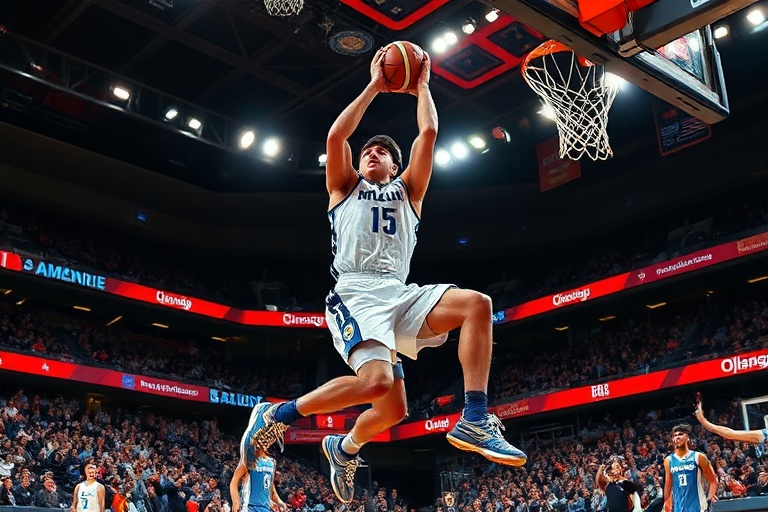
The EuroLeague is the pinnacle of professional basketball in Europe, bringing together the continent’s top clubs in a high-stakes tournament that rivals the NBA in intensity and prestige. Founded in 1958 as the FIBA European Champions Cup, it rebranded in 2000 under the EuroLeague Basketball Company, which now operates the competition independently of FIBA. Unlike domestic leagues, the EuroLeague features a mix of established powerhouses and ambitious underdogs, all vying for the coveted trophy and a chance to claim European supremacy.
The league’s structure is unique. It consists of 18 teams that play a regular season of 34 games, followed by playoffs that determine the champion. The top eight teams advance to a best-of-five series, culminating in a Final Four weekend where the last two teams face off in a single-elimination format. This format ensures drama and unpredictability, making every game critical. The EuroLeague also serves as a proving ground for future NBA talent, with players like Luka Dončić and Nikola Jokić using the platform to showcase their skills before making the jump to North America.
The Clubs That Define the EuroLeague
Certain teams have become synonymous with success in the EuroLeague, their histories woven into the fabric of the competition. Real Madrid, with 11 titles, is the most decorated club in the tournament’s history. The Spanish giants combine financial muscle with tactical brilliance, often fielding squads that blend seasoned veterans with rising stars. Their arch-rivals, FC Barcelona, hold the second-most titles (2) and are known for their fast-paced, offensive-minded play.
Other historic clubs include CSKA Moscow, which has dominated in recent years with eight titles, and Olympiacos from Greece, a team with a passionate fanbase and a knack for rising to the occasion in clutch moments. Italian powerhouse Olimpia Milano and Turkish club Anadolu Efes have also emerged as consistent contenders, each bringing a distinct style to the competition. Anadolu Efes, in particular, has become a model of modern basketball under coach Ergin Ataman, blending European fundamentals with a dynamic offensive system.
Rising Teams to Watch
The EuroLeague isn’t just about the traditional giants. Newer franchises have begun to challenge the status quo, injecting fresh energy into the tournament. Clubs like Virtus Segafredo Bologna, which won its first EuroLeague title in 2022, and Partizan Belgrade, with its rabid fanbase and developing talent, are proving that money isn’t everything. These teams rely on strong youth academies and smart roster construction to compete with the financial behemoths.
Another team on the rise is ASVEL from France, backed by NBA legend Tony Parker. Though still searching for its first title, ASVEL’s investment in infrastructure and player development signals a long-term commitment to challenging the established order. The EuroLeague’s expansion to include more clubs from emerging basketball markets, such as Germany’s Alba Berlin and Serbia’s Crvena Zvezda, has further diversified the competition, making it as unpredictable as it is exciting.
How the EuroLeague Compares to the NBA
Comparing the EuroLeague to the NBA is inevitable, given the global reach of both competitions. While the NBA is unquestionably the premier basketball league in the world, the EuroLeague offers something distinct: a more tactical, less physically taxing brand of basketball. Games are often decided by fine margins, with an emphasis on fundamentals like ball movement, defensive rotations, and three-point shooting. The lack of a shot clock reset rule, for instance, forces teams to execute under pressure, leading to more strategic play.
Financially, the gap between the two leagues is vast. NBA franchises operate with budgets in the hundreds of millions, while EuroLeague teams typically survive on a fraction of that. Yet, the EuroLeague punches above its weight by focusing on player development and smart scouting. Many NBA stars, including Dončić and Jokić, honed their skills in the EuroLeague before making the leap to the U.S. The league also serves as a testing ground for innovative coaching techniques, with European tacticians like Željko Obradović and Pablo Laso pushing the boundaries of basketball strategy.
Key Differences
The EuroLeague and NBA differ in several notable ways:
- Game Pace: The EuroLeague tends to be slower, with more half-court sets and deliberate play. The NBA, by contrast, prioritizes speed and athleticism.
- Defensive Schemes: Zone defenses, which are rare in the NBA due to rules against them, are common in the EuroLeague. This leads to a different style of defensive play.
- Roster Construction: EuroLeague teams often feature more international players, with fewer restrictions on roster spots compared to the NBA’s rules on domestic vs. international players.
- Fan Experience: EuroLeague arenas, particularly in countries like Greece, Serbia, and Spain, are known for their electric atmospheres, with fans creating an intimate, high-energy environment that’s hard to replicate in the NBA’s larger venues.
The EuroLeague’s Global Impact and Future
The EuroLeague’s influence extends far beyond Europe. With games broadcast in over 200 countries and partnerships with global brands like Turkish Airlines and Nissan, the league has cultivated a truly international audience. Social media engagement has surged in recent years, with clubs like Real Madrid and Barcelona amassing millions of followers across platforms. This global reach has made the EuroLeague a key player in the basketball ecosystem, bridging the gap between Europe and the NBA.
Looking ahead, the EuroLeague is poised for further growth. The league has expanded its footprint by adding teams from markets like Israel (Maccabi Tel Aviv) and the United Kingdom (London Lions), signaling a commitment to global expansion. There’s also talk of a potential merger or collaboration with FIBA to create a more unified basketball calendar, which could benefit players and fans alike by reducing scheduling conflicts.
Challenges Ahead
Despite its successes, the EuroLeague faces challenges. Financial disparities between clubs remain a hurdle, with some teams struggling to retain top talent amid the lure of the NBA and other lucrative leagues. The COVID-19 pandemic also exposed vulnerabilities, as empty arenas and lost revenue forced teams to adapt quickly. Additionally, the league must balance its ambition to grow globally with the need to preserve the unique identity that sets it apart from other competitions.
Another challenge is maintaining competitive balance. While the EuroLeague has seen a rise in parity in recent years, the financial might of clubs like Real Madrid and CSKA Moscow still gives them an edge. The league’s format, with its long regular season and high-stakes playoffs, also draws criticism for placing a heavy burden on players, leading to fatigue and potential injuries.
Why the EuroLeague Deserves Your Attention
For basketball fans seeking a blend of tradition, strategy, and raw emotion, the EuroLeague is a must-watch. It’s a league where underdogs can topple giants, where a single play can define a career, and where the love of the game shines through in every possession. Unlike the NBA, which often feels like a year-long audition for the playoffs, the EuroLeague treats every game as a potential masterpiece.
The league’s commitment to developing young talent and its emphasis on team basketball make it a refreshing alternative to the individual brilliance on display in the NBA. Whether you’re a fan of tactical chess matches, historic rivalries, or simply the thrill of high-stakes competition, the EuroLeague delivers. As the league continues to evolve, its role as a global basketball powerhouse is only set to strengthen.
For those new to European basketball, now is the perfect time to dive in. With clubs like Anadolu Efes and Partizan pushing the envelope, and legends like Obradović still coaching at the highest level, the EuroLeague is as compelling as it’s ever been. Follow the action, pick a team to root for, and prepare to be captivated by a competition that’s more than just basketball—it’s a celebration of the sport’s soul.
For more on basketball’s global landscape, explore our Sports section, or dive into analysis of emerging leagues at Analysis.