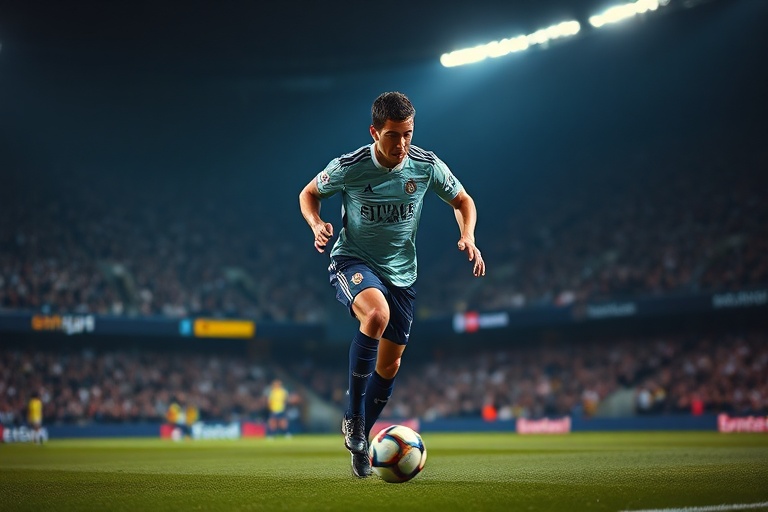
Federico Valverde has quietly become one of the most indispensable players in modern football. At just 25 years old, the Uruguayan midfielder has evolved from a promising prospect into the heartbeat of Real Madrid’s midfield, orchestrating play with a rare blend of physicality, technical precision, and tactical intelligence. His rise reflects broader trends in the sport: the increasing value of versatile, all-action midfielders who can dominate games both defensively and in transition.
Valverde’s journey from Peñarol’s youth ranks to Santiago Bernabéu stardom is a testament to his adaptability. Initially deployed as a box-to-box midfielder, he has seamlessly transitioned into a deeper, more controlling role under Carlo Ancelotti. This positional shift has unlocked new dimensions in his game, allowing him to dictate tempo while covering vast areas of the pitch. His performances in the 2023-24 season—particularly in the Champions League and La Liga—have cemented his status as a generational talent.
The Evolution of a Complete Midfielder
Valverde’s development mirrors the modern midfielder’s archetype: a player who can press aggressively, transition instantly, and execute pinpoint passes. His physical attributes—6’3” frame, explosive speed, and endurance—make him a nightmare for opposing midfields. Yet it’s his technical refinement that sets him apart. Whether spraying diagonal passes to Vinícius Jr. on the counter or shielding the backline with last-ditch tackles, Valverde operates as both a metronome and a disruptor.
His 2023-24 metrics underscore this duality. According to Dave’s Locker Sports, Valverde averaged:
- 85% pass completion rate in the final third
- 2.1 tackles per 90 minutes
- 1.4 interceptions per 90 minutes
- 1.7 key passes per game
These numbers place him among the elite in Europe’s top five leagues, a cohort that includes Kevin De Bruyne and Joshua Kimmich. What makes Valverde unique, however, is his ability to maintain these outputs while playing in a more disciplined, possession-oriented system.
Tactical Mastery Under Ancelotti
Ancelotti’s tactical flexibility has been pivotal in Valverde’s growth. The Italian coach initially deployed him as a right-sided midfielder in a 4-3-3, but his most impactful role has been as part of a double pivot alongside players like Kroos or Camavinga. In this setup, Valverde acts as a shield for the defense while launching attacks with vertical passes. His chemistry with Camavinga—another youthful, dynamic midfielder—has drawn comparisons to Barcelona’s legendary Busquets-Xavi-Iniesta trio.
Valverde’s role in Real Madrid’s 2022 Champions League triumph was particularly telling. His performance in the final against Liverpool showcased his maturity, as he nullified Fabinho and Thiago Alcântara while contributing to the team’s buildup. This tournament run highlighted how modern midfielders must excel in both structured and chaotic phases of play—a demand Valverde meets with aplomb.
Broader Implications: The New Midfield Paradigm
Valverde’s success reflects a broader shift in football tactics. Traditional defensive midfielders—think Sergio Busquets or N’Golo Kanté—are being complemented or replaced by hybrid players who combine defensive solidity with creative output. This evolution is driven by several factors:
- Increased pressing intensity: Teams now demand midfielders who can win the ball high up the pitch, reducing the time opponents have to organize attacks.
- Positional fluidity: Systems like Pep Guardiola’s inverted fullbacks or Ancelotti’s rotating midfielders require players who can adapt roles seamlessly.
- Physical demands: The modern game’s pace means midfielders must cover vast distances while maintaining technical quality.
Valverde embodies this shift. His ability to play in multiple midfield roles—whether as a single pivot, part of a double pivot, or even as a false winger—makes him a tactical wildcard. Clubs across Europe are now prioritizing such players, with teams like Arsenal (Declan Rice) and Manchester City (Rodri) investing heavily in similar profiles.
Looking Ahead: What’s Next for Valverde?
At 25, Valverde is entering his prime years. The next chapter of his career will likely be defined by two key questions: Can he replicate his club form for Uruguay? And will he secure a Ballon d’Or? His international career has been inconsistent due to Uruguay’s defensive structures, but as he gains more freedom in midfield, his influence could grow.
For Real Madrid, his future is secure for now. The club’s willingness to pay his €160 million release clause in 2026 speaks to his importance. Yet the broader implications of his career extend beyond trophies. Valverde represents a new generation of midfielders who are redefining the position’s role in elite football.
As the game continues to evolve, players like Valverde will shape how teams build and execute their strategies. His journey from Uruguay’s youth leagues to the top of European football is a case study in adaptability, tactical awareness, and relentless work ethic. In an era where midfielders are often judged by their ability to do everything, Federico Valverde does it all—and does it better than most.
For fans and analysts alike, watching him play is a reminder of how football’s demands are changing. The midfield is no longer a static battleground but a dynamic engine, and Valverde is its most refined operator.