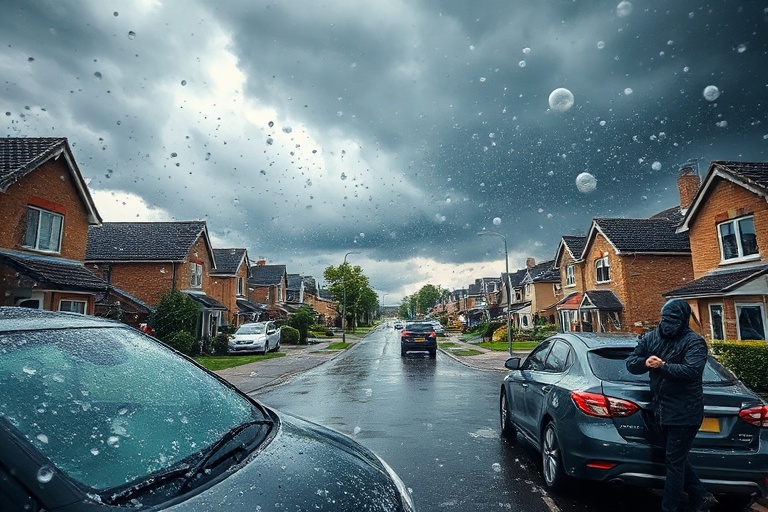
Hail storms are among the most visually dramatic and destructive weather phenomena on Earth. Unlike rain or snow, hail consists of solid ice pellets that can range from pea-sized to golf-ball-sized or larger, capable of causing significant damage to property, agriculture, and even posing risks to human safety. These storms develop within severe thunderstorms where updrafts carry raindrops into extremely cold areas of the atmosphere, freezing them into ice. The longer these ice pellets circulate within the storm, the larger they grow before finally falling to the ground.
The intensity of a hailstorm often correlates with the severity of the thunderstorm itself. Supercell thunderstorms, known for their rotating updrafts, are particularly prone to producing large hail due to their sustained and powerful vertical air currents. Hail events are most common in regions with warm, moist air near the surface and cold air aloft, which explains why areas such as the Great Plains in the United States, parts of Europe, and parts of South America experience frequent hailstorms.
The Science Behind Hail Formation
The process of hail formation begins when strong updrafts in a thunderstorm carry water droplets upward into subfreezing layers of the atmosphere. These droplets freeze into small ice particles, which then collide with supercooled water droplets—liquid water that remains unfrozen despite temperatures below 32°F (0°C). As these collisions occur, the ice particles grow in size, forming layers of ice around a central nucleus. This layered structure is often visible when hailstones are cut open, revealing concentric rings similar to those of an onion.
For hail to reach the ground in large sizes, the updraft within the storm must be exceptionally strong. A hailstone the size of a golf ball (approximately 1.75 inches in diameter) requires an updraft of about 60 mph to remain suspended long enough to grow. Larger hailstones, such as those measuring 2.5 inches or more, can only form in storms with updrafts exceeding 80 mph. It’s this combination of speed and sustained circulation that allows hail to accumulate mass before gravity finally pulls it earthward.
Not all thunderstorms produce hail, and not all hailstones are large enough to cause damage. The majority of hailstones are less than 0.75 inches in diameter—small enough to be harmless. However, when conditions align perfectly, storms can unleash hailstones capable of shattering windows, denting vehicles, and devastating crops. The largest hailstone ever recorded in the United States fell in Vivian, South Dakota, on July 23, 2010, measuring 8 inches in diameter and weighing nearly 2 pounds.
Regions Most Vulnerable to Hailstorms
Certain geographic regions are more prone to hailstorms due to their climate and topography. In the United States, the area known as “Hail Alley” spans parts of Colorado, Nebraska, Wyoming, and South Dakota, where hailstorms are frequent and often severe. This region experiences an average of 7 to 9 hail days per year, with some locations reporting over 10. The combination of cold air from the Rocky Mountains and warm, moist air from the Gulf of Mexico creates ideal conditions for thunderstorm development and hail growth.
Internationally, parts of northern India, China, and Argentina also experience frequent hail events. In India, hailstorms are particularly destructive during the pre-monsoon season, often impacting agricultural regions and leading to significant crop losses. In Europe, countries such as Germany, France, and Italy have seen increased hail activity in recent years, with some storms producing hailstones large enough to damage buildings and vehicles. Climate change may be contributing to this increase, as warmer temperatures can enhance the moisture content in the atmosphere, fueling more intense thunderstorms.
Urban areas are not immune to hail damage either. Cities like Denver, Dallas, and Atlanta have all experienced costly hail events in recent years. In 2017, a severe hailstorm in Denver caused an estimated $2.3 billion in insured losses, making it one of the costliest natural disasters in Colorado history. The concentration of property and infrastructure in urban areas amplifies the economic impact of hailstorms, even when the hail itself is not unusually large.
Economic and Environmental Impact of Hailstorms
The financial toll of hailstorms is staggering. According to the Insurance Information Institute, hail damage accounts for over $10 billion in insured losses annually in the United States alone. Agriculture is one of the most vulnerable sectors, as hail can destroy entire crops in minutes, wiping out years of investment. Fruits, vegetables, and grains are particularly susceptible, with orchards and vineyards experiencing devastating losses when hail strikes during the growing season.
Beyond agriculture, hailstorms pose significant risks to infrastructure. Roofs, windows, and siding on homes and commercial buildings are common targets, leading to costly repairs and insurance claims. The automotive industry also suffers, as vehicles caught in hailstorms often require expensive bodywork or even total replacement. In 2021, a single hailstorm in Texas resulted in over 140,000 auto insurance claims, with an average repair cost of $4,000 per vehicle.
Environmentally, hailstorms can have mixed effects. While they cause immediate damage to ecosystems, some research suggests that hail can help redistribute nutrients in soil, benefiting plant growth over time. However, the long-term ecological impact is often negative, particularly in fragile environments such as wetlands or forests, where hail can strip leaves from trees and disrupt habitats. Additionally, the flooding that sometimes accompanies hailstorms can lead to soil erosion and water contamination.
How to Stay Safe During a Hailstorm
Preparation and awareness are key to minimizing the risks associated with hailstorms. If you live in a hail-prone region, it’s important to have a safety plan in place. The best course of action during a hailstorm is to seek shelter indoors immediately. Stay away from windows, skylights, and glass doors, as hail can shatter glass and cause injury. If you’re driving when a hailstorm hits, pull over safely and avoid parking under trees or power lines, which can be hazardous during high winds.
It’s also wise to have an emergency kit ready, including first aid supplies, flashlights, and a battery-powered weather radio. After the storm passes, inspect your property for damage, particularly to roofs and vehicles. Document any damage with photographs before making repairs, as this will be necessary for insurance claims. If you’re in an area prone to severe storms, consider installing impact-resistant windows or protective covers for vehicles.
For those interested in tracking hailstorms in real time, several weather apps and websites provide detailed forecasts and alerts. The Weather section on Dave’s Locker offers up-to-date information on severe weather events, including hailstorms, so you can stay informed and prepared.
Long-Term Mitigation Strategies
Communities and governments are increasingly investing in strategies to mitigate the impact of hailstorms. In some regions, cloud-seeding programs are used to reduce the size of hailstones by introducing silver iodide or other agents into thunderstorms, encouraging the formation of smaller ice particles. While the effectiveness of cloud seeding is still debated, some studies suggest it can reduce hail damage by up to 40% in targeted areas.
Architectural innovations are also playing a role in hail resilience. Buildings in hail-prone areas are now being constructed with impact-resistant materials, such as reinforced roofing and shatterproof glass. Similarly, the automotive industry is developing hail-resistant coatings and designs to protect vehicles from damage. These advancements not only reduce repair costs but also enhance overall safety during extreme weather events.
Conclusion: The Growing Challenge of Hailstorms
Hailstorms are a powerful reminder of nature’s unpredictability and the importance of preparation. As climate patterns shift and severe weather events become more frequent, the risks associated with hailstorms are likely to increase. For individuals, this means staying informed, investing in protective measures, and having a plan in place. For communities, it means prioritizing infrastructure resilience and exploring innovative solutions to reduce damage.
The science behind hail formation is fascinating, but the real-world consequences are anything but trivial. From destroyed crops to crumpled vehicles, the impact of a single hailstorm can be felt for years. By understanding the conditions that lead to hailstorms and taking proactive steps to mitigate their effects, we can better protect ourselves, our property, and our livelihoods. Whether you live in Hail Alley or just want to be prepared for the unexpected, knowledge and readiness are your best defenses against the icy fury of a hailstorm.