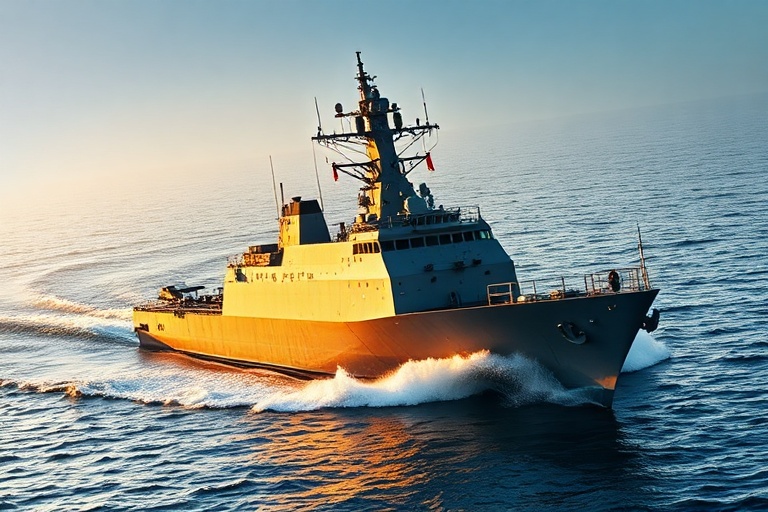
HMS Dragon: The Royal Navy’s Next-Gen Destroyer in Action
Published:
Introduction to HMS Dragon
Launched in 2008 and commissioned into service in 2012, HMS Dragon is one of the Royal Navy’s most advanced Type 45 destroyers. Designed for air defense and maritime security, this 7,350-tonne vessel represents a significant leap in naval technology. Built by BAE Systems at the Scotstoun shipyard in Glasgow, HMS Dragon is the fourth ship in its class, following HMS Daring, HMS Dauntless, and HMS Diamond.
Equipped with state-of-the-art radar systems and the PAAMS (Sea Viper) missile defense system, HMS Dragon is optimized for countering aerial threats. Its integrated electric propulsion system enhances efficiency and reduces maintenance costs. The ship also serves as a platform for helicopter operations, typically hosting a Merlin or Wildcat helicopter for anti-submarine and surveillance missions.
Beyond its technical capabilities, HMS Dragon plays a pivotal role in NATO operations, joint exercises, and international partnerships. Its deployment spans from the North Atlantic to the Mediterranean, demonstrating the Royal Navy’s global reach. In 2021, the ship completed a six-month deployment to the Indo-Pacific, underscoring the UK’s commitment to a “tilt” toward the region.
Operational Highlights and Deployments
HMS Dragon has participated in numerous high-profile missions since entering service. One of its earliest deployments was in 2013, when it escorted the Royal Yacht Britannia during its final voyage. In 2015, the ship joined NATO’s Standing Maritime Group 2, conducting anti-piracy patrols in the Mediterranean and later supporting Operation Sophia to counter migrant smuggling.
In 2017, HMS Dragon was deployed to the Gulf as part of Operation Kipion, protecting UK-flagged shipping in the region. The ship’s crew played a key role in escorting commercial vessels through the Strait of Hormuz amid heightened regional tensions. This deployment highlighted the ship’s versatility and the Royal Navy’s ability to project power across multiple theaters.
More recently, HMS Dragon took part in Exercise Joint Warrior 2023, one of NATO’s largest annual drills. The exercise tested interoperability with allied forces, including the U.S. Navy and French Marine Nationale. Such engagements reinforce collective defense capabilities and strengthen diplomatic ties.
Key Operational Features
- Air Defense: Equipped with the SAMPSON radar and Aster missiles, HMS Dragon can detect and engage multiple targets simultaneously.
- Helicopter Operations: The ship’s flight deck supports both Merlin and Wildcat helicopters for anti-submarine and surveillance roles.
- Maritime Security: Conducts counter-piracy patrols and protects vital shipping lanes in high-risk areas.
- Global Reach: Deployed from the North Atlantic to the Indo-Pacific, demonstrating operational flexibility.
- NATO Integration: Regularly participates in Standing Maritime Groups and joint exercises with allied navies.
Technological Advancements and Capabilities
The Type 45 destroyers, including HMS Dragon, are among the most technologically advanced warships in the world. Their design prioritizes stealth, automation, and networked operations. The Integrated Electric Propulsion system, for instance, allows for greater fuel efficiency and lower acoustic signatures, making the ships harder to detect.
The SAMPSON radar, a multi-function phased array system, can track hundreds of targets at once while guiding missiles to intercept threats. This capability is critical in modern naval warfare, where saturation attacks by drones or missiles are a growing concern. HMS Dragon also features the S1850M long-range radar, which provides early warning of ballistic missile launches.
Automation plays a significant role in reducing crew size while increasing operational efficiency. The Type 45 ships require approximately 191 personnel, a fraction of the crew needed for older destroyers. This reduction is achieved through advanced automation, remote monitoring, and centralized control systems.
The ship’s armament includes a 114mm main gun, Phalanx close-in weapon systems, and torpedo tubes. While not primarily designed for land attack, the vessel can support amphibious operations and special forces deployments when required. Its modular design also allows for future upgrades, ensuring HMS Dragon remains relevant for decades.
The Broader Implications for the Royal Navy
The deployment and performance of HMS Dragon reflect broader trends in the Royal Navy’s strategic direction. With the UK’s 2021 Integrated Review emphasizing a “Global Britain” approach, ships like HMS Dragon are central to this vision. The Indo-Pacific deployment, in particular, signaled a commitment to maintaining a presence in a region critical to global trade and security.
However, the Type 45 class has faced challenges, including propulsion issues and criticism over its limited anti-ship capabilities compared to peers like the U.S. Arleigh Burke-class destroyers. In response, the Royal Navy has invested in upgrades, including the Sea Viper Evolution program, which aims to enhance the Aster missile system’s range and lethality.
HMS Dragon also embodies the UK’s focus on multilateral security cooperation. By participating in NATO exercises and combined task groups, the ship reinforces collective defense while sharing the burden of global maritime security. This approach aligns with the UK’s post-Brexit foreign policy, which seeks to strengthen alliances and promote stability.
The ship’s role in humanitarian missions further underscores its versatility. During the 2020 Beirut explosion, HMS Dragon was among the vessels deployed to provide medical and logistical support. Such operations highlight the Royal Navy’s dual role as both a warfighting and humanitarian force.
Conclusion: A Ship of the Future, Today
HMS Dragon stands as a testament to British naval engineering and strategic foresight. Its advanced systems, operational versatility, and global deployments demonstrate the Royal Navy’s ability to adapt to modern challenges. While the Type 45 class faces ongoing scrutiny, ships like HMS Dragon remain vital to the UK’s defense posture and international commitments.
As geopolitical tensions rise and new threats emerge, the role of destroyers like HMS Dragon will only grow in importance. Whether countering aerial threats, protecting shipping lanes, or supporting humanitarian missions, this warship embodies the evolving nature of naval power. For enthusiasts of military technology and maritime strategy, HMS Dragon offers a compelling glimpse into the future of naval warfare.
To learn more about modern naval technology and its broader implications, explore our Analysis and Technology sections. For updates on military equipment and defense news, visit the News category.