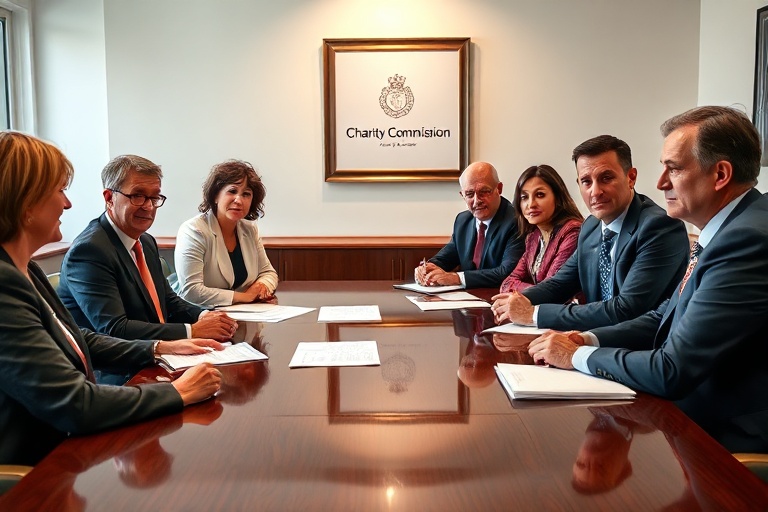
Charity commissions serve as the regulatory backbone for nonprofit organizations, ensuring transparency, accountability, and public trust. These independent bodies, established by governments or civil society initiatives, oversee the operations of charities, from registration to financial reporting. Their influence extends beyond mere oversight, shaping how organizations allocate resources, engage donors, and fulfill their missions.
Each country’s approach to charity regulation reflects its cultural, legal, and economic priorities. In some nations, these commissions operate under strict legal frameworks, while in others, they function as advisory bodies with more flexible guidelines. This diversity highlights the global nature of charitable work and the need for adaptable regulatory systems that balance oversight with operational freedom.
The Function of Charity Commissions in Different Regions
The structure and authority of charity commissions vary significantly around the world. In the United Kingdom, the Charity Commission for England and Wales enforces legal compliance while promoting best practices in governance. Its counterpart in Scotland, the Office of the Scottish Charity Regulator (OSCR), takes a proactive approach, offering guidance to charities on governance and risk management.
In the United States, the Internal Revenue Service (IRS) oversees tax-exempt organizations through its Exempt Organizations division. While not a dedicated charity commission, the IRS ensures that nonprofits meet stringent criteria to maintain their tax-exempt status. This system prioritizes financial transparency, requiring detailed disclosures in annual filings.
Across Europe, charity regulation often aligns with broader nonprofit frameworks. Germany’s Bundesnetzwerk Bürgerschaftliches Engagement (BBE) works alongside government agencies to support civil society. Meanwhile, in India, the Charity Commissioner’s Office regulates public trusts and societies, emphasizing local compliance over centralized oversight.
These variations underscore a critical truth: charity regulation is not one-size-fits-all. Cultural attitudes toward philanthropy, legal traditions, and government priorities all shape how commissions operate. Some nations prioritize rapid registration to encourage new charities, while others enforce rigorous audits to prevent misuse of funds. The result is a patchwork of systems that reflect each country’s unique approach to social good.
Key Responsibilities of Charity Commissions
Registration and Legal Compliance
Charity commissions act as gatekeepers, determining which organizations qualify for legal recognition. In many jurisdictions, registration is mandatory for tax benefits or public fundraising privileges. For example, the UK’s Charity Commission registers over 160,000 charities annually, ensuring they meet criteria such as public benefit and non-profit distribution.
The registration process often includes background checks on trustees, financial viability assessments, and alignment with the commission’s definition of charitable purpose. In Australia, the Australian Charities and Not-for-profits Commission (ACNC) streamlines this process with an online portal, reducing bureaucratic hurdles for smaller organizations.
Financial Oversight and Reporting
Transparency in financial management is a cornerstone of charity commissions’ work. Most require annual reports detailing income, expenditures, and fundraising activities. The US IRS, for instance, mandates Form 990 filings, which are publicly accessible and scrutinized by watchdog groups.
Some commissions go further by conducting random audits or investigating complaints. Ireland’s Charities Regulatory Authority (CRA) has the power to suspend charities suspected of mismanagement, ensuring donors’ confidence remains intact. These measures are particularly vital in regions where corruption risks are high.
Public Engagement and Education
Beyond regulation, many charity commissions serve as educational resources for nonprofits. They publish guides on governance, volunteer management, and digital fundraising—critical tools for organizations with limited administrative capacity. The Canadian Revenue Agency’s Charities Directorate offers workshops on compliance, helping charities navigate complex tax laws.
Public trust is another focus. Commissions often collaborate with media outlets to highlight successful charities and expose fraudulent ones. This dual role—as regulator and advocate—ensures that philanthropy remains a trusted force for social change.
Cultural Perspectives on Charity Regulation
How a society views philanthropy directly impacts its charity commission’s approach. In Nordic countries, where social welfare systems are robust, charity commissions often emphasize innovation and collaboration with government agencies. Sweden’s Skatteverket supports charities in delivering public services, reflecting the country’s collective approach to social welfare.
In contrast, countries with strong cultural traditions of individual philanthropy, like the United States, prioritize donor autonomy. The IRS’s role is largely administrative, with minimal interference in how charities operate. This hands-off approach has led to the rise of megadonors and large private foundations, which dominate the philanthropic landscape.
Religious and community-based charities also shape regulatory frameworks. In Israel, the government recognizes religious councils as part of its charity oversight, blending state regulation with traditional values. Similarly, Islamic charity models, such as zakat, operate within religious frameworks that complement (or sometimes conflict with) national charity laws.
These cultural nuances reveal that charity commissions are not just administrative bodies—they are reflections of societal values. Whether through strict legal enforcement or flexible guidance, these institutions adapt to local expectations, ensuring that philanthropy remains both effective and culturally resonant.
The Future of Charity Commissions: Challenges and Innovations
The digital revolution has transformed how charities operate, presenting both opportunities and challenges for commissions. Online fundraising platforms like GoFundMe and GlobalGiving have democratized giving, but they also introduce risks such as fraud and lack of transparency. Some commissions, like the UK’s Charity Commission, have launched digital reporting tools to keep pace with these changes.
Another pressing issue is the rise of cryptocurrency donations. Charities like UNICEF and the Red Cross now accept Bitcoin, but commissions struggle to regulate these transactions. The lack of standardized reporting for crypto donations complicates financial oversight, prompting calls for new guidelines.
Globalization has also created cross-border challenges. Charities operating in multiple countries must navigate conflicting regulations, from data privacy laws to financial reporting standards. The European Union’s General Data Protection Regulation (GDPR) has forced many charities to rethink how they handle donor information, adding another layer of complexity.
To address these issues, some experts advocate for international collaboration among charity commissions. Initiatives like the International Center for Not-for-Profit Law (ICNL) work to harmonize regulations, ensuring that charities can operate seamlessly across borders. This trend toward global cooperation could redefine the role of charity commissions in the 21st century.
Ultimately, the future of charity commissions will depend on their ability to balance innovation with accountability. As social and technological landscapes evolve, these institutions must adapt without compromising their core mission: fostering trust in the nonprofit sector.
Conclusion: The Enduring Importance of Charity Commissions
Charity commissions play an indispensable role in maintaining the integrity of the nonprofit sector. By enforcing legal standards, promoting transparency, and educating organizations, they ensure that philanthropy remains a force for good. Their work is particularly vital in an era where misinformation and financial mismanagement can erode public trust.
As global challenges like climate change and inequality grow, the need for effective charity regulation becomes even more urgent. Whether through traditional oversight or innovative digital solutions, these commissions must continue evolving to meet the demands of a changing world. For donors, beneficiaries, and charities alike, their work is a cornerstone of a thriving civil society.
In the end, charity commissions remind us that accountability is not an obstacle to progress—it is the foundation upon which meaningful change is built.