Recent Diplomatic Tensions and High-Stakes Negotiations
The relationship between Iran and the United States remains one of the most complex and volatile geopolitical dynamics of the 21st century. Recent months have seen a renewed cycle of diplomatic friction, military posturing, and indirect negotiations that could reshape regional stability in the Middle East. While both nations have engaged in sporadic talks over the past year, the underlying issues—nuclear enrichment, regional proxy conflicts, and sanctions—continue to stall meaningful progress.
The most pressing concern revolves around Iran’s nuclear program, which has been a flashpoint since the 2015 Joint Comprehensive Plan of Action (JCPOA) began to unravel in 2018 when the U.S. withdrew under the Trump administration. Since then, Iran has gradually increased its uranium enrichment levels, reducing its compliance with the agreement’s terms. International inspectors have raised alarms over the speed and scale of Iran’s nuclear advancements, which now place it weeks away from acquiring enough fissile material for a nuclear weapon.
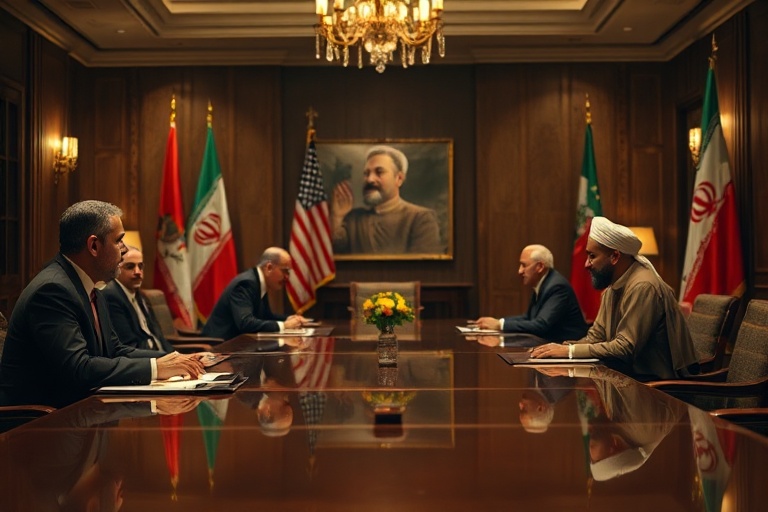
Meanwhile, indirect U.S.-Iran talks in Doha and Muscat have yielded little more than procedural agreements. A senior U.S. State Department official described the negotiations as “constructive but inconclusive,” highlighting the deep mistrust that persists on both sides. Iran insists on sanctions relief as a prerequisite for any concessions, while the U.S. demands verifiable limits on Iran’s nuclear and missile programs. Neither side appears willing to make the first substantial move, leaving the door ajar for further escalation.
Key Points in Recent Iran-US Relations
- Nuclear Escalation: Iran has enriched uranium to near weapons-grade levels, violating key provisions of the JCPOA.
- Sanctions and Economic Pressure: The U.S. continues to enforce strict economic sanctions, crippling Iran’s oil exports and trade.
- Proxy Conflicts: Iran-backed groups in Yemen, Syria, and Iraq remain active, complicating U.S. military and diplomatic strategies.
- Regional Alliances: Iran’s partnerships with Russia, China, and Syria strengthen its negotiating position but isolate it diplomatically.
- Cyber and Espionage Tensions: Reported cyberattacks and intelligence operations have added a new layer of confrontation.
Military Movements and Regional Security Risks
The absence of formal diplomatic channels has led to a dangerous reliance on military deterrence and covert operations. The U.S. has maintained a significant military presence in the Persian Gulf, including aircraft carriers and ballistic missile defense systems, ostensibly to counter Iranian aggression. In response, Iran has conducted naval drills in the Strait of Hormuz, a critical chokepoint for global oil shipments, and launched ballistic missile tests that violate UN resolutions.
Tensions reached a boiling point in early 2024 when Israeli strikes on Iranian consulates in Syria triggered retaliatory missile and drone attacks on Israel. The U.S. provided intelligence and logistical support to Israel during the confrontation, raising questions about direct U.S. involvement in a potential wider conflict. While neither side sought full-scale war, the risk of miscalculation remains high, particularly as regional proxies exploit the instability.
Analysts warn that a misstep—such as a targeted strike on a nuclear facility or a naval confrontation in the Gulf—could spiral into a broader regional war. The International Crisis Group has called for immediate de-escalation, emphasizing that “the region cannot afford another conflict.” The humanitarian toll of any direct confrontation would be catastrophic, with millions of civilians caught in the crossfire.
Economic Fallout and Global Energy Markets
The economic repercussions of U.S.-Iran tensions extend far beyond the Middle East. Oil prices have fluctuated sharply in response to each new round of sanctions or military threat. Iran, once OPEC’s second-largest producer, has seen its oil exports decline by over 50% since 2018, though it has found ways to circumvent some restrictions through shadow fleets and barter agreements with China.
Europe’s energy security has also been impacted, as the continent grapples with the dual challenges of reducing Russian gas dependence and avoiding disruptions in Iranian oil supplies. The Biden administration has faced criticism for not offering sufficient waivers to European allies, forcing them to seek alternative sources. Meanwhile, Iran’s currency, the rial, has plummeted, deepening economic hardship for ordinary citizens.
China and Russia have seized the opportunity to strengthen ties with Iran, signing 25-year cooperation agreements and expanding trade in non-dollar transactions. These moves not only undermine U.S. sanctions but also signal a shift in global power dynamics, as traditional Western alliances face new challenges from Beijing and Moscow.
Long-Term Implications for Geopolitics and Diplomacy
The standoff between Iran and the U.S. is more than a bilateral dispute—it reflects broader shifts in international relations. The erosion of the JCPOA demonstrates the fragility of multilateral agreements in an era of great power competition. China’s role as a mediator in some negotiations, while advancing its own interests, adds another layer of complexity. Meanwhile, the U.S. finds itself stretched thin, balancing commitments in Europe, Asia, and the Middle East.
For the Biden administration, the Iran question is a litmus test for its foreign policy legacy. A return to the JCPOA seems increasingly unlikely, but creative diplomacy—such as temporary sanctions relief in exchange for verifiable nuclear pauses—could offer a middle path. However, domestic political pressures in both countries limit maneuverability. Hardliners in Tehran and hawks in Washington have little incentive to compromise, making incremental progress difficult.
Looking ahead, the most plausible scenario may be a prolonged stalemate, punctuated by periodic crises. Yet history shows that prolonged tensions often lead to unintended consequences. The 1980s “Tanker War” during the Iran-Iraq conflict, in which the U.S. and Iran clashed directly, serves as a cautionary tale. Today, the stakes are even higher, with nuclear capabilities and advanced missile systems in play.
For now, the world watches as diplomats shuffle between meeting rooms and military commanders update their contingency plans. The stakes could not be higher: the prevention of a nuclear crisis, the stability of global energy markets, and the avoidance of another devastating war in the Middle East all hinge on whether cooler heads can prevail.
As the situation evolves, our Politics section will continue to provide updates and analysis, while Dave’s Locker News offers real-time coverage of breaking developments. The coming months will determine whether diplomacy can outpace confrontation—or if the world is destined to repeat the mistakes of the past.