Denny’s: From Classic American Diner to Global Icon
Few restaurant chains have achieved the cultural staying power of Denny’s. What began as a single donut shop in 1953 has evolved into a sprawling international chain with more than 1,600 locations across 14 countries. Denny’s success isn’t just about pancakes and late-night meals; it’s about adapting to local tastes while maintaining its core identity as a place where everyone belongs.
The chain’s journey mirrors America’s post-war optimism, when diners became social hubs for families, truckers, and night owls alike. Denny’s original location in Lakewood, California, set the template: booth seating, a menu that never sleeps, and prices that made comfort food accessible. As the brand expanded, it carried this ethos worldwide, often becoming one of the first American-style diners in markets where such concepts were novel.
The Global Expansion Strategy: Customizing Without Losing Identity
Denny’s international growth has been deliberate yet flexible. In Mexico, the chain introduced chilaquiles to its breakfast menu while keeping classics like mozzarella sticks. Japanese locations feature shrimp tempura pancakes, and Canadian diners can order poutine-topped breakfast platters. This localization strategy has been crucial in markets where breakfast-for-dinner isn’t a tradition.
The chain’s expansion timeline reveals a pattern of strategic entry into new markets:
- 1980s: First international locations in Canada and Japan
- 1990s: Entry into Mexico and Central America
- 2000s: Expansion into Puerto Rico and the Middle East
- 2010s: Focus on emerging markets like India and the Philippines
Each market required different adaptations. In India, where vegetarianism is widespread, Denny’s developed a separate vegetarian menu featuring paneer omelets and masala dosa pancakes. The chain’s ability to balance standardization with cultural sensitivity has been key to its longevity.
Cultural Impact: More Than Just a Restaurant Chain
Denny’s has embedded itself in local cultures beyond its menu offerings. In some communities, the diner serves as a de facto community center, hosting events like senior breakfast clubs or children’s birthday parties. The chain’s 24-hour operation in many locations makes it a haven for shift workers, students cramming for exams, and travelers seeking a predictable meal at 3 AM.
The brand’s social media presence has also shaped its modern identity. Denny’s Twitter account, known for its surreal humor and meme-like posts, has garnered millions of followers. This digital persona contrasts sharply with the chain’s traditional image, proving that Denny’s can appeal to multiple generations simultaneously.
In countries like South Korea, Denny’s locations often feature modern, Instagram-friendly interiors, attracting younger diners who might not otherwise visit a traditional American diner. The chain’s ability to reinvent its physical spaces while maintaining its soul has kept it relevant in markets where trends change rapidly.
The Denny’s Experience: What Keeps Customers Coming Back
Several factors contribute to Denny’s enduring appeal. First is consistency. Whether in Tokyo or Toronto, customers expect the same reliable service and familiar menu items. The chain’s “Grand Slam” breakfast, introduced in 1977, remains a bestseller decades later.
Second is the chain’s commitment to affordability. In an era of rising food prices, Denny’s $10-$15 average entree price point makes it accessible to a broad demographic. This value proposition has been particularly important during economic downturns, when the chain often sees increased traffic from budget-conscious diners.
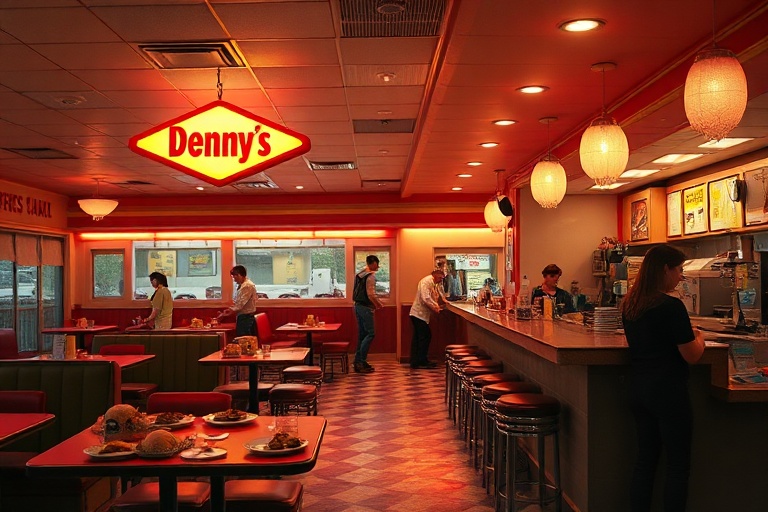
Third is the diner’s role as a cultural time capsule. The checkered floors, vinyl booths, and neon signs evoke nostalgia for a mid-century America that many customers never experienced but still romanticize. This aesthetic has become part of the brand’s global appeal, with many international locations intentionally designing their spaces to resemble classic American diners.
Challenges and Controversies: Navigating a Changing World
Denny’s hasn’t been without its challenges. The chain has faced criticism over the years for issues common to large restaurant chains: labor disputes, franchisee conflicts, and menu innovation struggles. In 2020, the COVID-19 pandemic forced Denny’s to close hundreds of locations temporarily and rethink its 24-hour model, which had become less viable during lockdowns.
The chain also grappled with racial discrimination lawsuits in the 1990s, which led to significant reforms in hiring practices and customer service training. This history serves as a reminder that even the most beloved brands must evolve to meet changing social expectations.
Looking ahead, Denny’s faces new challenges in an increasingly competitive restaurant landscape. Fast-casual chains, delivery apps, and changing consumer preferences toward healthier options all threaten the traditional diner model. Yet the chain’s ability to adapt—whether through plant-based menu options, delivery partnerships, or revamped interior designs—suggests it will continue serving customers for decades to come.
Why Denny’s Matters in the Global Restaurant Landscape
Denny’s story is one of cultural translation. It’s a case study in how an American concept can traverse borders while maintaining its essence. The chain’s success lies not in imposing a single model worldwide but in finding ways to make its core offerings resonate in diverse cultural contexts.
For travelers, Denny’s serves as both a comfort and a curiosity—a place where they can find familiar flavors in unfamiliar surroundings. For locals, it often becomes a cultural touchstone, a place where childhood memories are made and family traditions are established.
The chain’s longevity also offers lessons for other restaurant brands. In an industry where trends come and go, Denny’s has demonstrated the value of consistency, adaptability, and understanding one’s core identity. Its ability to balance tradition with innovation has allowed it to thrive in markets where many competitors have failed.
As Denny’s continues to expand, particularly in Asia and the Middle East, its story remains relevant. The chain proves that cultural exchange isn’t a one-way street—sometimes, the most successful global brands are those that listen as much as they lead.
“Denny’s isn’t just serving food; it’s serving a piece of Americana that people around the world have made their own.” — Restaurant Industry Analyst
Whether you’re in Los Angeles or Lima, Tokyo or Toronto, stepping into a Denny’s is like entering a time capsule of American diner culture—one that has been lovingly adapted to fit whatever country you’re in. In a world of fleeting trends, Denny’s enduring presence reminds us that sometimes, the most powerful cultural exports are those that make everyone feel at home.