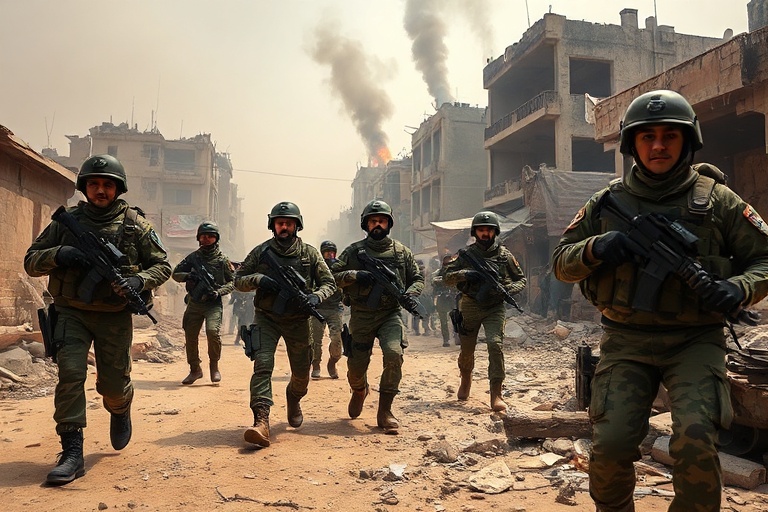
irán war
Iran’s Shadow War: How Proxy Conflicts Shape Global Stability
The conflict involving Iran extends far beyond its borders. Through a network of allied militias and state-backed forces, Tehran has woven itself into regional power struggles that ripple across the Middle East and beyond. These proxy engagements are not merely tactical maneuvers—they reflect a deliberate strategy to expand influence while avoiding direct confrontation with stronger adversaries like the United States or Israel.
Iran’s approach relies on deniability and strategic depth. By arming groups such as Hezbollah in Lebanon, the Houthis in Yemen, and militias in Iraq and Syria, Iran sustains a low-intensity conflict that drains rivals without triggering full-scale war. This method has allowed Iran to project power while minimizing direct military costs, but it has also drawn retaliatory strikes and international sanctions that strain its economy and diplomatic standing.
The Network of Influence: Mapping Iran’s Proxy Allies
At the core of Iran’s regional strategy is a web of non-state actors that serve as force multipliers. These relationships are built on shared ideological goals—often centered on resistance against Western influence or opposition to certain regional governments—and sustained through financial, military, and logistical support. The result is a decentralized but coordinated force that operates with plausible deniability.
- Hezbollah (Lebanon): One of Iran’s oldest and most powerful allies, Hezbollah has evolved from a militia into a political and military force controlling significant parts of Lebanon. It receives substantial funding, training, and weapons from Iran, making it a key deterrent against Israeli aggression.
- Houthis (Yemen): The Ansar Allah movement, commonly known as the Houthis, seized control of northern Yemen in 2014. With Iranian support, they have launched long-range drone and missile attacks on Saudi Arabia and the UAE, disrupting regional security and drawing international condemnation.
- Kata’ib Hezbollah (Iraq): This Iraqi militia, designated a terrorist organization by the U.S., has conducted attacks on American military bases and diplomatic facilities. It operates under the umbrella of the Popular Mobilization Forces (PMF), a coalition of mostly Shiite militias integrated into Iraq’s security apparatus.
- Syrian Regime Forces (Syria): Iran has played a pivotal role in propping up Bashar al-Assad’s government during the Syrian civil war. Through the deployment of the Islamic Revolutionary Guard Corps (IRGC) and allied militias, Iran secured a strategic foothold in Syria, linking Tehran to Beirut via a land corridor.
This network is not static. Alliances shift with battlefield outcomes, internal politics, and external pressures. For instance, Hezbollah’s involvement in the Syrian civil war strained its relationship with some Lebanese factions, while the Houthis’ alignment with Iran has drawn Yemen deeper into the broader regional conflict.
Cycles of Escalation: How Strikes and Retaliation Fuel Instability
Tensions often escalate through tit-for-tat strikes that draw in multiple actors. The cycle typically begins with an attack attributed to an Iranian-backed group, followed by retaliatory strikes by Israel or the U.S. These exchanges are carefully calibrated to avoid all-out war but still inflict damage and raise regional tensions.
For example, in April 2024, Israel conducted airstrikes on Iranian consular buildings in Damascus, killing senior IRGC officers. Iran responded with a direct missile and drone assault on Israeli territory—a rare escalation that signaled Tehran’s willingness to bypass proxies and strike directly. The incident underscored the fragility of the deterrence balance and the risk of miscalculation.
Such cycles are exacerbated by misinformation and shadowy operations. Attacks are rarely claimed immediately, and evidence often remains circumstantial. This opacity fuels speculation and allows each side to frame events in ways that justify further action. International observers warn that repeated escalations could eventually cross a threshold where de-escalation becomes impossible.
Global Implications: Sanctions, Oil Markets, and Diplomatic Isolation
Iran’s involvement in proxy wars has drawn global attention—not just for regional stability, but for its impact on energy markets, nuclear diplomacy, and international law. The U.S. has imposed sweeping sanctions targeting Iran’s oil exports, banking sector, and military entities. While these measures aim to curb Iran’s regional activities, they have also pushed Tehran to deepen ties with Russia, China, and other pariah states.
The economic strain is evident. Iran’s currency, the rial, has plummeted in value, and inflation remains persistently high. Despite this, Iran has found ways to circumvent sanctions through oil smuggling networks and barter trade agreements, particularly with China. These economic maneuvers allow Iran to sustain its proxy operations, even as ordinary citizens face shortages and hardship.
Meanwhile, Iran’s nuclear program continues to cast a long shadow. Negotiations to revive the 2015 nuclear deal have stalled repeatedly, with both Iran and the U.S. accusing each other of bad faith. While the program is not directly linked to the proxy conflict, it serves as a bargaining chip and a source of leverage in regional power dynamics.
Can Diplomacy Break the Cycle?
Despite the entrenched hostilities, diplomatic channels remain open. Oman and Qatar have historically mediated between Iran and regional adversaries, while indirect talks between Iran and the U.S. have occurred under European auspices. However, trust is in short supply. Each side views negotiations through the lens of past betrayals and perceived hypocrisy.
Some analysts argue that a regional security framework—perhaps modeled after the 2023 Saudi-Iranian détente brokered by China—could help reduce tensions. Such an arrangement would require buy-in from all major stakeholders, including Israel, the U.S., and Gulf states. Yet, the presence of hardliners in Tehran and Jerusalem makes compromise difficult.
For now, the proxy war continues, waged in the shadows of the Levant and the Red Sea. It is a conflict defined not by open battlefields, but by covert operations, economic warfare, and the slow erosion of trust. Until a new equilibrium emerges—or until one side overreaches—the cycle of escalation and retaliation appears set to persist.
As the world watches, the real question may not be who will win, but how long the region can endure the cost of a war with no clear front lines.
—