iran war hormuz
Understanding the Strategic Importance of the Strait of Hormuz
The Strait of Hormuz is more than a narrow waterway connecting the Persian Gulf to the Gulf of Oman—it is a global chokepoint for oil transit. Roughly 20% of the world’s oil supply passes through this 21-mile-wide passage daily, making its security a priority for energy markets and military planners alike. The strait’s significance lies not only in its volume but in its geography: bordered by Iran to the north and Oman to the south, its narrow lanes force tankers into predictable routes, creating natural vulnerabilities.
This strategic bottleneck has repeatedly drawn international attention, especially during periods of heightened tension between Iran and Western powers. The Islamic Republic has demonstrated the ability to disrupt shipping lanes through military exercises, missile threats, and occasional seizures of foreign vessels. Such actions are not merely symbolic—they are calculated moves within a broader geopolitical chess game where control over Hormuz equates to leverage over the global economy.
The 2019 Attacks and Escalating Tensions
One of the most visible escalations occurred in June 2019, when two oil tankers—the Front Altair and Kokuka Courageous—were attacked near the Strait of Hormuz. The incidents, initially blamed on Iran by the United States and its allies, occurred during a period of rising tensions following the U.S. withdrawal from the Iran nuclear deal. While Iran denied involvement, the attacks underscored the strait’s role as a potential flashpoint in broader conflicts.
The 2019 events were not isolated. Earlier that month, Iran had shot down a U.S. drone over the strait, nearly prompting a retaliatory strike by the Trump administration. The subsequent de-escalation highlighted the fragile balance of deterrence in the region. Military analysts noted that Iran’s actions were designed to signal its capacity to disrupt global oil flows without triggering a full-scale war, a strategy rooted in asymmetric warfare tactics honed over decades.
These incidents also revealed the vulnerabilities of international shipping. Insurance premiums for vessels transiting the strait surged, and some companies rerouted shipments around the Cape of Good Hope, adding weeks to transit times and increasing costs. The message was clear: even a temporary disruption in Hormuz could ripple through energy markets, affecting prices worldwide.
Iran’s Military Posture and Asymmetric Capabilities
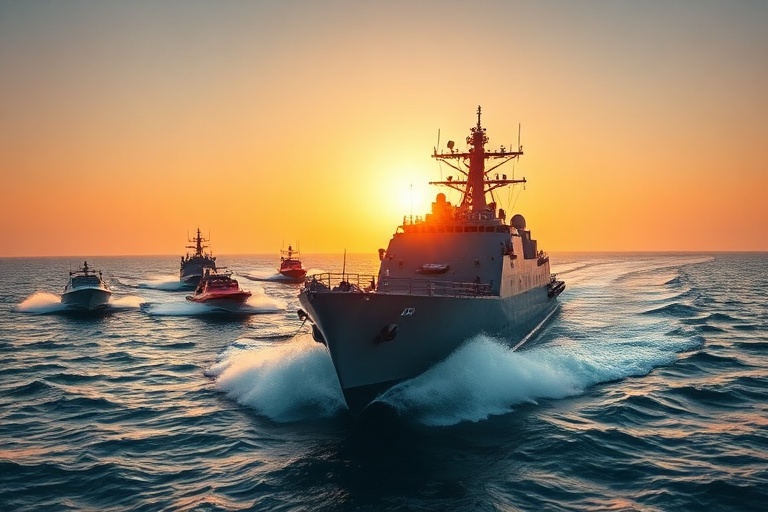
Iran’s approach to maintaining influence in the Strait of Hormuz is defined by asymmetry. With a conventional navy far outmatched by U.S. and allied forces, Iran has invested in fast-attack boats, anti-ship missiles, and naval mines—weapons tailored for close-quarters engagements in confined waters. The Islamic Revolutionary Guard Corps (IRGC), which oversees Iran’s naval operations in the Gulf, has conducted frequent drills simulating the closure of the strait, often using swarm tactics to overwhelm larger vessels.
Beyond hardware, Iran leverages proxy forces. Groups like Yemen’s Houthis have launched missile and drone strikes against Saudi oil facilities and shipping lanes in the Red Sea, drawing indirect support from Tehran. This network of proxies extends Iran’s reach without direct confrontation, complicating responses from Western powers. Analysts argue that Iran’s strategy is not to win a conventional war but to make any conflict in the region prohibitively costly for its adversaries.
Satellite imagery and intelligence reports have also highlighted Iran’s development of underground missile facilities and mobile launch platforms along its southern coast. These assets allow Iran to rapidly deploy anti-ship weapons while minimizing vulnerability to preemptive strikes. The combination of mobility, concealment, and precision has turned Hormuz into a contested zone where Iran holds significant tactical advantages.
Global Responses and the Risk of Escalation
The international community has responded to Iran’s actions with a mix of deterrence and diplomacy. The U.S. has maintained a naval presence in the region, including the Fifth Fleet based in Bahrain, and has formed a maritime security coalition to protect shipping lanes. Countries like the UK, France, and Australia have contributed vessels to these efforts, signaling a broad commitment to maintaining freedom of navigation.
However, these measures have not eliminated risks. In 2021, an Israeli-owned tanker, the Mercer Street, was struck by a drone off the coast of Oman, killing two crew members. The U.S. and UK attributed the attack to Iran, though Tehran denied responsibility. Such incidents illustrate the difficulty of attributing blame in the region’s shadowy maritime conflicts, where proxies and false flags complicate accountability.
Diplomatic efforts have also struggled to yield lasting solutions. The Joint Comprehensive Plan of Action (JCPOA), or Iran nuclear deal, was designed to curb Iran’s nuclear ambitions in exchange for sanctions relief. While its revival remains a topic of negotiation, the deal does not address Iran’s regional behavior or its military activities in the Strait of Hormuz. This gap has led some analysts to question whether diplomacy alone can prevent future clashes in one of the world’s most critical waterways.
Economic and Environmental Consequences of a Closure
The potential closure of the Strait of Hormuz is not just a military concern—it is an economic and environmental nightmare. A disruption lasting even a week could send oil prices skyrocketing, triggering inflation and supply shortages in energy-dependent economies. The U.S. Energy Information Administration estimates that a prolonged closure could remove over 17 million barrels of oil per day from global markets, a volume equivalent to nearly 20% of daily consumption.
The environmental toll could be equally severe. In the event of a military conflict, oil spills from damaged tankers or sabotaged pipelines could contaminate the Gulf’s fragile ecosystems. The region’s coral reefs, mangroves, and marine life—already stressed by pollution and climate change—would face catastrophic damage. Cleanup efforts in such a volatile environment would be logistically daunting, with international cooperation likely hindered by geopolitical tensions.
For countries like China and India, which rely heavily on Middle Eastern oil, the stakes are particularly high. Diversifying supply routes is an option, but alternatives such as the Strait of Malacca or Arctic shipping lanes come with their own risks—higher costs, longer transit times, and geopolitical dependencies. The economic ripple effects of a Hormuz closure would be felt from Wall Street to Shanghai, underscoring the strait’s role as a linchpin of global stability.
Navigating the Future: Can Diplomacy Prevail?
The question of whether the Strait of Hormuz remains open hinges on the interplay between military deterrence and diplomatic engagement. While no single nation can guarantee the strait’s security, multilateral coalitions and confidence-building measures offer pathways to reduce tensions. Initiatives like the News section on Dave’s Locker provide ongoing coverage of regional developments, helping policymakers and the public stay informed about evolving threats.
Yet, the road ahead is fraught with challenges. Iran’s leadership has repeatedly framed its military posture as defensive, arguing that its actions are responses to perceived threats from the U.S. and its regional allies. Meanwhile, Western powers continue to view Iran’s activities in Hormuz as provocative, reinforcing a cycle of mutual distrust. Without a breakthrough in negotiations or a shift in regional power dynamics, the strait will remain a powder keg on the brink of ignition.
For now, the status quo persists—a tense equilibrium where neither side can afford a full-scale conflict, but neither is willing to back down. The world watches as naval ships patrol the waters, diplomats shuttle between capitals, and energy markets brace for the next crisis. The Strait of Hormuz is more than a chokepoint; it is a mirror reflecting the fragile state of global order in an era of shifting alliances and rising tensions.