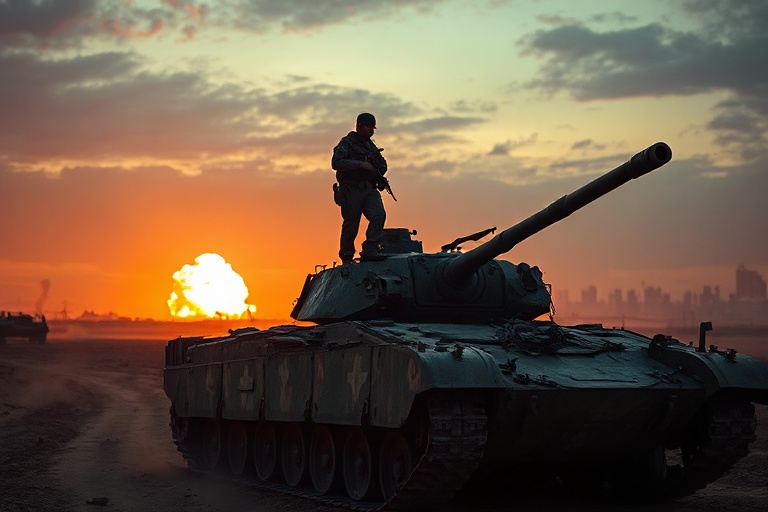
Iran War Risks: Why a Regional Conflict Could Go Global
The specter of conflict in the Middle East has once again taken center stage as tensions involving Iran continue to mount. Recent military exchanges between Israel and Iranian-backed forces in Syria, combined with Iran’s nuclear advancements and regional proxy activities, have raised alarms about the potential for a broader regional war. While direct war between Iran and major global powers remains unlikely, the risk of miscalculation or escalation remains dangerously high.
The Context: Decades of Tension and Recent Flashpoints
Iran’s relationship with the West, particularly the United States and Israel, has been marked by decades of hostility since the 1979 Islamic Revolution. The nuclear deal, formally known as the Joint Comprehensive Plan of Action (JCPOA), briefly eased some tensions in 2015, but the U.S. withdrawal in 2018 under the Trump administration reignited confrontation. Since then, Iran has accelerated its uranium enrichment, breaching several limits set by the JCPOA and positioning itself closer to potential weapons-grade levels.
Meanwhile, Iran’s regional influence has grown through support for groups like Hezbollah in Lebanon, the Houthis in Yemen, and various militias in Iraq and Syria. These proxy forces have been involved in numerous attacks on Israeli and U.S. targets, including a recent drone strike in Jordan that killed three U.S. soldiers. The U.S. responded with strikes on Iranian-backed militia sites in Syria and Iraq, signaling a willingness to counter aggression but stopping short of direct confrontation with Iran itself.
Key Events Leading to Current Tensions
- April 2024: Israel conducts airstrikes on Iranian consulate in Damascus, killing high-ranking Islamic Revolutionary Guard Corps (IRGC) officers.
- April 13, 2024: Iran launches a massive missile and drone attack on Israel, its first direct assault, in retaliation for the Damascus strike. Israel intercepts most projectiles with help from the U.S., Jordan, and others.
- Ongoing: Increased attacks by Iranian-backed militias on U.S. forces in Iraq and Syria, leading to retaliatory U.S. strikes.
- Nuclear Advancements: The International Atomic Energy Agency (IAEA) reports Iran has enriched uranium to 60%, far above civilian needs and close to weapons-grade levels.
What Would a Full-Scale Iran War Look Like?
A direct war between Iran and Israel or the U.S. would be unlike any recent conflict in the region. Iran’s military strategy relies heavily on asymmetric warfare, leveraging its ballistic missile arsenal, drones, and proxy forces rather than traditional armored divisions. A full-scale conflict could unfold in several phases, depending on who initiates hostilities and how quickly allies intervene.
The most immediate flashpoint remains Israel. Iran has vowed to “wipe Israel off the map,” and while it lacks the conventional capability to do so, a sustained missile barrage combined with Hezbollah’s rocket force could overwhelm Israeli air defenses. Israel, in turn, possesses a sophisticated missile defense system (Iron Dome, David’s Sling, Arrow) and a nuclear arsenal, though it maintains a policy of nuclear ambiguity.
If the U.S. were directly involved—through strikes on Iranian nuclear facilities or defending Israel—the conflict could escalate rapidly. Iran might target U.S. bases in the Gulf, choke off oil shipping through the Strait of Hormuz, or launch cyberattacks on critical infrastructure. Such actions would draw in Gulf states like Saudi Arabia and the UAE, potentially turning a regional conflict into a broader sectarian war.
Potential Scenarios of Escalation
- Limited Israeli Strike: Israel conducts a preemptive strike on Iranian nuclear sites, followed by Iranian retaliation through proxies and limited direct attacks. U.S. provides intelligence and logistical support but avoids direct involvement.
- U.S.-Iran Direct Clash: A U.S. strike on Iranian military targets, possibly in response to an attack on a U.S. base or ship, leads to sustained Iranian retaliation. Iran targets U.S. allies in the region, forcing NATO involvement.
- Regional War: Israel launches a full-scale invasion of Lebanon to eliminate Hezbollah, triggering Iranian missile strikes on Israel and Gulf states. U.S. intervenes to protect allies, drawing in Russia and China in a proxy role.
- Unintentional Escalation: A miscalculation—a false alarm, a rogue militia attack, or a cyber incident—spirals out of control, leading to unintended escalation and wider war.
Global Implications: Energy, Security, and Geopolitics
The ripple effects of a major conflict involving Iran would extend far beyond the Middle East. The most immediate impact would be on global energy markets. Iran and its Gulf neighbors sit atop vast oil reserves, and any disruption to shipping through the Strait of Hormuz—through which 20% of the world’s oil passes—would send prices soaring. In 2019, attacks on Saudi oil facilities caused a temporary spike in Brent crude prices by over 14%. A prolonged conflict could push prices past $150 per barrel, triggering a global economic slowdown.
Security would also be severely tested. Iran commands one of the largest and most diverse missile arsenals in the region, with over 3,000 ballistic missiles capable of striking targets across Israel, Saudi Arabia, and U.S. bases. Drones, often harder to detect and intercept, could be deployed in swarms, targeting military and civilian infrastructure alike. Cyber warfare would likely play a major role, with Iran known to have sophisticated cyber capabilities that could disrupt financial systems, power grids, and communications.
Geopolitically, the conflict would realign alliances. The U.S. would likely strengthen ties with Israel and Gulf states, while Iran would deepen its partnership with Russia and China, both of which have strategic interests in the region. China, a major importer of Iranian oil, has already called for restraint but has also criticized U.S. military presence in the Gulf. Russia, facing its own war in Ukraine, may see an opportunity to distract Western attention or gain leverage in energy negotiations.
Can Diplomacy Still Prevent War?
Despite the dire warnings, there remains a narrow window for diplomacy. Backchannel negotiations between Iran and the U.S. have continued intermittently, though neither side appears willing to make major concessions. The Biden administration has signaled openness to reviving the JCPOA, but Iran’s leadership, facing internal pressure and regional ambitions, shows little interest in halting its nuclear program.
Multilateral efforts through the IAEA and regional forums like the Gulf Cooperation Council (GCC) could help de-escalate tensions, but trust is at an all-time low. The recent attack on the Iranian consulate in Damascus demonstrated Israel’s willingness to act unilaterally, while Iran’s retaliatory strike on Israel was calibrated to avoid major Israeli casualties—suggesting both sides are acutely aware of the risks of uncontrolled escalation.
Civil society and economic pressure may also play a role. Widespread protests in Iran over economic hardship and government repression have weakened the regime’s domestic standing, potentially making it more cautious in external actions. Meanwhile, international sanctions have crippled Iran’s economy, reducing its ability to fund proxy groups or sustain a prolonged war.
Steps Toward De-escalation
- Revival of Nuclear Diplomacy: Even a limited return to the JCPOA framework could freeze Iran’s nuclear program and reduce enrichment levels.
- Regional Security Dialogue: Saudi Arabia and Iran have resumed diplomatic relations, and broader talks including Israel and Gulf states could help prevent miscalculation.
- Confidence-Building Measures: Temporary ceasefires in proxy conflicts, such as in Yemen or Syria, could reduce daily violence and build trust.
- International Mediation: The UN or neutral third parties could facilitate backchannel talks between Iran and Israel, with U.S. and European support.
Conclusion: A Tinderbox Awaiting a Spark
The Middle East today resembles a tinderbox, with Iran war tensions serving as the most volatile fuse. While neither Iran nor its adversaries want a full-scale war, the combination of miscalculation, proxy violence, and unresolved nuclear standoffs creates a perilous environment. The April 2024 exchange between Iran and Israel demonstrated that direct conflict is no longer unthinkable—it is a plausible scenario that could unfold within hours.
For now, deterrence appears to be holding. Israel’s military remains the most capable in the region, and the U.S. has shown it will defend its interests. Iran, despite its threats, has avoided actions that would provoke an overwhelming response. Yet in a region where history is written in decades of enmity and sudden violence, the margin for error is slim.
The international community must act with urgency to prevent escalation. Whether through renewed diplomacy, economic pressure, or strategic deterrence, the goal must be clear: to prevent a war that would destabilize the global order, disrupt energy supplies, and plunge millions into further crisis. The time to act is now—before the next spark ignites a fire no one can extinguish.
For ongoing coverage of regional conflicts and geopolitical analysis, visit Dave’s Locker News and Dave’s Locker Analysis.