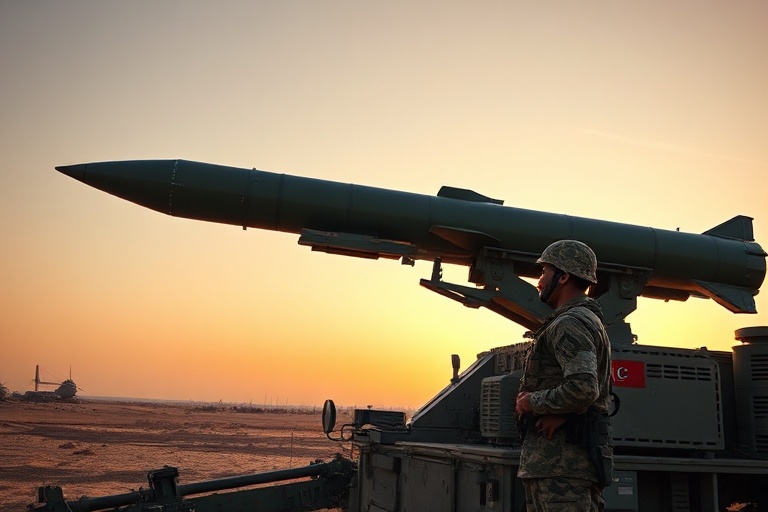
Iran’s Missile Arsenal: Threats, Tech, and Global Impact
Iran’s ballistic missile program has evolved into one of the most sophisticated in the Middle East, drawing international scrutiny while serving as a cornerstone of the Islamic Republic’s defense strategy. With ranges extending from regional rivals to potential targets across the Persian Gulf, these weapons have become both a symbol of national resilience and a flashpoint for geopolitical tensions.
The Evolution of Iran’s Missile Program
Since the Iran-Iraq War in the 1980s, Tehran has prioritized missile development as a response to conventional military imbalances. Initially reliant on Soviet-era Scud missiles, Iran has since indigenized production, achieving breakthroughs in accuracy, payload capacity, and range. The Shahab-3, introduced in the late 1990s, marked a turning point, offering a 1,300-kilometer reach—capable of striking Israel and U.S. bases in the region.
Today, Iran boasts a diverse arsenal, including the medium-range Emad (2,000 km), the solid-fueled Sejjil (2,500 km), and the recently unveiled hypersonic missile, Fattah-1. These advancements reflect a deliberate shift toward precision-strike capabilities, reducing Iran’s reliance on outdated, liquid-fueled systems. The program’s expansion has been bolstered by domestic innovation and, according to Western intelligence, covert transfers from allies like North Korea and Russia.
Key Milestones in Iran’s Missile Development
- 1980s: Initial deployment of Scud-B missiles during the Iran-Iraq War, marking the program’s infancy.
- 1998: Introduction of the Shahab-3, Iran’s first long-range ballistic missile, with a range of 1,300 km.
- 2009: Test of the Sajjil-2, a two-stage solid-fueled missile with a 2,500 km range, enhancing mobility and launch speed.
- 2020: Introduction of the Fattah-1 hypersonic missile, capable of speeds exceeding Mach 15 and evasive maneuvering.
- 2023: Expansion of missile production sites, including underground facilities near Tehran and Isfahan.
Strategic Implications: Deterrence or Provocation?
Iran frames its missile program as a defensive necessity, citing threats from Israel, the U.S., and regional adversaries like Saudi Arabia. Supreme Leader Ayatollah Ali Khamenei has repeatedly emphasized that ballistic missiles are non-negotiable, framing them as a deterrent against potential aggression. However, critics argue that Iran’s missile tests—often conducted in defiance of UN Security Council resolutions—undermine regional stability.
The program’s dual-use nature complicates diplomacy. While Iran insists its missiles are conventional, Western powers and Gulf states view them as a proxy for nuclear ambitions. The 2015 Joint Comprehensive Plan of Action (JCPOA) did little to curb missile development, as Tehran maintained that its ballistic activities fell outside the agreement’s scope. This loophole has fueled tensions, particularly after the Trump administration’s withdrawal from the JCPOA in 2018.
Regional and Global Reactions
The proliferation of Iran’s missiles has triggered a regional arms race. Saudi Arabia has invested heavily in missile defense systems, including the U.S.-supplied THAAD and Patriot batteries, while Israel has developed its own layered defense network, such as the Arrow-3 system. Meanwhile, the U.S. has imposed sanctions on Iranian entities involved in missile production, including the Islamic Revolutionary Guard Corps (IRGC).
Internationally, the UN has condemned Iran’s missile tests, with resolutions calling for restraint. However, enforcement remains weak, as Russia and China have shielded Iran from harsher penalties in the UN Security Council. This dynamic has emboldened Tehran, which continues to test missiles at an accelerating pace, often in tandem with military drills.
Technological Advancements and Future Threats
Iran’s missile program is no longer confined to ballistic systems. The introduction of the Fattah-1 hypersonic missile represents a quantum leap in capability, reducing interception windows and complicating missile defense strategies. Hypersonic missiles travel at speeds exceeding Mach 5, making them nearly impossible to track and intercept with current technology.
Additionally, Iran has made strides in cruise missiles and drone warfare, integrating these systems into a layered strike capability. The Shahed-136 drone, used in attacks on Saudi oil facilities and Ukrainian infrastructure, exemplifies Tehran’s shift toward asymmetric warfare. These developments suggest that Iran is prioritizing a “hybrid” approach, blending ballistic missiles with precision-guided munitions and drone swarms.
Potential Future Developments
- Hypersonic Expansion: Further development of hypersonic missiles, including the Fattah-2, with extended ranges and improved maneuverability.
- Satellite-Launched Missiles: Reports indicate Iran is exploring satellite-based missile launches, which could extend global reach.
- AI Integration: Potential incorporation of artificial intelligence for real-time targeting and evasive maneuvers.
- Export to Proxies: Increased transfers of missile technology to allied groups like Hezbollah and the Houthis, expanding Iran’s asymmetric footprint.
Broader Geopolitical Consequences
Iran’s missile program is not merely a military issue—it is a geopolitical puzzle reshaping alliances across the Middle East and beyond. For the U.S., the program complicates efforts to revive the JCPOA while maintaining pressure on Tehran. Israel, meanwhile, views Iran’s missiles as an existential threat, prompting preemptive strikes against missile production sites in Syria and Iraq.
Europe faces a dilemma: balancing human rights concerns with economic interests. While the EU has condemned Iran’s missile tests, it has hesitated to impose sanctions that could destabilize the 2015 nuclear deal further. Meanwhile, Russia has exploited Iran’s isolation by deepening military cooperation, including the supply of advanced air defense systems.
The program also fuels proxy conflicts. Iran’s support for groups like Hezbollah in Lebanon and the Houthis in Yemen has enabled these actors to acquire ballistic missiles, transforming local conflicts into regional crises. The 2022 Houthi missile attacks on Abu Dhabi and Saudi Arabia demonstrated how Iran’s missile proliferation can escalate beyond its borders.
Conclusion: A Program in Flux
Iran’s ballistic missile program remains a critical flashpoint in an already volatile region. While Tehran frames its missiles as a defensive tool, the international community sees them as a destabilizing force. The program’s rapid technological advancements—from hypersonic missiles to drone warfare—ensure that it will remain a top security concern for years to come.
Diplomatic efforts to curb Iran’s missile activities have thus far fallen short, as the program enjoys broad domestic support and regional allies. Without a comprehensive strategy addressing both Iran’s security concerns and its provocative posturing, the missile crisis is likely to intensify. For policymakers, the challenge lies in balancing deterrence with diplomacy—a task that grows more complex with each new missile test.
As the Middle East navigates this arms race, the world watches closely. The next decade will determine whether Iran’s missiles become a stabilizing deterrent or a catalyst for further conflict.
For more on regional security dynamics, explore our coverage of Middle East Security and Defense Technology.